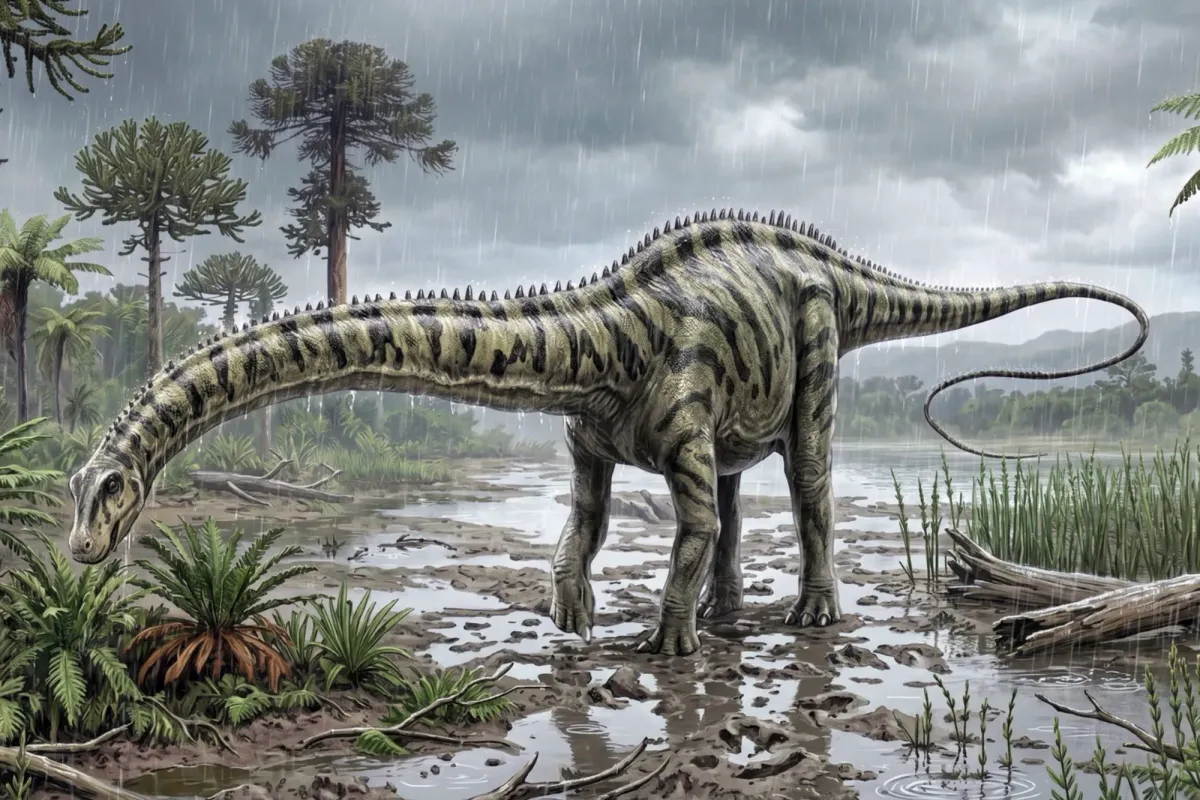
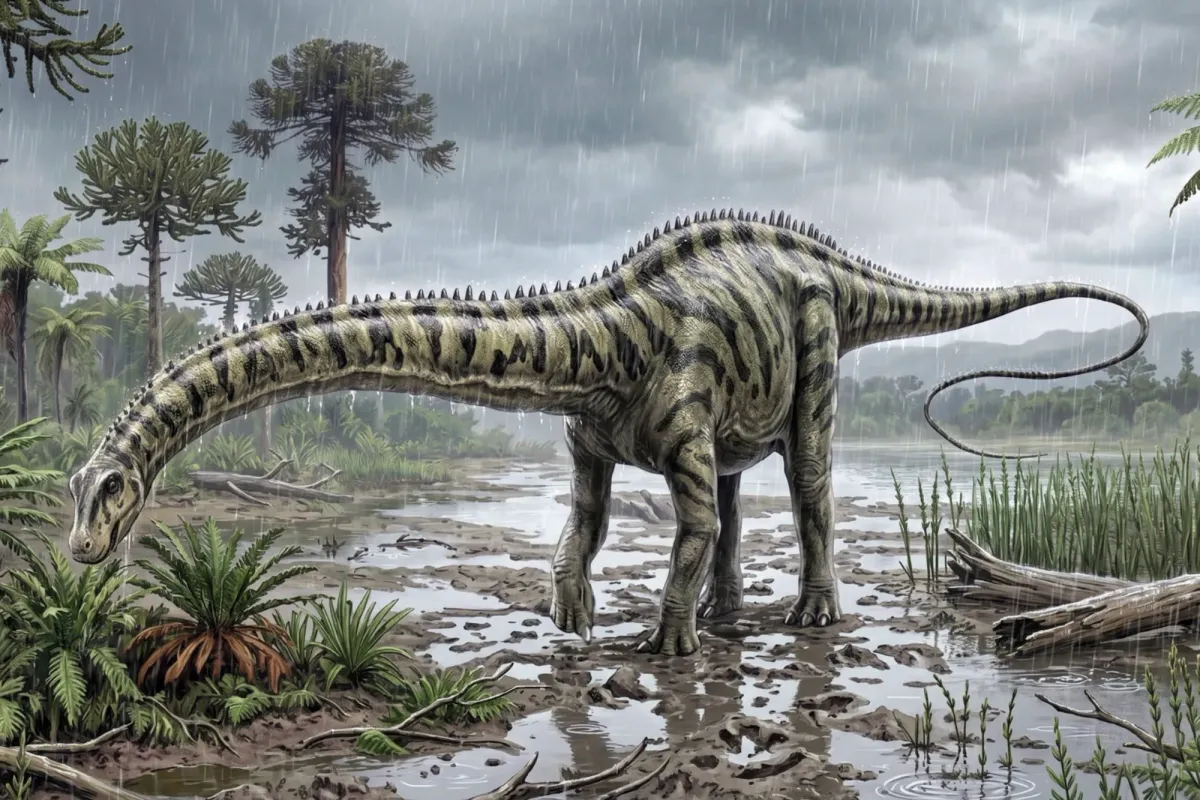
For millions of years, the Diplodocus — that iconic, long-necked, whip-tailed gentle giant — seemed like a proudly American dinosaur. Every single confirmed fossil of this particular long-necked plant-eater, which roamed the Earth roughly 155 to 145 million years ago, was found exclusively in the western United States.
Apparently, someone forgot to tell a Diplodocus in Spain.
The OG Globetrotter
Paleontologists have just announced the first-ever Diplodocus remains found outside of North America, unearthed in El Castellar, a charming little town in Teruel, Spain. Imagine being the paleontologist who unearths that. "Wait a minute... you're not supposed to be here."
The discovery includes 14 remarkably preserved tail bones, plus several chevron bones from the tail, which are exactly what you want to find when you're trying to identify an ancient creature. Researchers put these bones through the wringer, comparing them to known Diplodocus anatomy and using advanced evolutionary analyses. The verdict? Definitely a Diplodocus, and a close relative of the Diplodocus hallorum, no less.
We're a new kind of news feed.
Regular news is designed to drain you. We're a non-profit built to restore you. Every story we publish is scored for impact, progress, and hope.
Start Your News DetoxSergio Sánchez Fenollosa, the lead author and a graduate student at the Joint Paleontology Foundation Teruel-Dinópolis, confirmed that all the evidence consistently pointed to one conclusion: This guy was a Diplodocus.
This particular Spanish sauropod lived about 150 million years ago. Its existence suggests that during the Late Jurassic period, dinosaurs were doing a bit of international travel, likely utilizing temporary land bridges that popped up in the fledgling North Atlantic Ocean. Back then, the supercontinent Pangea was in the middle of a rather dramatic breakup, and the Atlantic was just starting to get its act together.

At about 82 feet long, this Spanish Diplodocus was just as massive as its North American cousins, which, if you think about it, is both impressive and slightly terrifying. Its remains are now proudly on display at the Aragones Museum of Paleontology at Dinópolis. So, next time you're in Spain, you can pay your respects to the dinosaur who broke all the rules.