Imagine moving a 25-tonne stone — that’s about five elephants — for 11 miles. Now imagine doing it 4,000 years ago, without forklifts, cranes, or even proper roads. That's precisely what prehistoric builders in Britain did, and scientists just figured out how they pulled off one of history's most impressive, and baffling, construction projects.
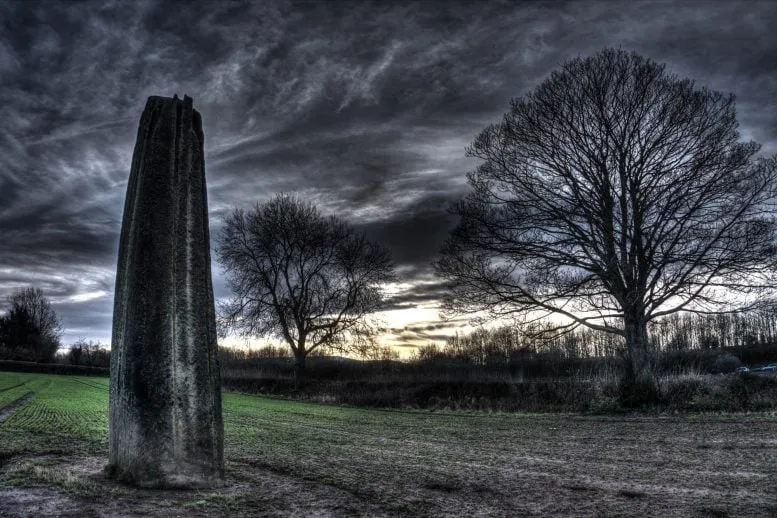
For centuries, the towering megaliths known as the Devil's Arrows, near Boroughbridge in northern England, have stood as silent, stony giants, reaching up to 23 feet high. Their origin? A complete mystery. Until now.
The Case of the Traveling Boulders
Researchers from Curtin University and the University of York just published a study that finally pinpointed where these colossal stones came from: Brimham Rocks, a rugged, dramatic area in North Yorkshire. This isn't just a fun fact; it completely upends what we thought we knew about monument building in the Late Neolithic or Early Bronze Age.
We're a new kind of news feed.
Regular news is designed to drain you. We're a non-profit built to restore you. Every story we publish is scored for impact, progress, and hope.
Start Your News DetoxTurns out, these ancient architects weren't just grabbing the closest rock. Oh no. They trekked 11 miles over challenging terrain to get these specific stones. For context, previous theories suggested a much closer source, Plumpton Rocks. So, they went the extra mile (or ten), which implies there was something deeply significant about the origin point.
Dr. Anthony Clarke, the lead author, put it plainly: "Our research shows these stones weren't just taken from the closest place. They were specifically chosen from a challenging landscape 18 kilometers away." Because apparently, convenience wasn't a priority when you're building something meant to last millennia. Which, if you think about it, is both impressive and slightly terrifying.
Mineral Fingerprints Don't Lie
So, how did they figure this out without, say, chipping off a piece of a 4,000-year-old monument? They used a surprisingly gentle method: adhesive tape. By collecting tiny mineral grains from the stones, they could analyze their unique "age fingerprints." These geological signatures were an exact match for Brimham Rocks.
This also ruled out any natural explanations, like glaciers somehow dragging these behemoths across the landscape. Nope. This was a deliberate, Herculean effort by humans. They didn't just move them; they then had to position and raise them into their dramatic, linear formation.
Dr. Jim Leary, a co-author, noted that this discovery "highlights the importance of the landscape and shared beliefs, as well as the huge effort needed to move and raise such large stones." It's a reminder that sometimes, the journey (and the specific origin of your building materials) is just as important as the destination.
What's next? The team plans to use this non-invasive tape method on other mysterious standing stones and dig deeper at both the Devil's Arrows and Brimham Rocks. Because when you solve a 4,000-year-old mystery, you've probably just unearthed a few more. And frankly, we're here for it.