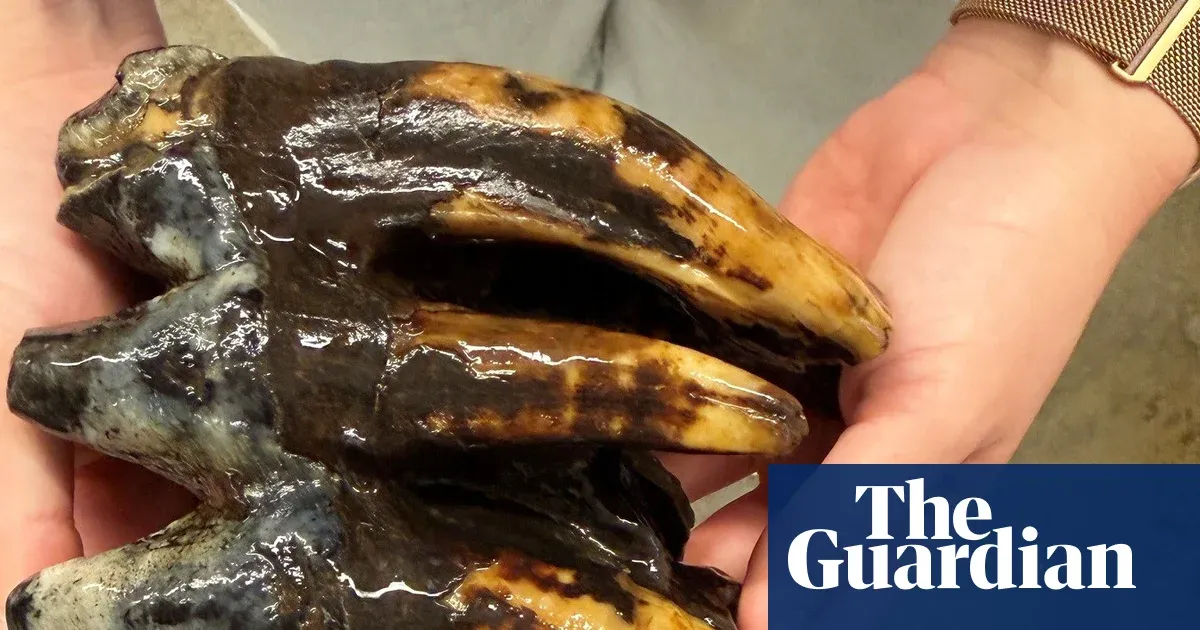
Imagine you're a scientist, just doing your science-y thing, when you stumble upon a rock. Except, it's not a rock. It's a 10,000-year-old molar from a Pacific mastodon, perfectly preserved, just chilling in a California preserve. Because apparently, that's where we are now.
Brigid Lynch, a geomorphologist, was working in San Mateo County when she made the discovery. It was later confirmed by paleontologists at the Midpeninsula Regional Open Space District. And yes, they were excited. Very excited.
Paleontologist Wayne Thompson, who clearly understands the assignment, said the tooth was in “perfect condition” and called it the most complete mastodon molar ever found in the area. He felt chills. Let that sink in. Someone got chills from a tooth. Because it helps piece together the epic, woolly puzzle of the Ice Age.
We're a new kind of news feed.
Regular news is designed to drain you. We're a non-profit built to restore you. Every story we publish is scored for impact, progress, and hope.
Start Your News DetoxThe Tooth, The Whole Tooth, and Nothing But The Tooth
Pacific mastodons were the ancient, shaggy cousins of modern elephants, roaming the American West — from California to Mexico — until they decided to call it quits over 10,000 years ago. Their demise? A delightful combo platter of climate change messing with their digs and, you guessed it, humans hunting them a bit too enthusiastically.
This particular molar is now off to Stanford University, where researchers will carbon-date it to pinpoint its exact age. Christine Garcia, a curator there, points out that fossils like this are basically time machines, letting us glimpse past biodiversity and, in turn, make slightly less terrible decisions about future ecosystems. Which, if you think about it, is both impressive and slightly terrifying.
And if you're thinking this is a one-off, think again. Just this year, a New Yorker found a mastodon jaw under their lawn. And a year before that, a woman found a foot-long mastodon tooth sticking out of a California beach. Apparently, these ancient giants are just waiting to be dug up, one incredibly old tooth at a time.