Turns out, space isn't just a big, empty void. It's more like a cosmic dust bunny convention, filled with gas, plasma, and stardust. Our entire Solar System is currently cruising through one of these interstellar clouds, a fluffy little number called the Local Interstellar Cloud.
For years, scientists have been sifting through ancient Antarctic snow and ice — because apparently, that's where you find the best cosmic clues. They're looking for stardust, tiny specks that tell us about our galactic neighborhood's past. And they've just hit the jackpot: a clue that maps our Solar System's journey through this cosmic fluff over the last 80,000 years.
Earth: The Ultimate Cosmic Dustpan
Usually, astronomy involves pointing giant telescopes at distant stars and galaxies. But this new approach is a bit more… grounded. Instead of looking out, scientists are looking in — specifically, at debris from exploding stars that landed right here on Earth.
We're a new kind of news feed.
Regular news is designed to drain you. We're a non-profit built to restore you. Every story we publish is scored for impact, progress, and hope.
Start Your News DetoxStars are basically giant element factories, churning out everything from carbon to iron. When a truly massive star decides to go out with a bang (a supernova), it blasts these elements, including rare isotopes like iron-60, across the galaxy. Think of it as cosmic shrapnel.
These tiny bits of stardust, carrying their radioactive iron-60 calling card, eventually make their way to Earth. By finding these atoms in our planet's geological records, scientists can essentially rewind the tape and see stellar explosions that happened long, long ago.
Antarctica, with its slow-accumulating, pristine layers of snow and ice, is the perfect cosmic archive. Each layer is a snapshot of what was floating around in our galactic neighborhood at the time. When researchers initially sifted through 500 kilograms of recent Antarctic snow, they found this rare radioactive iron-60. The weird part? No recent supernova had occurred nearby.
So, the theory emerged: maybe this stardust was just hanging out in the local interstellar clouds, waiting for Earth to sweep through and collect it. Denser clouds, more iron-60. A neat theory from 2019.
The Iron-60 Mystery Deepens
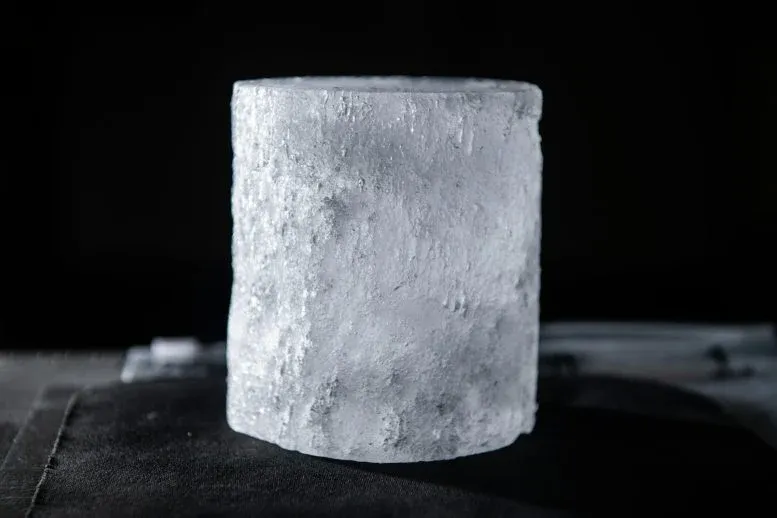
Another idea was that this iron-60 was just the last lingering bits from much larger supernova events that bombarded Earth millions of years ago. To get to the bottom of it, researchers embarked on a truly epic task: analyzing 300 kilograms of Antarctic ice dating back 40,000 to 80,000 years.
This isn't a simple scoop-and-scan. They had to melt the ice, chemically treat it, and then, using a super-sensitive atom counter (called accelerator mass spectrometry at the Australian National University), count individual iron-60 atoms. Because apparently, that's where we are now.
They expected a steady level of iron-60, based on earlier surface snow and ocean sediment measurements. What they found instead was a lot less.
Not zero, mind you. But significantly lower. This suggests that during that particular 40,000-year stretch, Earth was collecting less interstellar dust. It's a noticeable shift over a relatively short cosmic period, and it didn't fit with those ancient, millions-of-years-old supernova deposits.
Astronomers have been intensely curious about the clouds surrounding our Solar System. A study last year even suggested these clouds likely originated from a stellar explosion, and that our Solar System has been moving through the Local Interstellar Cloud sometime between 40,000 and 124,000 years ago.
And what did the Antarctic ice reveal? That the amount of iron-60 collected on Earth changed exactly during that period. The Solar System was, indeed, having a less dusty ride.
It's not a perfect, star-explodes-cloud-forms-iron-60-everywhere story; scientists would expect more iron-60 if the clouds came directly from a recent explosion. But the fact that these clouds left any mark in Earth's geological record is pretty wild. Now, they're hoping to dig into even older ice and solve the full history of these local interstellar clouds. Because who doesn't love a good cosmic mystery, especially when it's buried in ice?