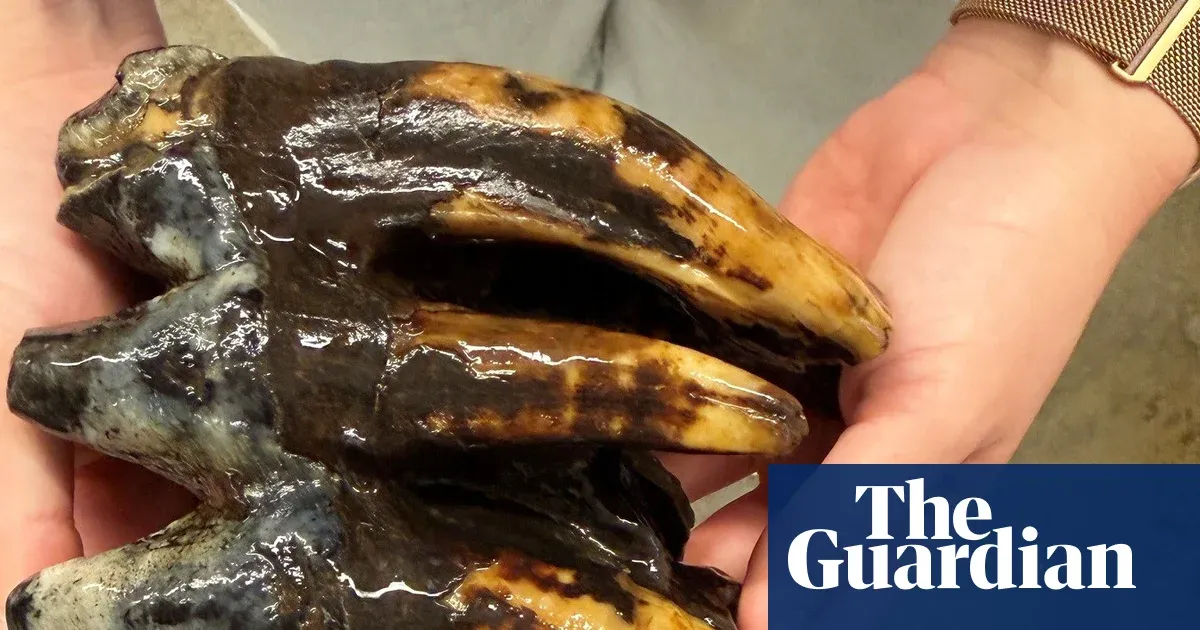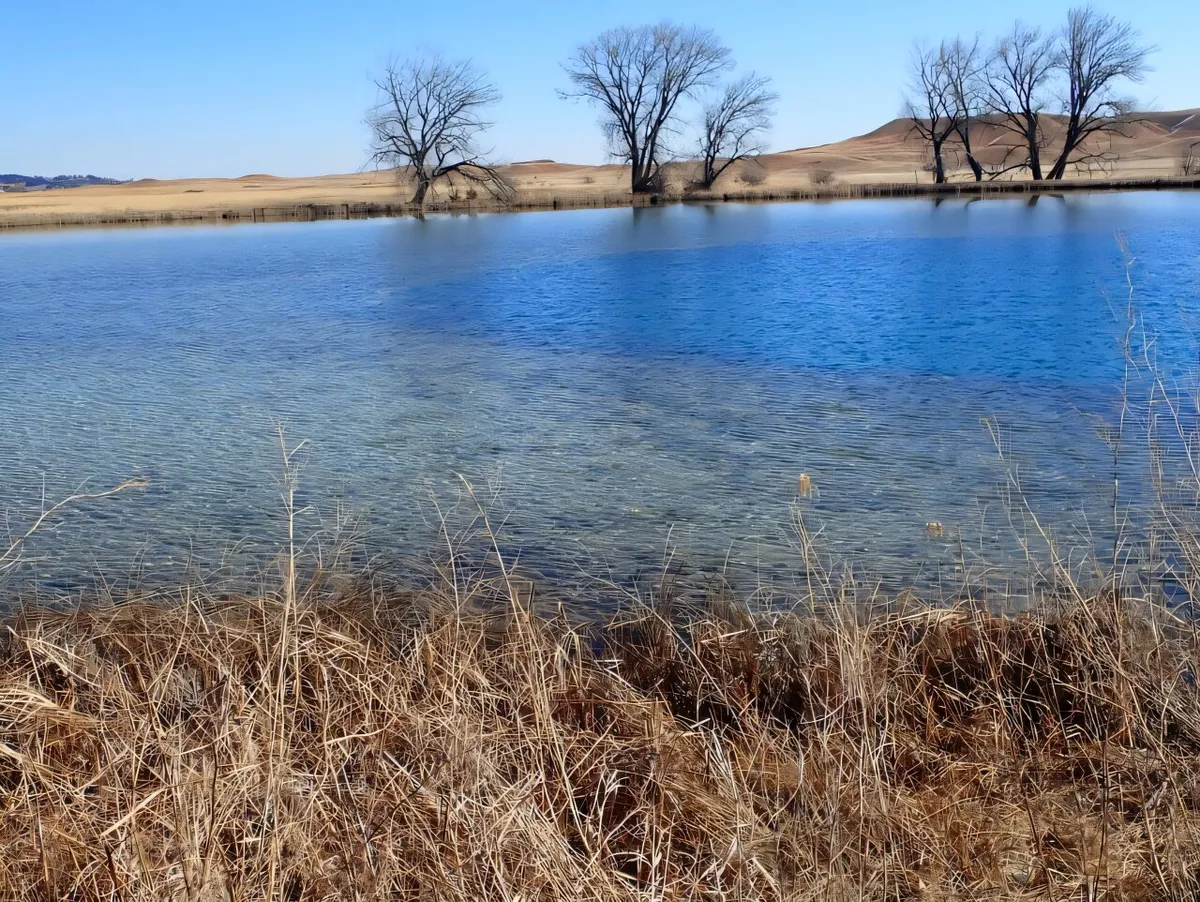
Deep inside an ancient sinkhole in South Dakota lie the remains of many mammoths. These prehistoric animals likely died after wading into warm springs. For a long time, people thought these deaths happened about 26,000 years ago.
But new research in the journal Quaternary Research suggests these ice-age giants are much older. They are now believed to be between 160,000 and 232,000 years old.
Since its discovery in 1974, the Mammoth Site has revealed over 60 Columbian mammoths. Most were young males. This is the largest group found in North America.
We're a new kind of news feed.
Regular news is designed to drain you. We're a non-profit built to restore you. Every story we publish is scored for impact, progress, and hope.
Start Your News DetoxThe new dates mean these mammoths lived during a much colder time in the Pleistocene era. This makes the site one of the few in the Northern Great Plains that dates back so far.
Jim Mead, a retired researcher from Mammoth Site and the University of Arizona, had doubts about the old dates for years. He had worked in a radiocarbon lab and found the dates from bone minerals, called apatite, to be unusual. Mead always wanted to use a different dating method.
The Mammoth Death Trap
The Mammoth Site was found by accident during a housing project. Workers uncovered giant tusks. Soon after, Mead and the late Larry Agenbroad, a former professor and site director, began excavating.
Their work showed an ancient sinkhole. It likely formed when the ground collapsed as groundwater dissolved the rock below. This created a 13- to 16-foot-deep trap with water temperatures around 90 to 95 degrees Fahrenheit.
The study says the slick, steep sides meant mammoths couldn't escape once they fell in. Other animals, like a short-faced bear, a North American camel, a wolf, and a coyote, also met their end there.
Dating the remains was difficult. The bones lacked collagen, a protein usually used for radiocarbon dating. So, researchers used bone apatite, which often gives unreliable ages in wet environments.
Six dates from apatite ranged from 23,000 to 42,000 years. However, two other dating methods suggested much older ages: 129,000, 150,000, and 101,000 years.
Dating the Sand
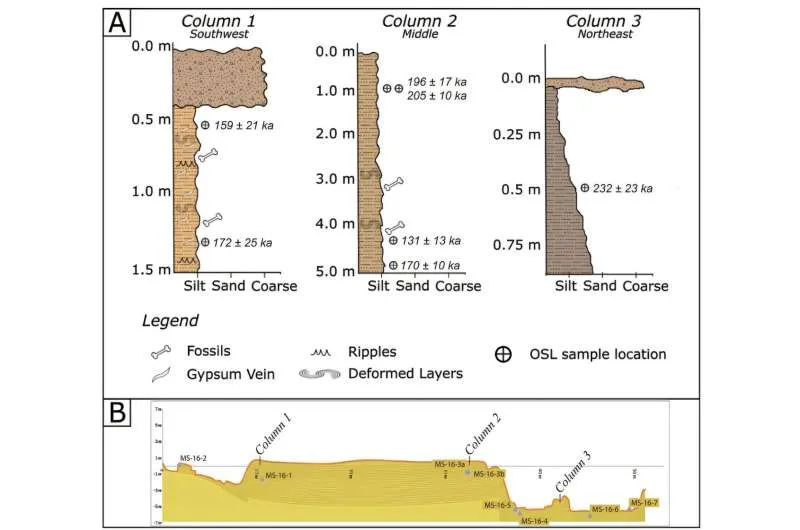
Since the bones gave conflicting results, researchers looked at the surrounding sand. They used luminescence dating, which tells when mineral grains in sediment were last exposed to sunlight. This method measures how much radiation minerals absorb while buried. Sunlight resets this "clock."
Sampling happened inside the museum built over the excavation. This allowed visitors to talk with the researchers, said Shannon Mahan, a U.S. Geological Survey geologist. She noted it was a pure form of science education. They collected six sinkhole samples and four comparison samples.
The quartz grains normally used for luminescence dating were not helpful. They had absorbed too much radiation and could only give a minimum age of about 75,000 years. So, the researchers used feldspar instead.
Samples went to two different labs, and both returned matching results. The site was much older than previously thought, around 160,000 to 232,000 years. This made the mammoth bones over 100,000 years older than the radiocarbon dates suggested.
Emma Krolczyk, a U.S. Geological Survey geologist, explained why the radiocarbon dates were so far off. Old carbon in bone apatite can dissolve and then reform with new carbon from groundwater. This essentially resets the radiocarbon signal.
The researchers noted some new dates have limitations. One sample from the middle of the sinkhole was about 40,000 years younger than nearby samples. Paul Hanson of the University of Nebraska-Lincoln said this could be due to several factors, making it hard to pinpoint one cause. He emphasized the importance of using many age estimates, not just one or two.
The team plans to use other methods, like uranium-thorium dating, to confirm the ages. Accurate ages are crucial for understanding the environment and evolution of large mammals in the Black Hills. This new timeline offers a much longer record of how the region's modern animals and plants developed.
The bottom third of the sinkhole is still unexcavated. Researchers believe more remains might be there, but they lack storage space for new finds. Christopher Jass, curator at the Royal Alberta Museum and principal investigator at Mammoth Site, suspects they will find more mammoths and possibly other extinct megafauna.
Deep Dive & References
Age reassignment using luminescence dating for The Mammoth Site, Black Hills, South Dakota, USA - Quaternary Research, 2026