Turns out, even paleontologists can misplace a good story. For over two decades, a small bone sat in a Japanese fossil center, misidentified and unstudied. That bone, discovered in 1999, was initially thought to be a breastbone from a much larger dinosaur. Just gathering dust, really.
Then, someone finally took a closer look. And what they found wasn't just interesting; it completely changed our understanding of what was roaming Japan's ancient coastlines.
That unassuming fossil, found at the Iwaki City Ammonite Center in Fukushima, dates back 90 million years. The area was a shallow-marine environment back then, meaning this dinosaur was living right by the water's edge. But here’s the kicker: it wasn't the big bruiser everyone assumed.
We're a new kind of news feed.
Regular news is designed to drain you. We're a non-profit built to restore you. Every story we publish is scored for impact, progress, and hope.
Start Your News DetoxThe Little Dino That Could
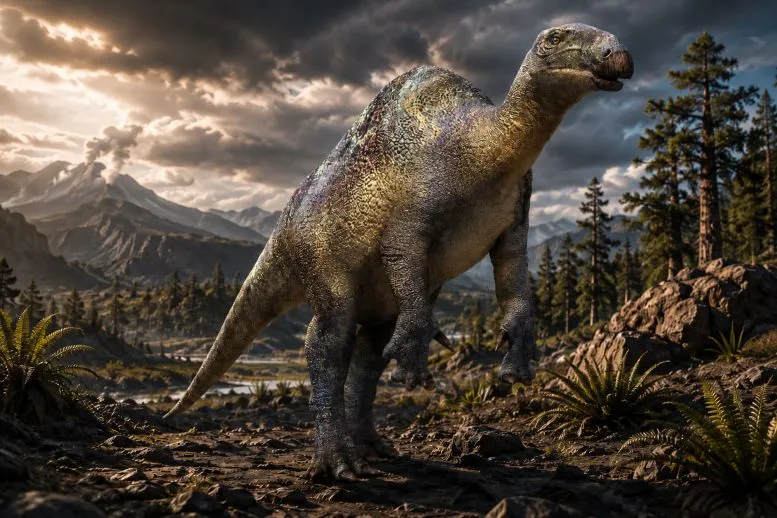
Recent analysis revealed the bone belonged to a styracosternan, a subgroup of the plant-eating iguanodontians. And this particular styracosternan? Scientists estimate it was only about three meters long. For context, many of its relatives, like the famous hadrosaurs, were absolute giants.
This pint-sized discovery means that 90 million years ago, Japan's coastal areas weren't just for the big boys. They were bustling ecosystems supporting iguanodontians of all shapes and, more importantly, all sizes. It's like finding out the local beach town had both monster trucks and smart cars cruising the boardwalk.
So, a fossil that sat in limbo for twenty years ended up proving that ancient East Asian coasts were far more diverse than we thought. Goes to show, sometimes the biggest revelations come from the smallest, most overlooked corners. Or, you know, from finally getting around to that paperwork.