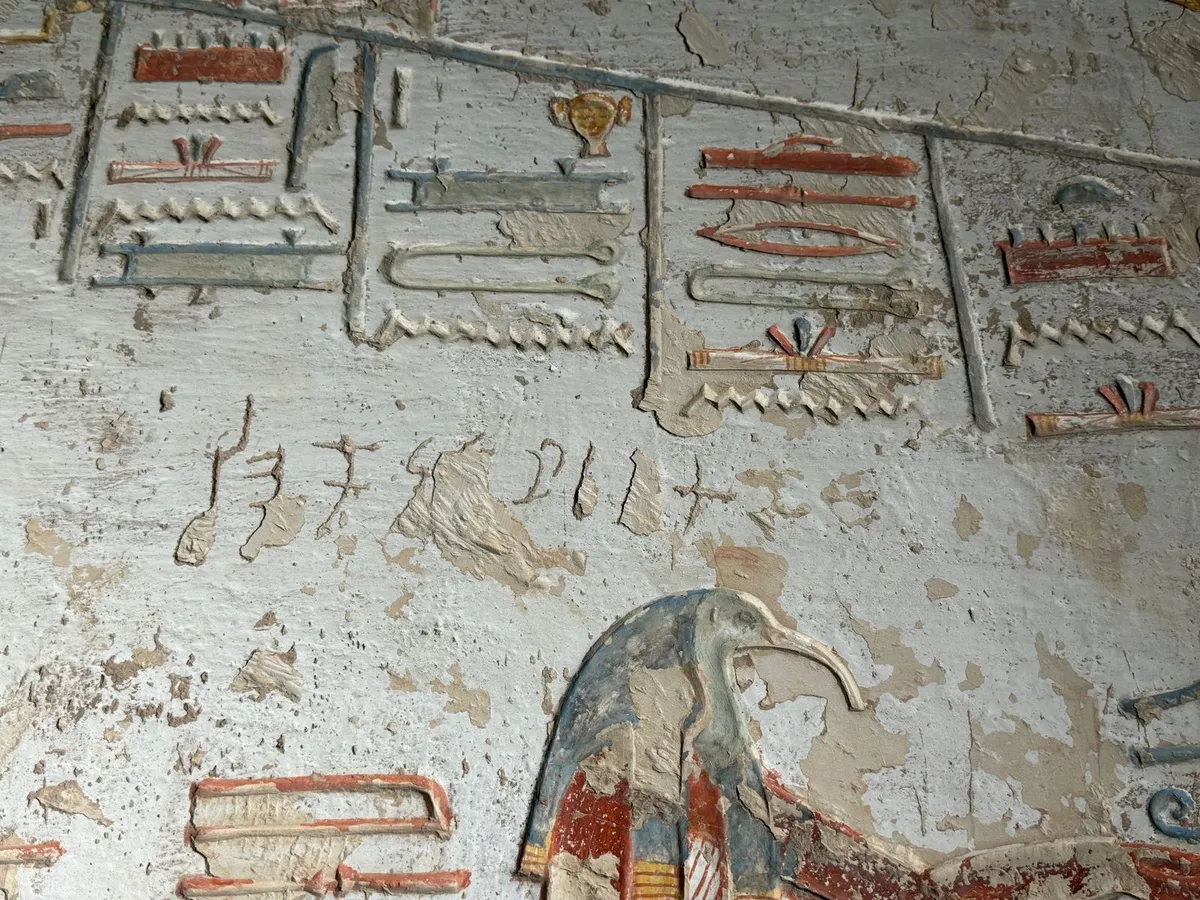
Two thousand years ago, a man named Cikai Korran traveled from India to Egypt's Valley of the Kings and did what travelers have always done: he left his mark. Literally. Scratched across five tombs in Old Tamil script, his name appears eight times—some inscriptions placed so high on the walls that researchers still aren't sure how he reached them.
Korran wasn't alone. Researchers have now identified 30 inscriptions written in Indian languages across six tombs, all dating between the first and third centuries C.E. Twenty of them are in Tamil, the rest in Sanskrit, Prakrit, and other ancient Indian languages. For nearly 2,000 years, these writings sat in plain sight, unrecognized—not because they were hidden, but because no one studying Egyptian graffiti knew Indian languages, and no one studying Indian languages was looking in Egyptian tombs.

Ingo Strauch, a scholar at the University of Lausanne, discovered them almost by accident while visiting the Valley of the Kings. He recognized the script, photographed everything, and after returning home, realized what he'd found. What makes this discovery wild is what it reveals about ancient Indian travelers: they didn't just arrive on ships and leave. They stayed. They explored. They traveled inland to one of Egypt's most sacred sites—the burial ground of pharaohs like Tutankhamun.
We're a new kind of news feed.
Regular news is designed to drain you. We're a non-profit built to restore you. Every story we publish is scored for impact, progress, and hope.
Start Your News DetoxPrevious evidence suggested Indian traders visited Egypt's port cities, particularly Berenike on the Red Sea. But graffiti in hard-to-reach places—some 16 to 20 feet above tomb entrances—tells a different story. These weren't quick commercial stops. Some travelers, like a man named Indranandin who identified himself as a messenger of an Indian king, journeyed deep into the country. Researchers suspect he may have arrived at Berenike, then traveled inland, possibly on his way to Rome, which controlled Egypt at the time.

Even more striking: some graffiti appears to be in conversation. Inside one tomb, Sanskrit and Tamil inscriptions reference Greek writing, suggesting these ancient visitors from different places actually interacted with each other. "These new inscriptions show the integration of people of Indian origin from all parts of the subcontinent into the society of Roman Egypt," Strauch noted.
For centuries, scholars have studied Greek and Aramaic graffiti in Egypt. Indian inscriptions were always there—just waiting for someone who could read them. The discovery suggests more Indian artifacts likely remain hidden in plain sight across Egypt, waiting for the right person to notice.