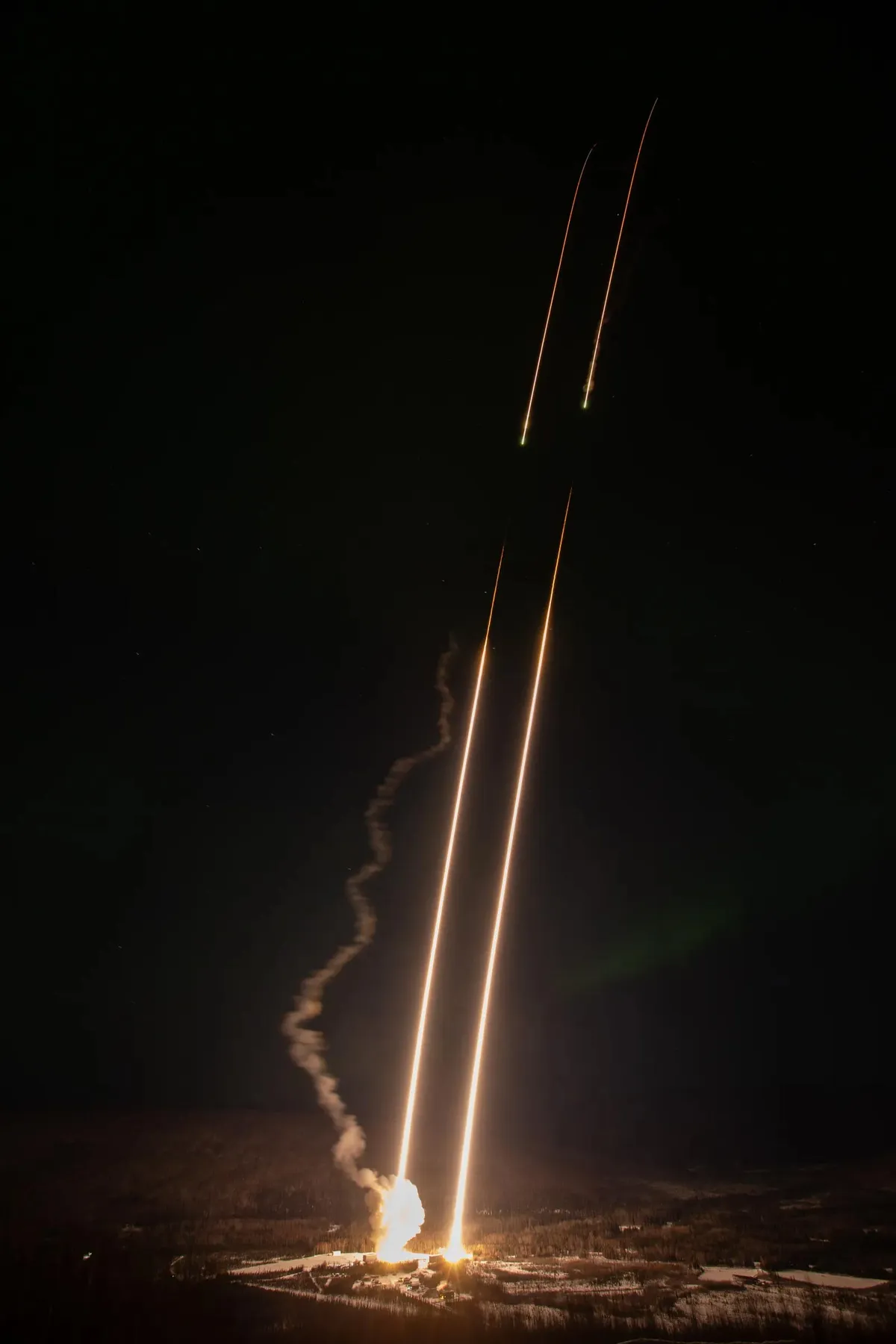
Three sounding rockets launched from Alaska in February have given scientists their clearest look yet at how the northern lights actually work — and it turns out the glowing ribbons we see are just the visible part of a much larger electrical circuit.
When electrons stream down from space and collide with Earth's atmosphere, they create the aurora's familiar glow. But here's what makes it complicated: those electrons have to get back out to space somehow. The incoming beam is relatively neat and organized, like electricity flowing through a cable. The return journey is chaos — electrons scatter in every direction, bouncing off gas molecules, pushed by winds and shifting magnetic fields, slowly finding their way back to space to complete the circuit.
Mapping that return flow is the puzzle NASA's GNEISS mission (Geophysical Non-Equilibrium Ionospheric System Science) set out to solve. On February 10, two rockets lifted off nearly simultaneously from Poker Flat Research Range near Fairbanks, flying side by side through the same auroral display along slightly different paths. Each rocket released four smaller payloads to gather measurements at multiple points within the glowing region.
We're a new kind of news feed.
Regular news is designed to drain you. We're a non-profit built to restore you. Every story we publish is scored for impact, progress, and hope.
Start Your News DetoxReading the Aurora Like a CT Scan

Kristina Lynch, the mission's principal investigator and a professor at Dartmouth College, designed GNEISS to create a three-dimensional picture of the aurora's electrical structure. As the rockets passed overhead, they transmitted radio signals through the surrounding plasma to receivers on the ground. The plasma modified those signals during their journey — similar to how body tissue alters X-rays in a medical CT scan. By analyzing these changes, scientists could map where electrical currents flow and how plasma density varies throughout the auroral region.
"It's essentially like doing a CT scan of the plasma beneath the aurora," Lynch said.
The same launch window also carried the Black and Diffuse Auroral Science Surveyor, which reached about 224 miles altitude on February 9. That mission focused on unusual dark patches within auroras — regions scientists believe mark locations where electrical currents abruptly reverse direction. All instruments on both missions operated as planned, and researchers reported receiving high-quality data.
Why does any of this matter beyond the physics. These electrical currents control how energy from space gets distributed through Earth's upper atmosphere. When currents spread out, they heat the surrounding air, generate winds, and create turbulence that can affect satellites traveling through that region. Understanding auroral currents is understanding how space weather actually shapes our planet.
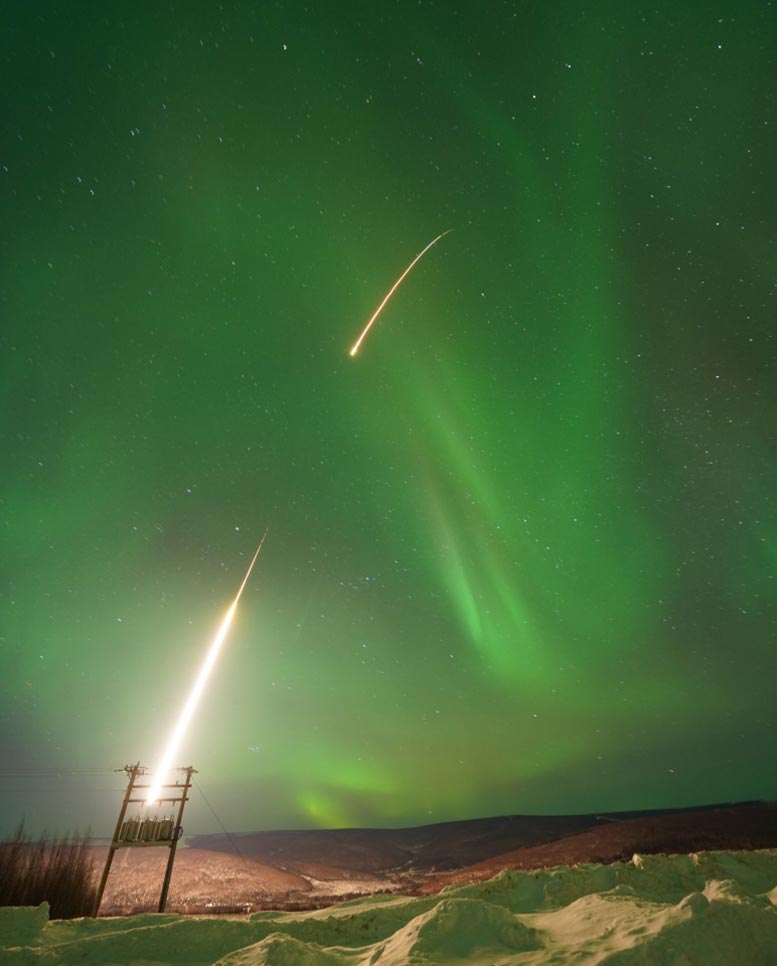
NASA's approach combines multiple vantage points: the EZIE satellite mission launched in March 2025 measures auroral currents from orbit, ground-based imagery captures the big picture, and now direct rocket measurements provide data from inside the auroral region itself. "If we can put the in-situ measurements together with the ground-based imagery, then we can learn to read the aurora," Lynch said.
Sounding rockets offer something satellites can't — the ability to fly directly through the processes unfolding, placing instruments exactly where the action happens. Through short, precisely timed missions, NASA is turning fleeting flashes of light into deeper insight about one of Earth's most dramatic natural phenomena.