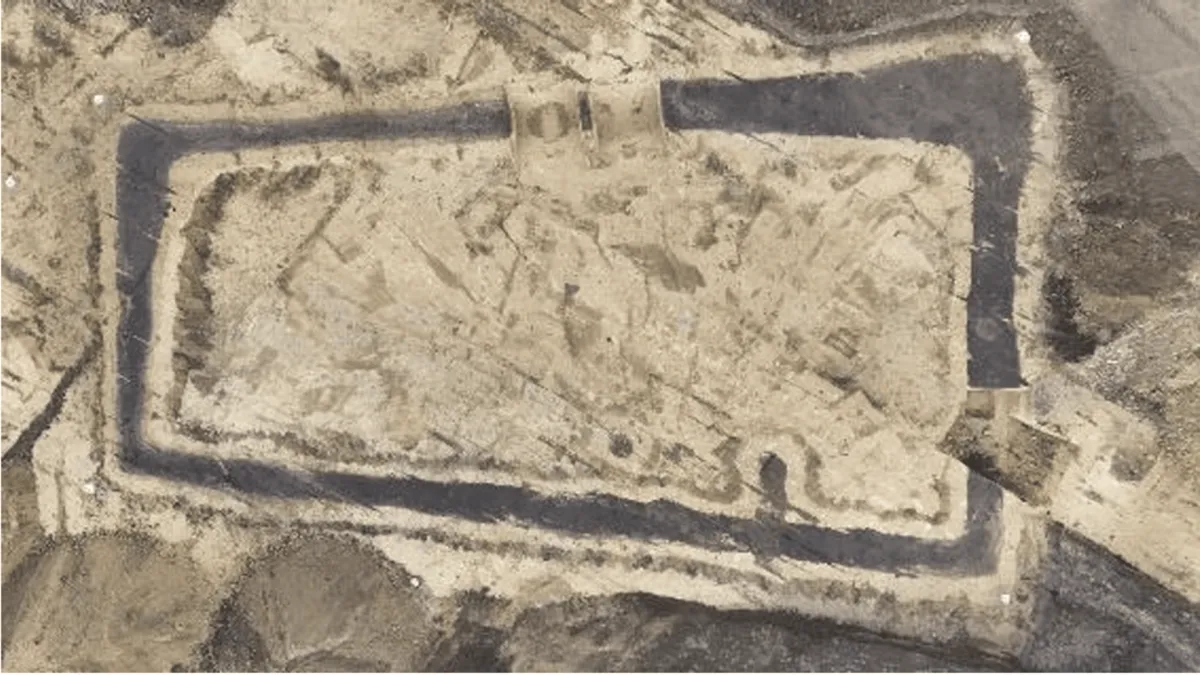
Archaeologists in Saxony-Anhalt have uncovered another erdstall — one of medieval Europe's most persistent mysteries. While excavating near Reinstedt in late 2025 to check for archaeological sites before a wind farm construction, the Landesamt für Denkmalpflege und Archäologie found something unexpected: a 3.28-foot-tall underground passage carved from stone, barely two feet wide, buried beneath a Neolithic ditch that's thousands of years older.
These narrow tunnels are scattered across Central Europe — thousands of them — yet almost no one agrees on why they exist. Medieval people clearly built them with intention: descending carved steps, squeezing through small wall niches, navigating by torchlight. But for what purpose? That remains genuinely puzzling.
What They Found Inside
The Reinstedt tunnel held clues, though fragmented ones. An iron horseshoe. Fox bones. Mammal remains. Evidence of a small fire at the lowest point. Stoneware deliberately stacked at the entrance, suggesting the passage had been intentionally sealed. Radiocarbon dating places the tunnel between the 10th and 13th centuries — medieval through and through.
We're a new kind of news feed.
Regular news is designed to drain you. We're a non-profit built to restore you. Every story we publish is scored for impact, progress, and hope.
Start Your News DetoxWhat makes this discovery particularly strange is its location: deliberately dug beneath a Neolithic site, as if the medieval builders were drawn to something ancient, something they perhaps believed held power or danger.
A Widespread Phenomenon With No Clear Answer
These tunnels — called erdstalls — first appeared in written records in 1449 in Austrian tax documents, but they were likely built centuries earlier. What's remarkable is how uniform they are. Rarely longer than 164 feet. Consistently narrow enough that only small-framed people could move through them, often hunching or turning sideways. Some branch into multiple levels with parallel passages and even narrower "Schlupf" sections requiring crawling.
They cluster in specific places: basement chambers beneath old farmhouses, near churches, cemeteries, hidden in remote forests. The pattern suggests coordination, a shared cultural practice spanning generations and geography. Yet no artifacts mark their function. No inscriptions explain their purpose. They're simply there — empty, deliberate, silent.
Archaeologists have proposed several theories. Protection during conflict or persecution. Ritual spaces for initiation ceremonies or spiritual retreats. Sites where medieval people gathered because they believed ancient ground held sacred or frightening power. Some suggest they were refuges for those engaging in illicit activity, or spaces for cult-like practices. None of these explanations fully accounts for the sheer number of these tunnels or their remarkable consistency.
The Reinstedt erdstall, with its sealed entrance and scattered remains, adds another piece to an unsolved puzzle that spans centuries and a continent. What drove medieval communities to carve these passages, often beneath sites their ancestors had already deemed significant, remains one of archaeology's more haunting open questions.