
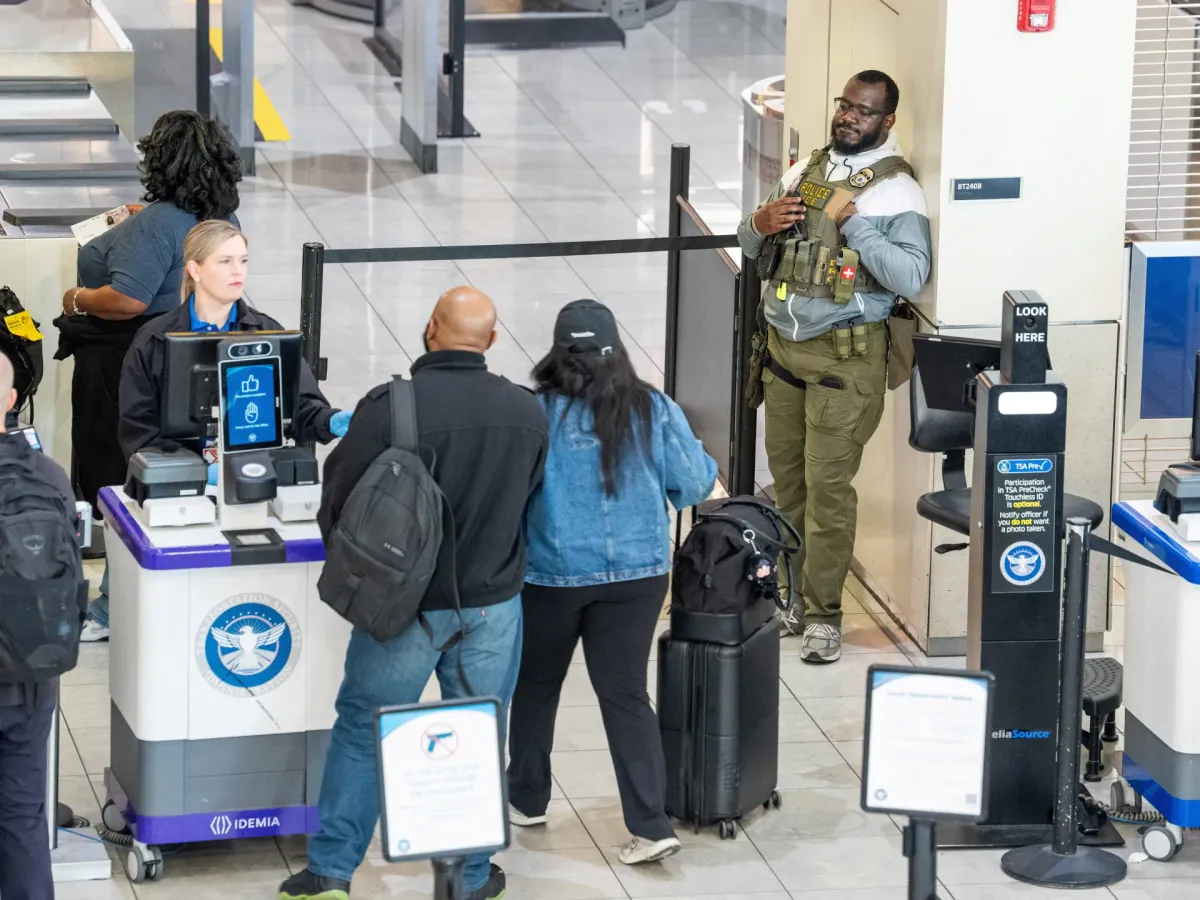
Well, folks, it's official: the U.S. House of Representatives finally passed a bill to restart funding for the Department of Homeland Security (DHS). This means an end to the 11-week partial government shutdown that had everyone from TSA agents to FEMA worrying about their paychecks and operations. The bill is now on President Trump's desk, fresh from its Senate approval.
Here's the kicker: this bill doesn't include funding for Immigration and Customs Enforcement (ICE) or Customs and Border Protection (CBP). Which, if you've been following the news, was the whole point of contention.
The Unpaid Bills and Political Chess
Initially, House Speaker Mike Johnson was not a fan of this particular bill, precisely because it left ICE and CBP out in the cold. But then, President Trump gave it his blessing, and suddenly, it was on the floor for a vote. Turns out, those two agencies had enough funding from earlier legislative maneuvers anyway. Because apparently, that's how we do things now.
We're a new kind of news feed.
Regular news is designed to drain you. We're a non-profit built to restore you. Every story we publish is scored for impact, progress, and hope.
Start Your News DetoxThe shutdown had its expected ripple effects. TSA agents, for instance, were clocking in without pay, leading to airport lines that probably made everyone reconsider their life choices. And then there were the whispers about potential disruptions at FEMA, which, let's be honest, is one agency you really don't want to see sidelined when disaster strikes.
Democratic Congresswoman Zoe Lofgren was, understandably, quite pleased. Funding for TSA and FEMA? Good. She also took the opportunity to call for some long-overdue reforms for ICE and CBP, because why waste a good moment?
The Filibuster, Masks, and Minnesota
The whole kerfuffle started, in part, with an immigration crackdown in Minnesota that, tragically, led to the deaths of two U.S. citizens. This prompted Democratic leaders to demand some "common sense reforms" for ICE. We're talking about banning agents from hiding their identities with masks, putting an end to racial profiling, and stopping immigration raids in places that should probably be off-limits, like schools and churches.
Republicans, naturally, called these demands unreasonable. Despite controlling both the Senate and the House, the Senate's filibuster rule means you need 60 votes to pass major legislation. So, when the DHS shutdown officially kicked off on February 14, it was clear this wasn't going to be a quick fix.
The Senate did pass a DHS funding bill without ICE funding back in March as a compromise, but Speaker Johnson sat on it for over a month. Now, Republican senators are reportedly trying to secure ICE funding through a budget process called reconciliation, which conveniently bypasses the filibuster. President Trump, for his part, has just been urging his party to ditch the filibuster entirely. Because, you know, simpler times.
Congress holds the purse strings, and when they don't agree on where the money goes, things grind to a halt. Services get disrupted, employees go unpaid, and both sides use it as leverage. It's a grand tradition, really. And now, at least for DHS, the show can go on.