Engineers at Argonne National Laboratory are deliberately trying to break next-generation nuclear reactors—not because the designs are flawed, but because finding weaknesses now, while blueprints are still flexible, is far cheaper and safer than discovering them later.
The work focuses on passive safety systems: the cooling mechanisms that work without power or human intervention. Most modern reactors already use them. Advanced designs—especially small modular reactors—rely on them even more heavily. Which means understanding what could go wrong is essential before these reactors are licensed and built.
"We want to know what would cause these systems to not work," says Darius Lisowski, group manager of reactor safety testing at Argonne. "In this project, we're focusing on bad guys who might have authorized access and knowledge of inside workings. What could they do to make things break?"
We're a new kind of news feed.
Regular news is designed to drain you. We're a non-profit built to restore you. Every story we publish is scored for impact, progress, and hope.
Start Your News DetoxRather than treating sabotage as an abstract worry, Argonne researchers are testing real scenarios using large-scale experimental facilities. Over the past two years, teams from Argonne, Sandia, Oak Ridge, and Idaho National Laboratories have systematically identified plausible insider threats—leaving access hatches open, deliberately blocking cooling pathways—and then measured how reactor systems respond under stress.
Finding Vulnerabilities Before They Matter
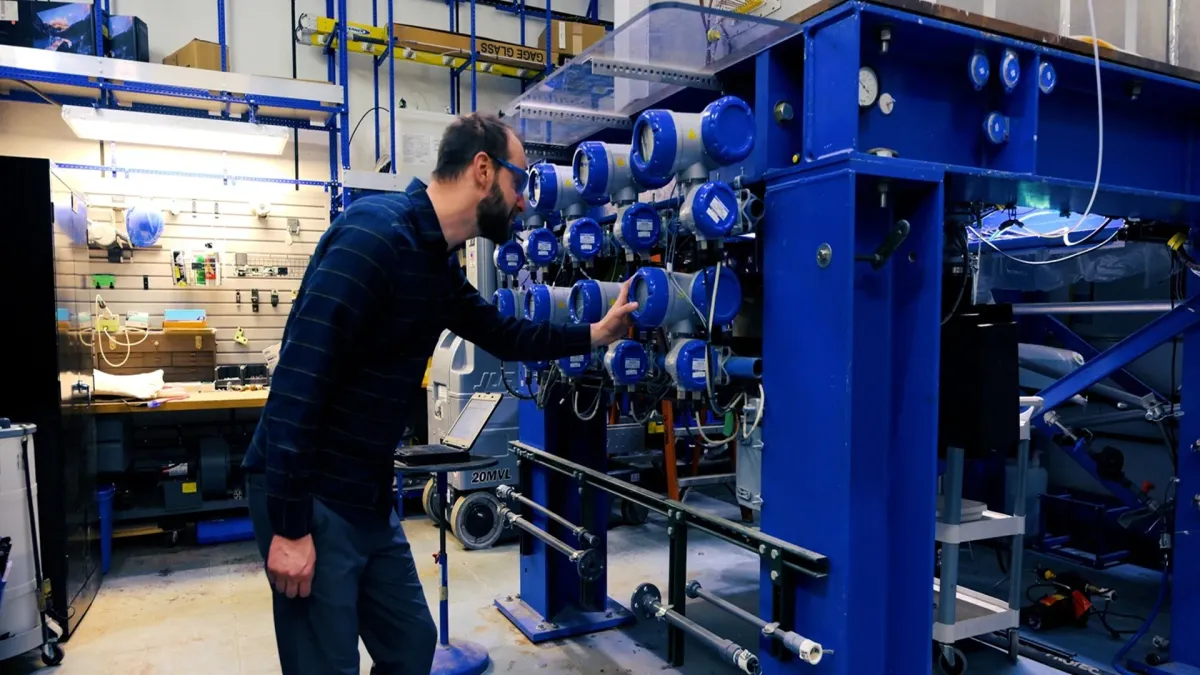
The team used Argonne's Natural Convection Shutdown Heat Removal Test Facility, a massive experimental setup that simulates how heat moves through reactor systems when pumps fail and power is lost. They recreated sabotage scenarios inside the facility, blocking cooling paths and leaving components unsecured, watching how the passive safety systems held up.
The findings, compiled into a report for the International Atomic Energy Agency, confirmed what engineers largely expected: nuclear plants are built with multiple layers of protection. Controlled access, alarms, redundancy, and conservative design make successful sabotage genuinely difficult. But the team also identified some vulnerabilities worth addressing now, while reactor designs are still malleable.
"By using redundancy, focusing on the most severe threats, and meeting strict design tests, we can make sure passive safety features are robust," Lisowski said.
The experiments weren't aimed at any specific reactor company or design. Instead, they focused on common features shared across many advanced reactor concepts. That universality matters: Matthew Bucknor, Argonne's international nuclear security lead, notes that "our research is relevant and applicable to every U.S. nuclear vendor out there."
Design improvements will happen early, before the next generation of reactors goes into operation. As countries increasingly look to nuclear energy to power the rising electricity demand from AI, data centers, and electrification, the researchers argue that safety and security must evolve alongside the technology itself.
The work is funded by the DOE's National Nuclear Security Administration, with support for continued research already secured.