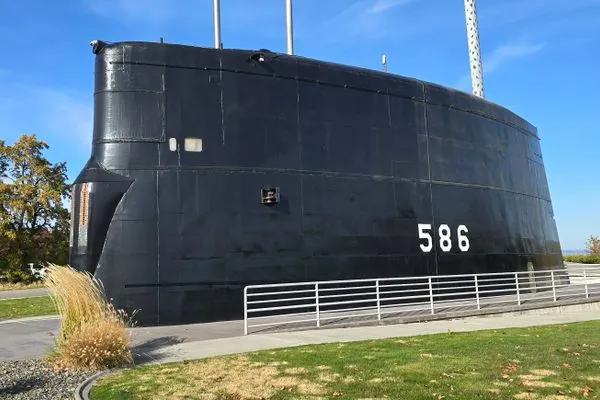
In 1960, the USS Triton did something no submarine had done before: it circled the entire planet while staying underwater. For 84 days, the crew navigated by the same route Ferdinand Magellan had charted four centuries earlier—except Magellan's ships had to surface. The Triton never did.
Operation Sandblast, as it was classified, was a Cold War flex wrapped in scientific achievement. The submarine's commanding officer, Edward L. Beach Jr., later wrote two novels about submarine life (Cold is the Sea and Run Silent, Run Deep), turning the mission's tension into fiction. But the real story was the crew: 176 men, including 8 technical and scientific personnel, who spent nearly three months in a steel tube circumnavigating the world.
Today, the sail of the USS Triton—the tall, fin-like structure that breaks the water's surface—sits in a park in Richland, Washington. It's not just a monument to engineering or Cold War bravado. Engraved on the memorial are the names of all 176 crew members. Walk past it and you're reading the roster of people who trusted their lives to nuclear propulsion, to sealed compartments, to each other, in an era when submarines were still learning what they could do.
We're a new kind of news feed.
Regular news is designed to drain you. We're a non-profit built to restore you. Every story we publish is scored for impact, progress, and hope.
Start Your News DetoxThe Triton's circumnavigation marked a shift in what submarines represented. They were no longer just weapons or reconnaissance vessels—they were proof that humans could master journeys once thought impossible. The sail stands quietly in a Washington park, a piece of steel that traveled the world without ever seeing it.