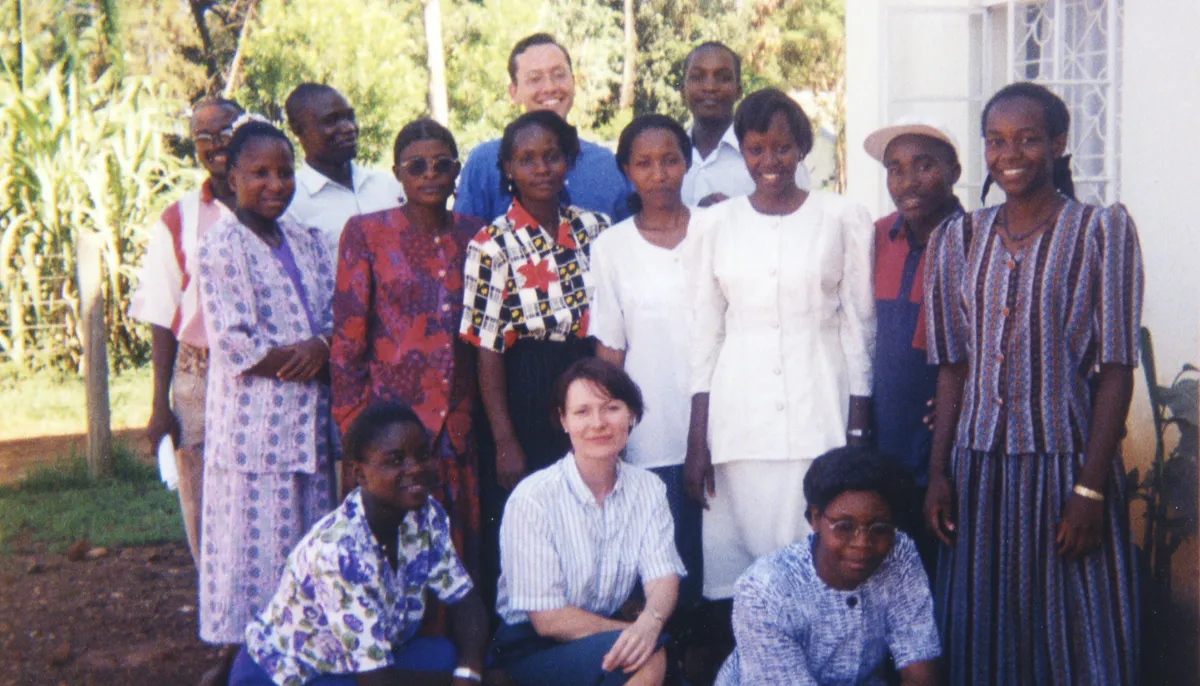
Carol Nekesa probably had parasitic worms as a child. She can't remember being sick from them — they were just part of growing up in rural Kenya in the 1980s, a quiet drain on energy and growth that nobody talked about. Her village lacked clean water and proper sanitation, conditions that made intestinal parasites nearly universal among kids.
What happened next, though, changed the trajectory of her life and her children's lives in ways nobody anticipated.
The Invisible Tax on Childhood

Parasitic worms are deceptively quiet killers of potential. The symptoms — fatigue, diarrhea, weight loss, stunted growth — rarely trigger alarm the way malaria or cholera do. Yet they affected over a billion people globally in the 1990s, mostly children, making them one of the most widespread chronic infections on the planet. In places like Busia County where Nekesa grew up, the worms were so common that parents barely noticed them as a problem.
We're a new kind of news feed.
Regular news is designed to drain you. We're a non-profit built to restore you. Every story we publish is scored for impact, progress, and hope.
Start Your News DetoxIn 1998, economist Ted Miguel and future Nobel laureate Michael Kremer decided to test whether treating these infections actually mattered. They launched the Primary School Deworming Project in Busia, giving some children medication and leaving others untreated, then tracking what happened.

Nearly 30 years later, the data tells a striking story. Children who received deworming treatment as kids are now earning significantly more as adults. Their children are healthier. Their families are more stable. The treatment didn't just fix an immediate health problem — it created a ripple effect that moved through decades.
What makes this remarkable is the scale of the impact. A simple, cheap intervention — deworming medication costs just a few dollars — ended up reshaping entire life trajectories. The children who were treated went to school more often (because they weren't sick), learned more effectively (because their bodies weren't fighting infection), and carried those educational gains into adulthood earnings. They built more stable households. They had healthier children themselves.
This isn't just a health story. It's an economics story, an education story, and a generational story all at once. The worms had been creating a hidden tax on childhood potential — stealing focus, energy, and school days from millions of kids who had no idea what they were missing.

Why This Matters Beyond Kenya
The Busia study became the template for something larger. Governments and organizations worldwide started citing it as justification for mass deworming programs. The research showed that you don't need to wait for perfect infrastructure or complete poverty elimination to move the needle on human potential — sometimes the most efficient intervention is the smallest one, delivered at exactly the right moment in a child's life.

Miguel, now a UC Berkeley economics professor, has watched the research transform from academic curiosity into global policy. "It's kind of mind-blowing to be a researcher and know that your research is being cited and used as a justification for these large-scale programs," he said.
The deeper insight here is about compounding effects. A child treated for parasites doesn't just feel better next week — they attend school more consistently, absorb more from lessons, develop stronger cognitive foundations, and carry those advantages into adulthood. Those advantages then flow to their own children, who start life with better nutrition, more stable households, and parents who understand the value of health interventions. One treatment, multiplied across a generation.
Today, deworming programs operate in dozens of countries across Africa, Asia, and Latin America, reaching millions of children annually. The intervention remains one of the most cost-effective health investments available — not because it's glamorous or cutting-edge, but because it removes a specific, treatable barrier to human development at a moment when small changes compound into lifetime differences.