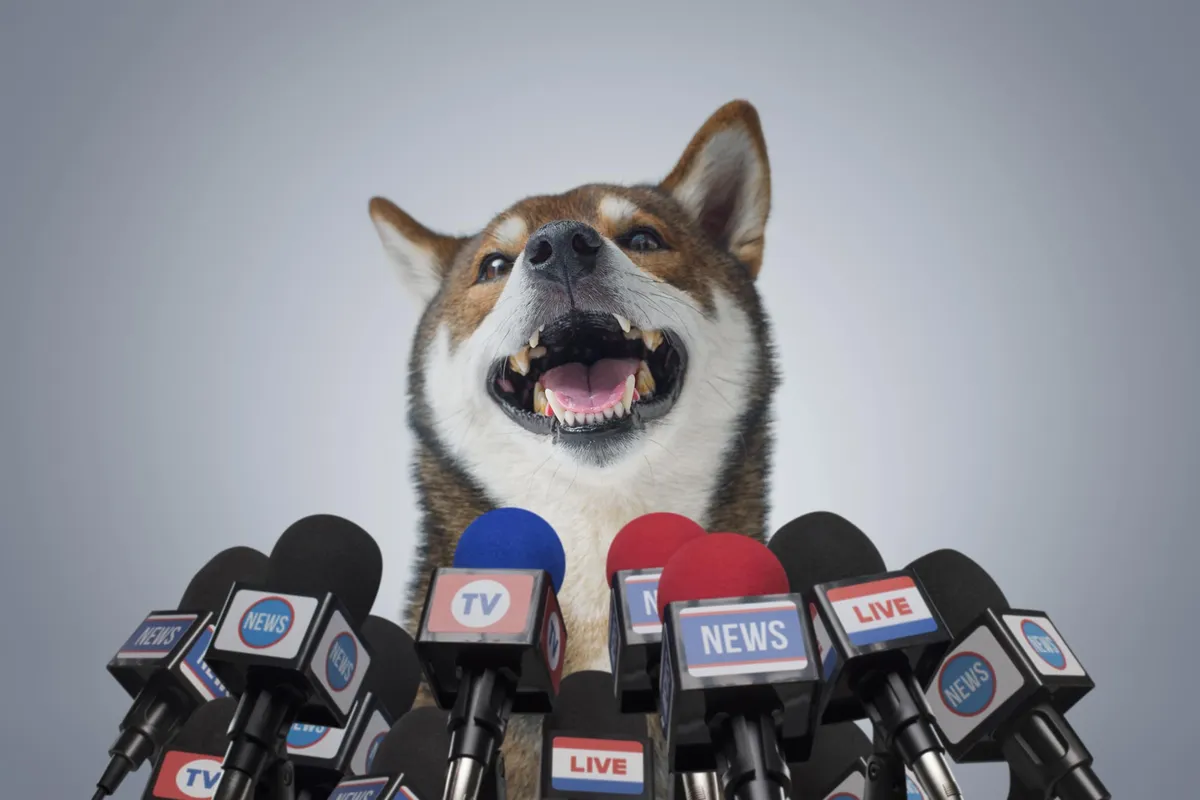
The fantasy is timeless: your dog looks you in the eye and says something back. But a new review from researchers at Eötvös Loránd University in Hungary tackles the question seriously — not to make it happen, but to understand why it probably won't, and what that tells us about language itself.
What would it actually take?
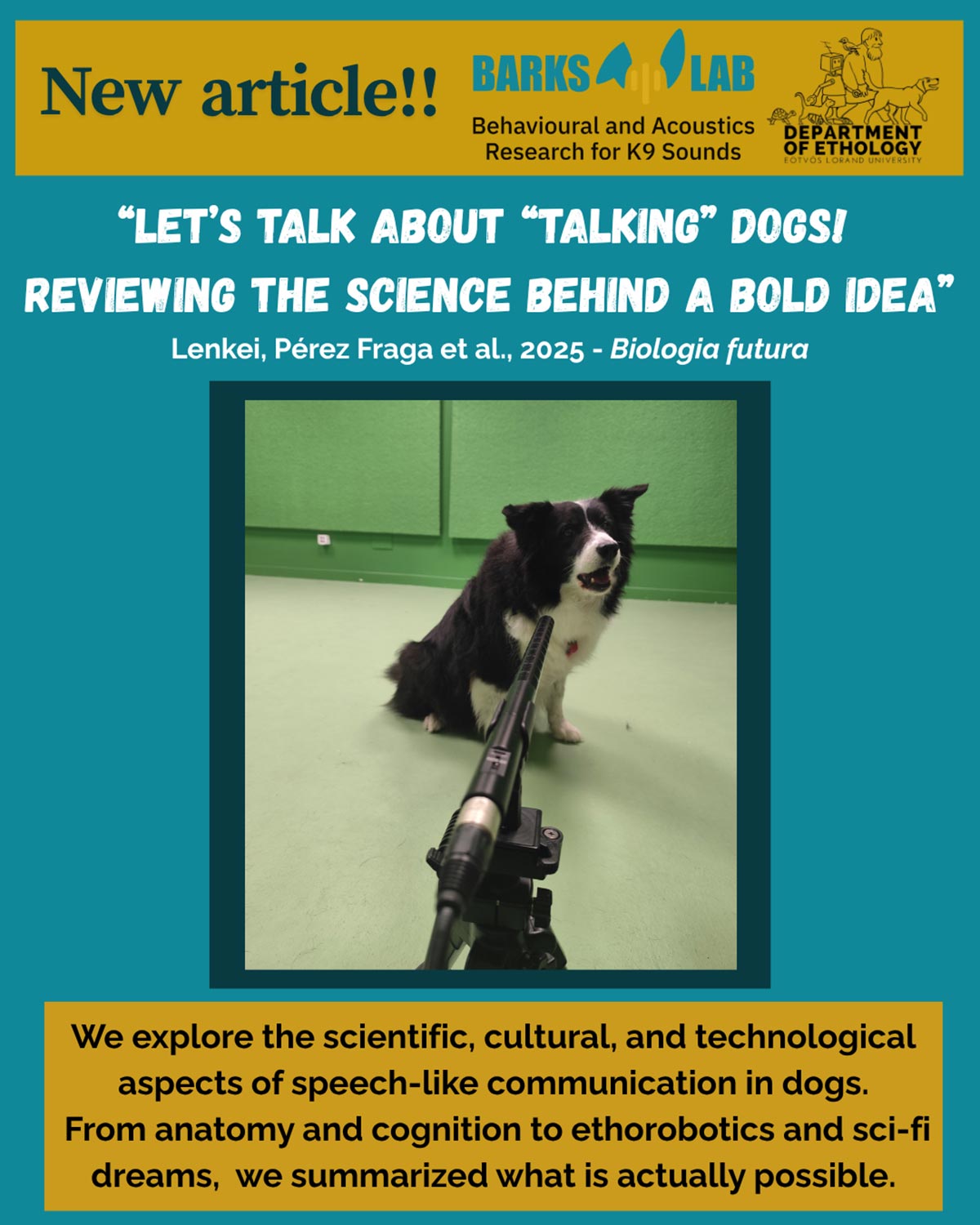
Dr. Rita Lenkei and her team at the BARKS Lab examined the anatomical, cognitive, and evolutionary pieces required for dogs to produce human speech. The question sounds playful, but it's rooted in serious science: which abilities do dogs already have, which are they missing, and which might they develop?
The honest answer: dogs lack several biological requirements. Their vocal anatomy — the shape of their throat, the structure of their larynx — simply isn't built for forming the sounds humans use. Their brains, while remarkably attuned to human behavior and emotion, don't have the neural architecture for the kind of abstract symbol manipulation that language demands. And evolution didn't push them toward it. Dogs were domesticated to work alongside humans, not to negotiate with them.
We're a new kind of news feed.
Regular news is designed to drain you. We're a non-profit built to restore you. Every story we publish is scored for impact, progress, and hope.
Start Your News DetoxBut here's where it gets interesting. The researchers aren't just closing the door on the idea. They're asking a better question: why are we so fixated on dogs talking like us in the first place?
The real communication is already happening
Dr. Paula Pérez Fraga, the other lead author, reframes the entire conversation. "Instead of asking whether dogs could speak," she explains, "we should focus on understanding the unique ways dogs already communicate — both vocally and non-verbally — and what this tells us about language, empathy, and cooperation across species."
Your dog's bark, whine, and body language are sophisticated. They've evolved over thousands of years to be precisely calibrated to human attention. A dog's ability to read your facial expression, to understand dozens of words, to communicate need and emotion without words — that's not a failure to speak. That's a different kind of fluency.
Why this matters beyond dogs
The research has implications that reach far beyond the question of talking dogs. Dr. Tamás Faragó, who leads the research group, points out that studying how domestication shaped dogs' communication could illuminate how human language itself evolved. Since we can't recreate the conditions that gave rise to human speech, studying other species — particularly one that's lived alongside us for millennia — offers crucial clues.
There's also a practical angle: insights into how dogs and humans communicate are now informing a new field called ethorobotics, which sits at the intersection of animal behavior and robotics. Understanding dog-human interaction better could help engineers design robots that interact more naturally with both people and animals.
The researchers also flag an ethical dimension worth considering. Even if we could somehow engineer dogs to speak human language, should we? The question itself suggests we might be chasing the wrong goal.
The conclusion, quietly radical: dogs may not need words to be great communicators. Understanding each other doesn't always require speech. Sometimes it just takes learning to listen in the right way.