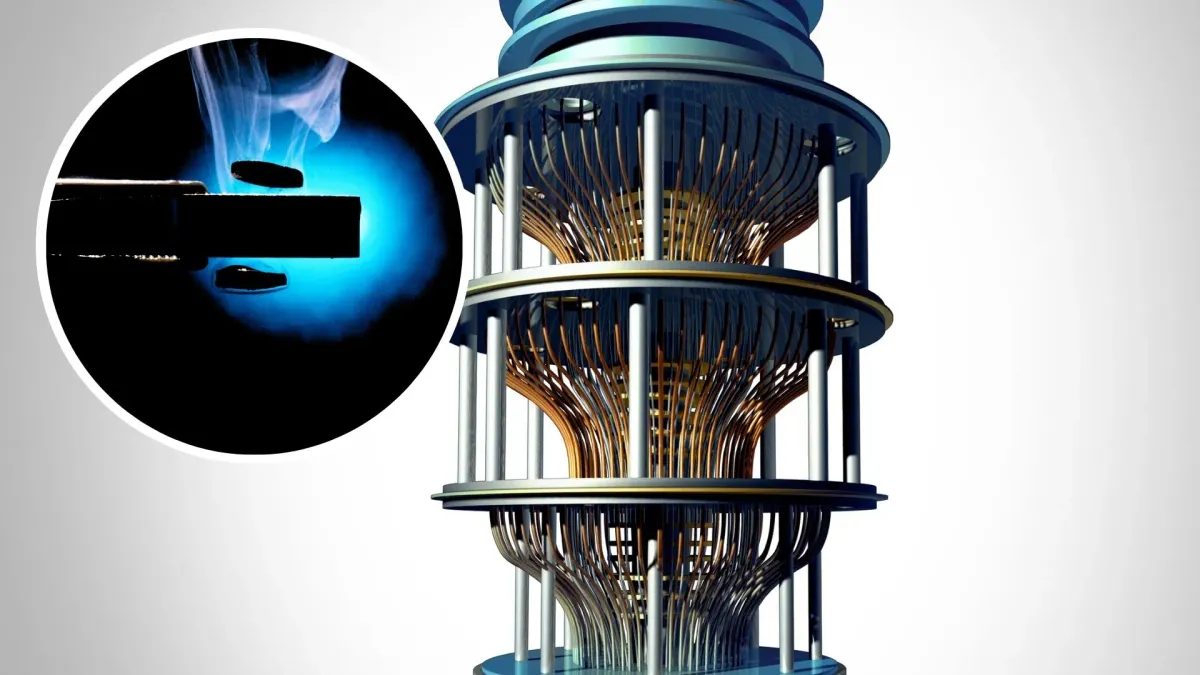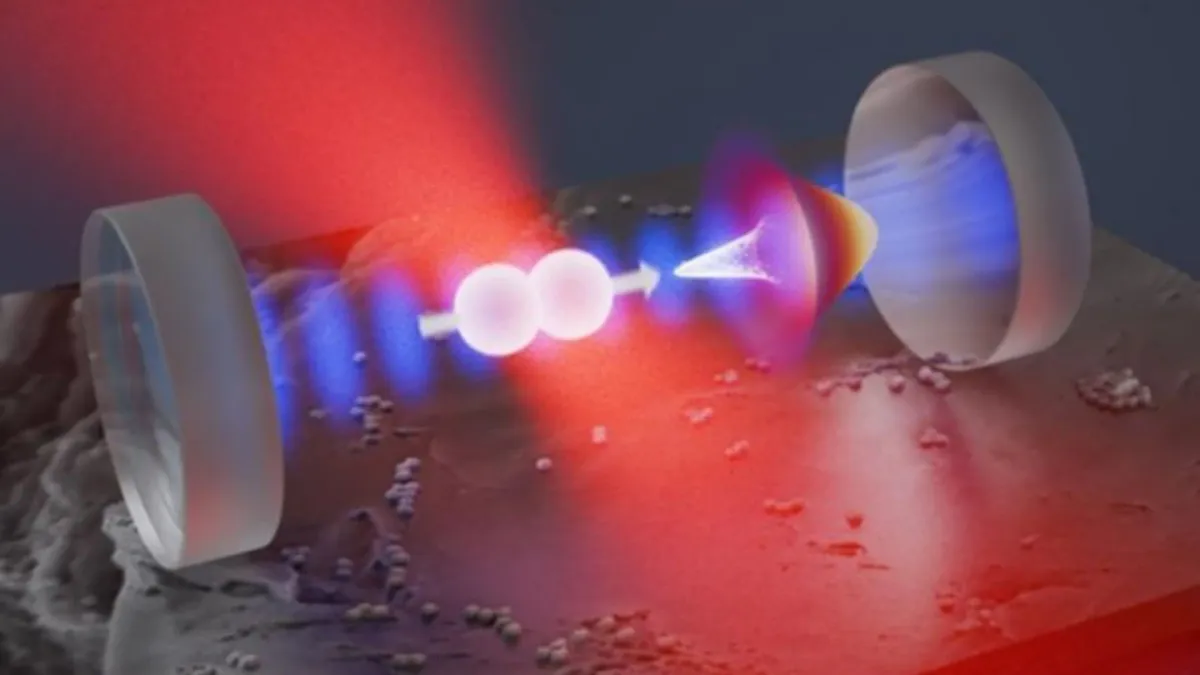
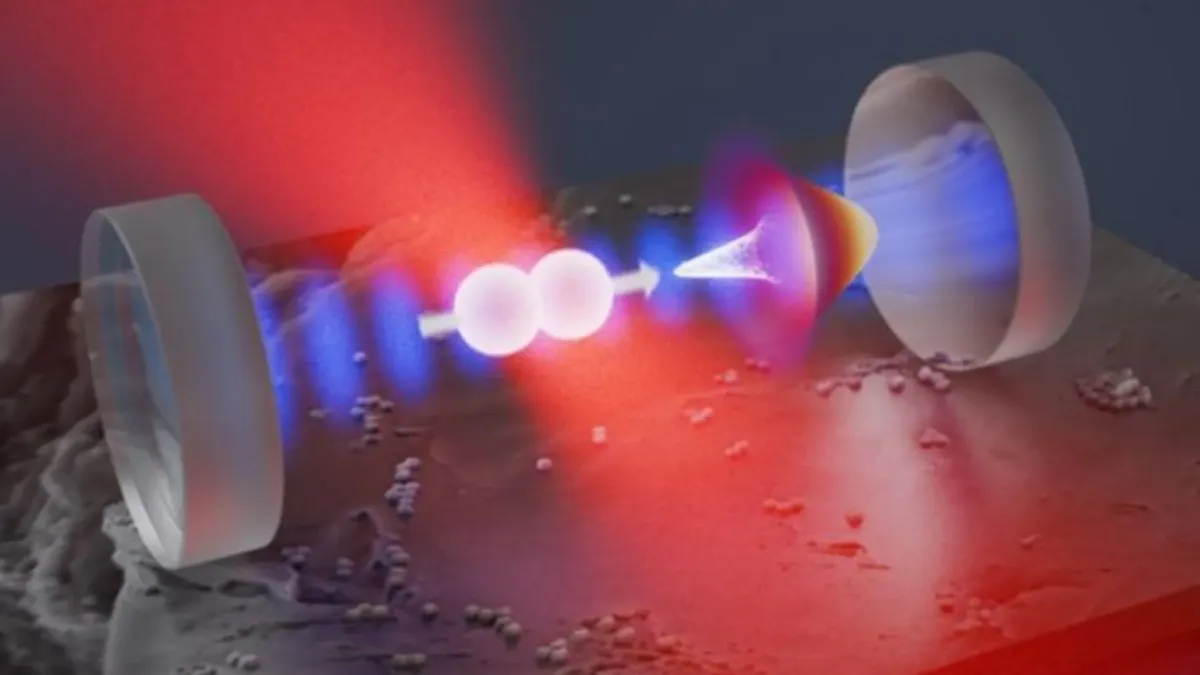
Imagine a spinning top that's been cooled down so much, it's barely moving. Now imagine it's so cold, it's only moving in ways that quantum physics—the truly bizarre rules of the universe—allows. Scientists just did that with a silica nanorotor, a minuscule dumbbell-shaped particle, chilling its rotation to its quantum ground state.
This isn't just about making things really, really cold. It's about trapping a particle's spin with light, limiting its movement to the absolute bare minimum. And it’s a massive leap for future tech that sounds like it’s straight out of a sci-fi novel: things like rotational matter interferometry and quantum torque sensing. Because apparently that’s where we are now.
The Chill Zone: Where Physics Gets Weird
In our everyday world, everything's a bit of a jiggle. Particles are constantly moving and spinning thanks to heat. Cool things down, and they slow. Classical physics, the stuff we can see and touch, says at absolute zero, everything would just… stop. But quantum mechanics, the physics of the very, very small, has a different, much more interesting story.
We're a new kind of news feed.
Regular news is designed to drain you. We're a non-profit built to restore you. Every story we publish is scored for impact, progress, and hope.
Start Your News DetoxQuantum mechanics says even at absolute zero, particles still have some energy. They're never truly still; they just exist in a state of “disorientation” called their quantum ground state. When particles get super cold, their energy doesn't just smoothly decrease; it drops in specific, tiny steps, all linked to this ground state.
Cooling linear motion to this state has been done before. But rotational motion? That's been the real head-scratcher. Previous attempts only managed to cool rotation in one direction. Which, if you think about it, is like stopping a spinning top from wobbling left-to-right, but letting it still spin around its axis like crazy.
Two Directions, One Tiny Spin
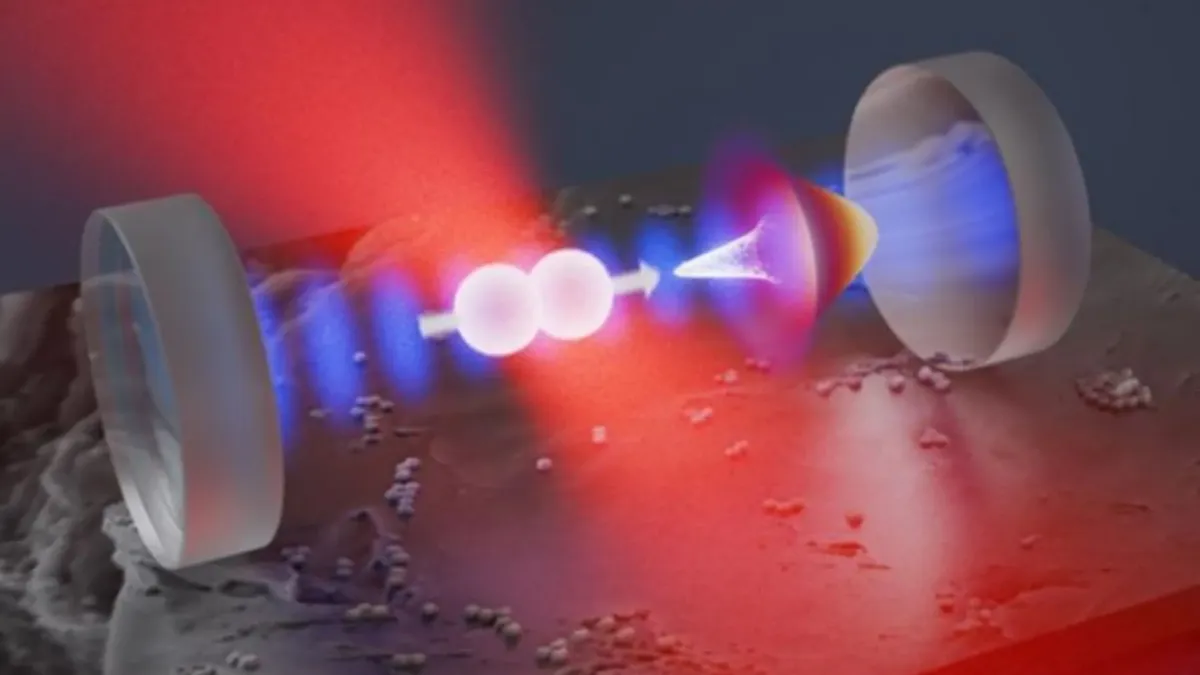
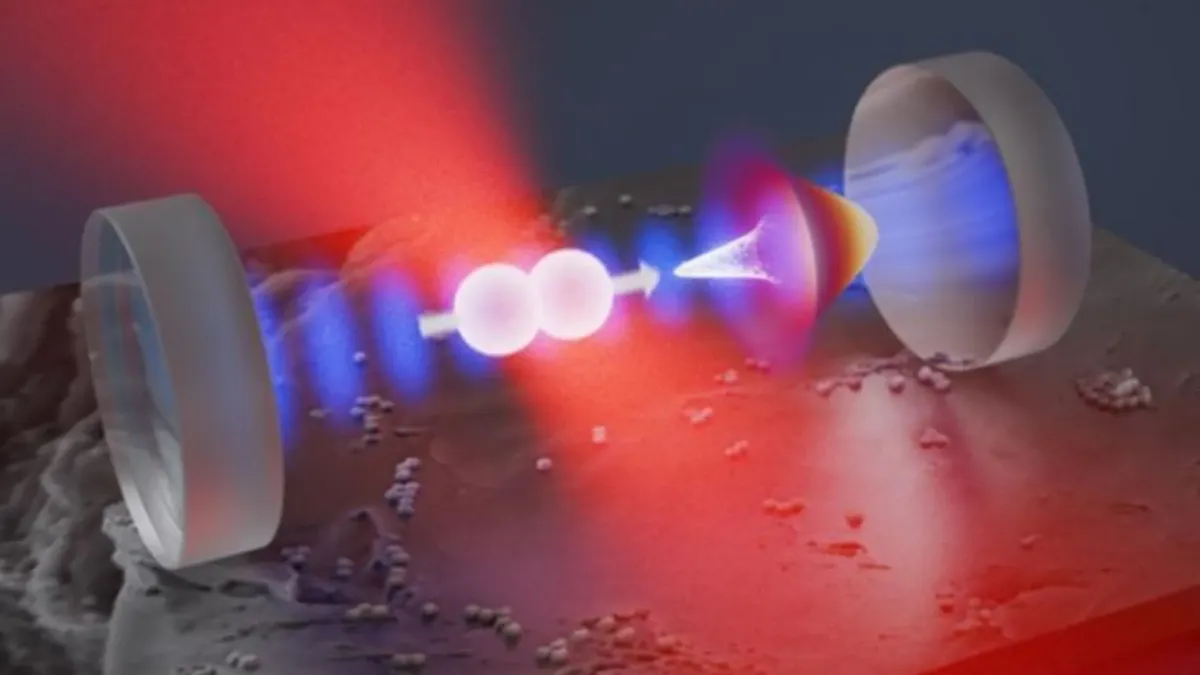
This time, a dream team of researchers from the University of Vienna, TU Wien, and Ulm University went for the full stop. They used a laser's electric field to trap their nano-dumbbell rotor. Initially, it was just wobbling and spinning like any normal, heat-affected particle.
To get it to near absolute zero, they deployed a method called optical cooling. They trapped the nanoparticles in intense light, then scattered that light into an optical resonator. Each time a light photon left, it took a tiny chunk of the particle's rotational energy with it. Like a microscopic, laser-powered energy vampire.
By applying this trick along two axes, they managed to align the rotor's orientation to its quantum limit. Its direction was uncertain by only 20 microradians. To put that in perspective, researcher Stephan Troyer explained, "The tip of the rotor then moves less than one hundredth of the diameter of a single atom." He added, "This is like a compass needle oriented to better than the width of a bacterium." Let that satisfyingly tiny number sink in.
This isn't just a fancy lab trick. It’s a literal doorway to a new generation of quantum technologies. Unlike linear motion, a rotor returns to the same orientation after each turn, and these rotational quantum effects are truly unique.
Imagine a nanorotor that, when the trapping light is switched off, can spin in all directions at once. That’s a quantum superposition of orientations, and it opens up wild possibilities for new experiments and advanced quantum tech. Troyer even noted that their 2D cooling works for different sizes, and surprisingly, it's easier for larger objects. So, the goal now is to apply this to even smaller structures, hoping to observe rotational quantum interference—a place where quantum physics truly bumps up against our everyday world.
Oh, and a super-chilled nanorotor is also incredibly sensitive to tiny twists, making it perfect for quantum torque sensing. Which, if you ask me, sounds like the perfect name for a new Marvel villain. Just saying.