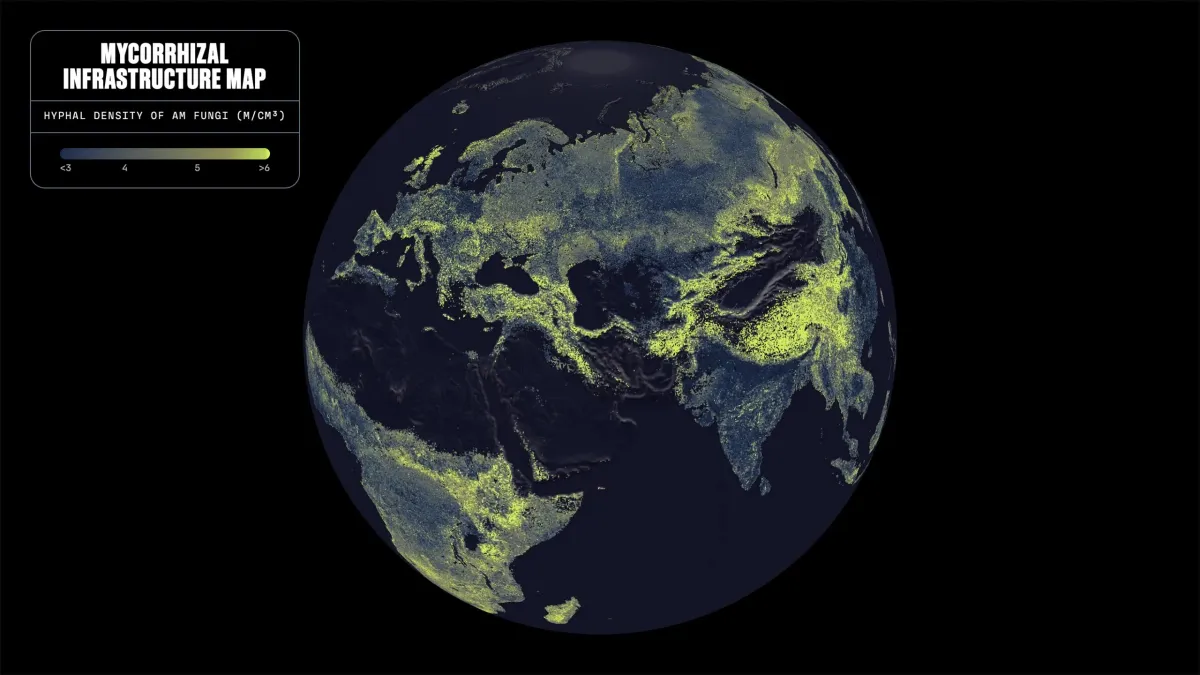
Scientists have created the first global map of Earth's hidden fungal networks. This vast underground system, stretching 68 quadrillion miles, helps plants grow and stores carbon in the soil.
The research, published in Science, focuses on arbuscular mycorrhizal (AM) fungi. An interactive map shows the huge scale of this biological infrastructure. These new maps will help experts find areas where fungal networks are thriving or at risk.
Key Discoveries About the Fungal Network
The study revealed several important facts about these networks:
- Global topsoils contain about 110 quadrillion kilometers of AM fungal networks. These are made of tiny tube-like structures called hyphae. This distance is almost a billion times the distance from Earth to the Sun.
- Grasslands hold an estimated 40% of Earth's AM fungal infrastructure.
- Areas with very dense networks include the flooded grasslands of South Sudan, Florida’s Everglades, and the Tibetan plateau.
- AM fungal networks move about 4 billion tons of CO2 into soils each year. This is equal to 11% of all human-caused carbon dioxide emissions.
- Large croplands are predicted to have network densities about 50% lower on average. More research is needed to understand how farming affects fungal health. Lower network density might reduce a soil's ability to store carbon, recycle nutrients, and handle environmental stress.
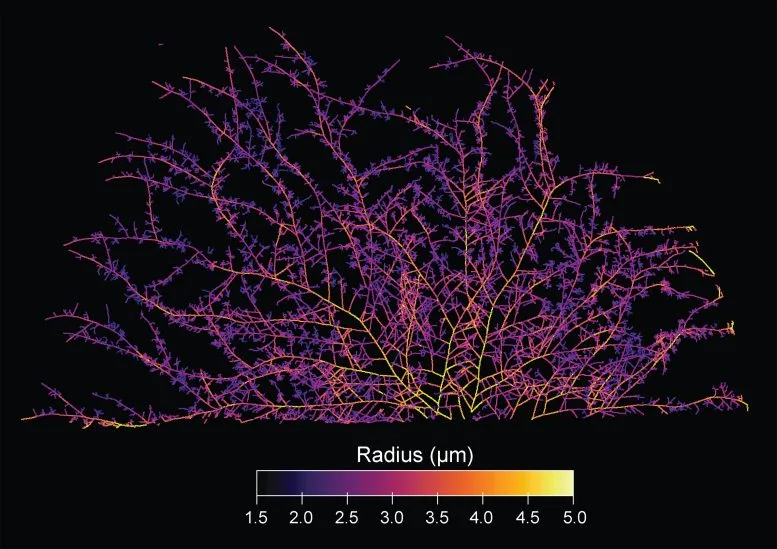
Mapping Earth's Hidden Fungal Infrastructure
AM fungi form helpful partnerships with about 70% of plant species worldwide. Plants give the fungi carbon from photosynthesis, and the fungi provide water and nutrients.
We're a new kind of news feed.
Regular news is designed to drain you. We're a non-profit built to restore you. Every story we publish is scored for impact, progress, and hope.
Start Your News DetoxThese underground networks act as living infrastructure, supporting ecosystems and moving carbon into soils. While researchers had mapped fungal biodiversity before, no one had estimated the physical density and global spread of AM fungal networks themselves.
To create the new maps, scientists gathered data from over 16,000 soil samples from around the world. They then used machine-learning models with environmental data from various ecosystems to estimate network density in areas not directly sampled.
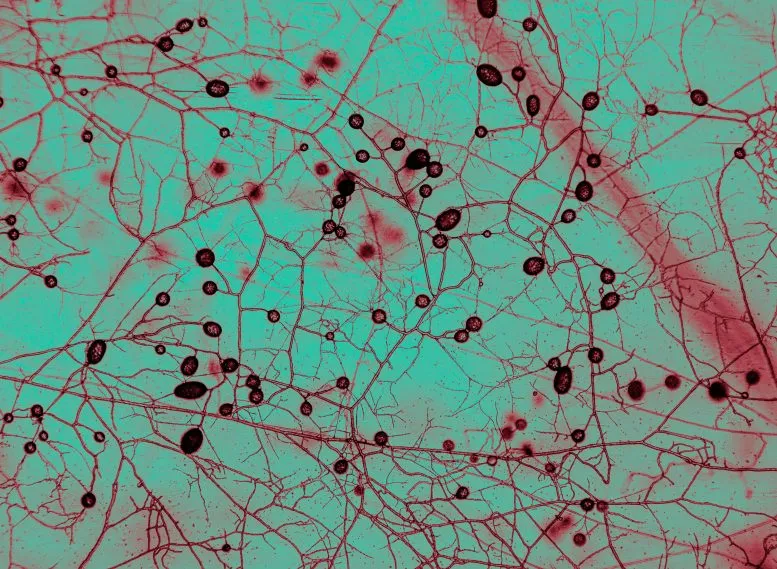
The team also worked with the Physics of Behavior group at AMOLF. They used robotic imaging to analyze over 300,000 living AM fungal hyphae grown in labs to help calibrate their models.
Based on this data, researchers estimate that AM fungal networks span about 110 quadrillion kilometers globally. They contain about 300 megatons of carbon, which is 4 to 6 times the mass of all living humans.
Dr. Justin Stewart, lead author from the Society for the Protection of Underground Networks (SPUN), noted the fungi's importance. He said there could be up to 10 meters (32 feet) of mycorrhizal network in just a teaspoon of soil.
A Hidden System Moving Carbon and Nutrients
Mycorrhizal networks are often compared to a planetary circulatory system. They move carbon, water, and nutrients through underground ecosystems.
In healthy soils, these fungal networks can extend the reach of plant roots by up to 100 times. They can also supply over 80% of a plant's phosphorus needs.
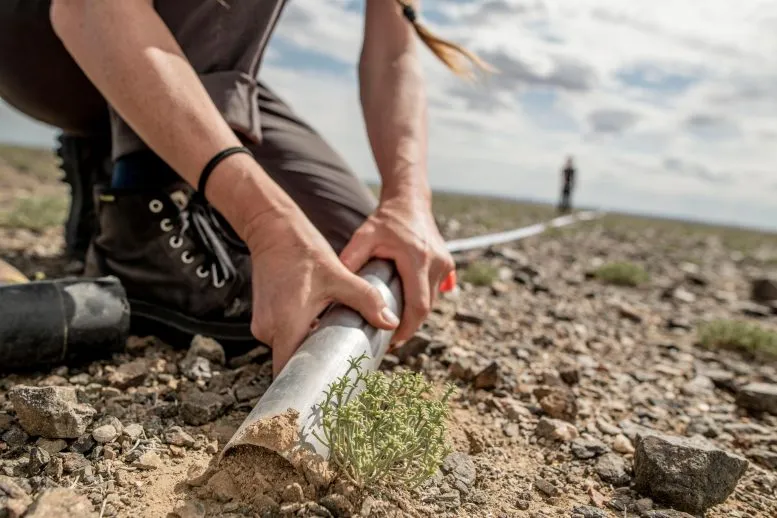
Dr. Corentin Bisot, co-lead author and AMOLF biophysicist, explained that new technologies are revealing this hidden world. He said they are learning how complex fungal networks transport nutrients and help regulate the climate.
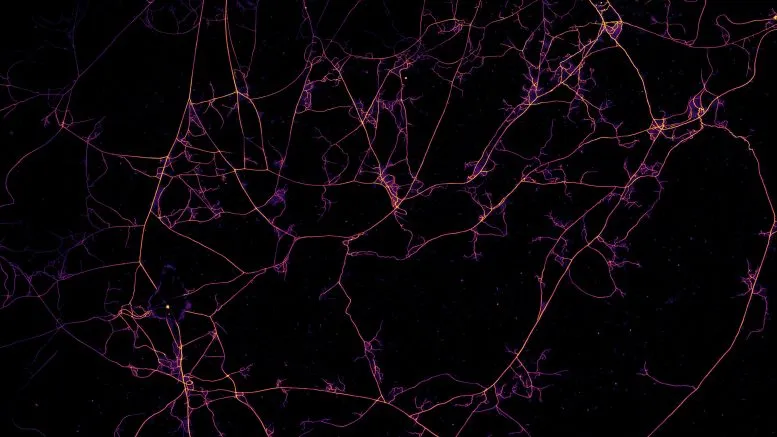
To share their findings, the researchers worked with data visualization designer Moritz Stefaner to create the Mycorrhizal Infrastructure Map. This project offers the most detailed view of Earth’s fungal infrastructure, with estimates for every 1 square kilometer of land where enough data was available. The data is publicly available for governments and decision-makers to monitor these important underground communities.
Some team members previously published research in Nature about how mycorrhizal fungi and plants form efficient trading networks for carbon and nutrients. That work measured carbon moving through fungal systems at speeds up to 120 micrometers per second. This new study expands on that by showing how these carbon and nutrient flows work on a global scale.
Threats to Fungal Networks
The study also highlights potential dangers to these underground systems. Mycorrhizal network densities in croplands are predicted to be about half of those in wild ecosystems. Wild grasslands contain roughly 40% of the world’s AM fungal biomass.
However, grasslands are among the least protected ecosystems. They are being converted to agricultural land four times faster than forests. This supports earlier SPUN research showing that 95% of AM fungi biodiversity hotspots are outside protected areas.
Dr. Toby Kiers, Executive Director of SPUN, believes these findings can improve climate policy. She stated that fungi have been overlooked in climate and conservation for too long, and it's time to change that. Kiers recently received the Tyler Prize, known as the "Nobel Prize for the Environment," for her work on plant-fungal systems.
A Vast Underground World Still Largely Unknown
Despite revealing the huge scale of Earth’s fungal networks, researchers emphasize that much more remains to be discovered.
Dr. Merlin Sheldrake, co-author and biologist, noted that mycorrhizal fungi have shaped life on Earth for millions of years. Yet, we still know too little about how these living transport systems are spread across the planet. He added that this study is an exciting step toward understanding this planetary circulatory system. It also suggests ways to work better with fungi to address challenges like food security and climate change.
The study provides the most complete estimate of AM fungal networks worldwide. It also points out large regions that haven't been sampled, showing how much of this underground world is still unexplored.
Deep Dive & References
Global density and biomass of arbuscular mycorrhizal fungal networks - Science, 2026