A new, ultra-fast method helps scientists track how quickly quantum information vanishes. This breakthrough could solve a major problem in building reliable quantum computers.
The Challenge of Unstable Quantum Data
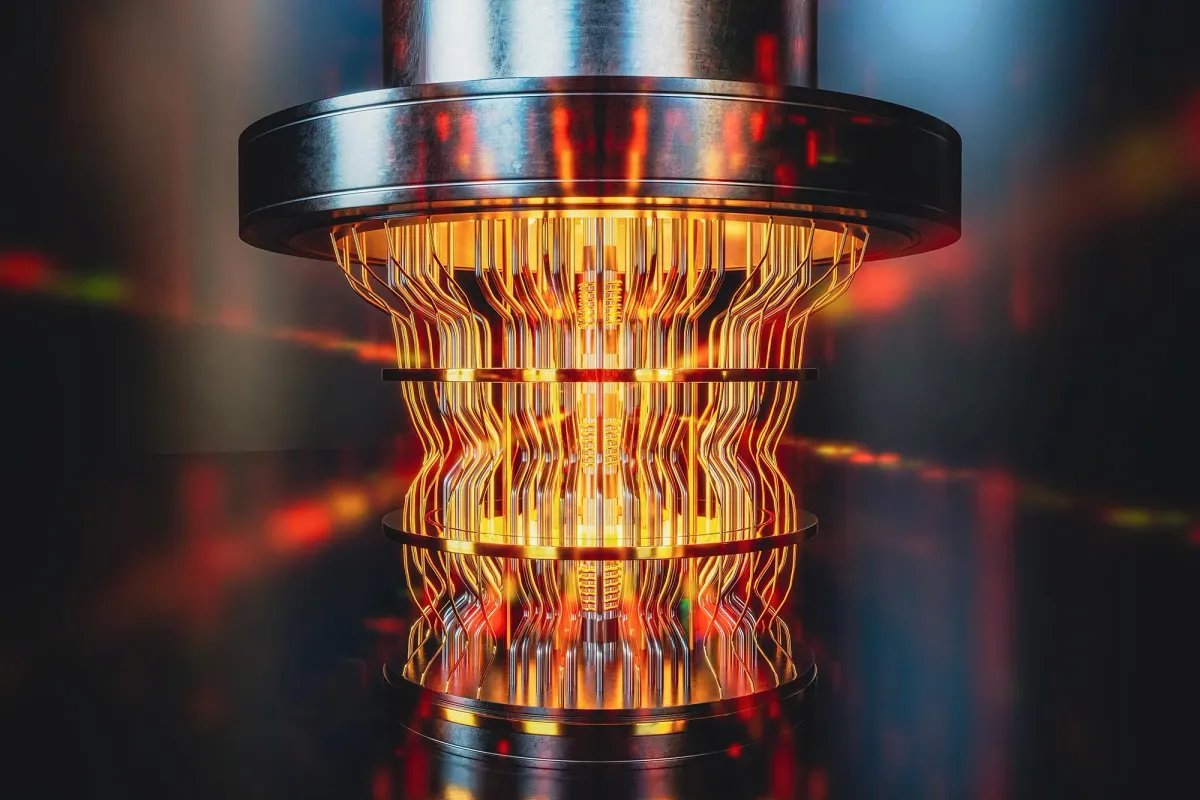
Quantum computers promise incredible power, but they are still unreliable. This is because information inside them can disappear very quickly. This makes it hard to do consistent calculations.
Jeroen Danon, a professor at NTNU, explained that quantum computers use "qubits" to store and send information. But this quantum information can be lost fast.
We're a new kind of news feed.
Regular news is designed to drain you. We're a non-profit built to restore you. Every story we publish is scored for impact, progress, and hope.
Start Your News DetoxIt has been tough to figure out exactly how fast this information disappears. Without a precise way to measure it, improving quantum systems is difficult.
Danon noted that in common superconducting qubits, information loss is usually reasonable. However, it seems to change randomly over time. This unpredictability makes it even harder to track how long qubits hold information.
A 100x Faster Solution
Danon and his team have found a promising solution. They worked with an international team from the Niels Bohr Institute in Copenhagen. Together, they developed a new measurement method.
This new method measures how long it takes to lose information with unmatched speed and accuracy.
Before, measuring how long quantum information lasted took about one second. This is very slow in the quantum world.
Danon said they can now do it in about 10 milliseconds. That's more than 100 times faster, almost in real-time.
This huge speed increase lets researchers watch information loss as it happens. It also shows tiny, quick changes that were impossible to see before. This will make it easier to find out why the information disappears.
Impact on Quantum Computing
This new method could change how scientists test and improve quantum processors. By understanding the tiny processes that limit performance, researchers can work towards more stable quantum systems.
This progress could help make quantum computers reliable for real-world uses.
Deep Dive & References
Real-Time Adaptive Tracking of Fluctuating Relaxation Rates in Superconducting Qubits - Physical Review X, 2026