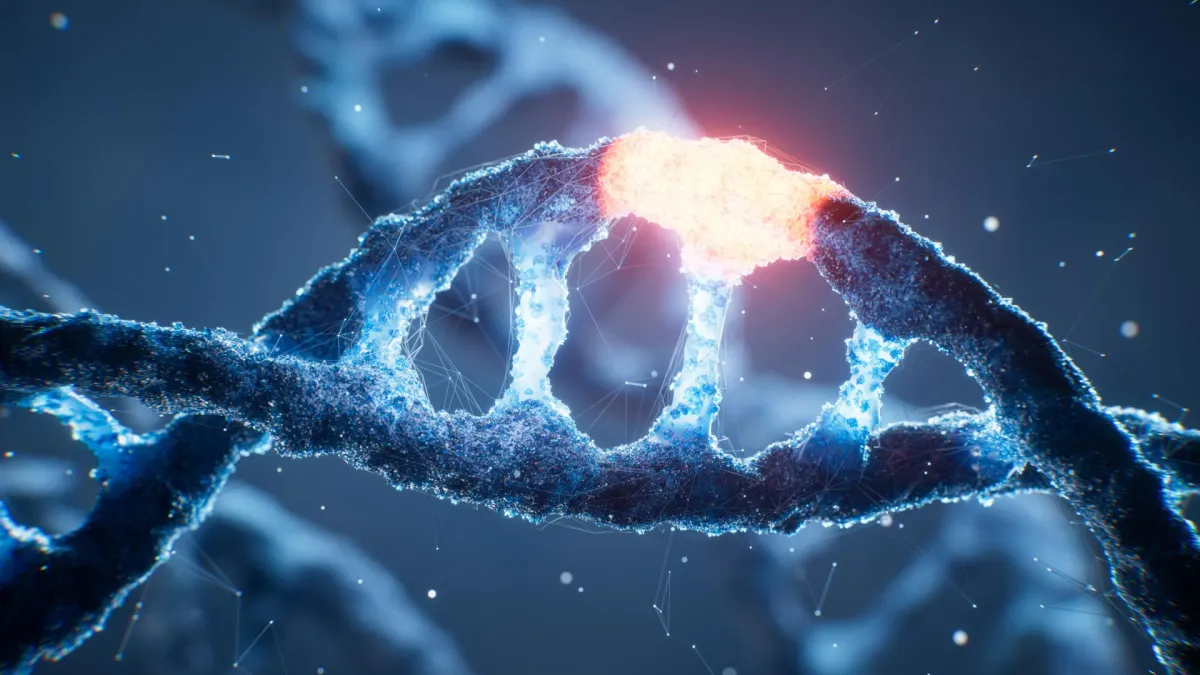
Turns out, you've got a secret 'on switch' in your DNA, and an AI just helped scientists finally decode it. This isn't about turning you on, mind you, but rather giving researchers a much clearer picture of how our genes decide when to get to work.
Think about it: your body needs tens of thousands of genes to fire up at precisely the right moment to build you, maintain you, and keep everything running smoothly. These genes are responsible for churning out everything from enzymes to hormones, and when they misfire, things go sideways. We're talking cancer, among other unpleasantries.
For a while, scientists at the University of California San Diego have been hot on the trail of a specific DNA element called the "initiator." This little guy is basically the starting gun for a gene, telling it, "Alright, time to make some proteins!" Figuring out its exact pattern has been a bit like trying to find a specific grain of sand on a very large beach.
We're a new kind of news feed.
Regular news is designed to drain you. We're a non-profit built to restore you. Every story we publish is scored for impact, progress, and hope.
Start Your News DetoxEnter graduate student Torrey Rhyne-Carrigg and a very patient machine learning system. The team essentially fed this AI about half a million different versions of the initiator, along with data on how active each version was. The AI, being a super-smart pattern recognition machine, crunched all that data and learned the specific DNA sequence that screams, "I'm an initiator!"
Once the AI had its eureka moment, the researchers unleashed it on the human genome. The result? Roughly 60% of human genes contain this newly decoded initiator. Professor James T. Kadonaga, who led the research, noted that these AI models were the first to accurately predict the initiator's presence, finally cracking its DNA sequence pattern. Let that satisfying number sink in: 60%. That's a lot of genes now making more sense.
Predicting the Ripple Effect
So, what's this mean for the rest of us? Well, for starters, this discovery could help predict how tiny mutations in this initiator might throw a wrench into gene activity, potentially leading to all sorts of disorders. It's like finally understanding why a light switch sometimes flickers, rather than just knowing it's broken.
The data and AI models could also help design what are called "synthetic promoters" — essentially custom-made DNA sequences that can turn genes on or off for specific medical or research purposes. Because apparently that's where we are now: designing bespoke DNA switches.
This whole endeavor is a prime example of how good old-fashioned lab work, when paired with the brute-force pattern recognition of AI, can unlock some of the deepest secrets of our own biology. Kadonaga is already planning to expand these AI models, because when you've got a key to 60% of the genetic code, why stop there?