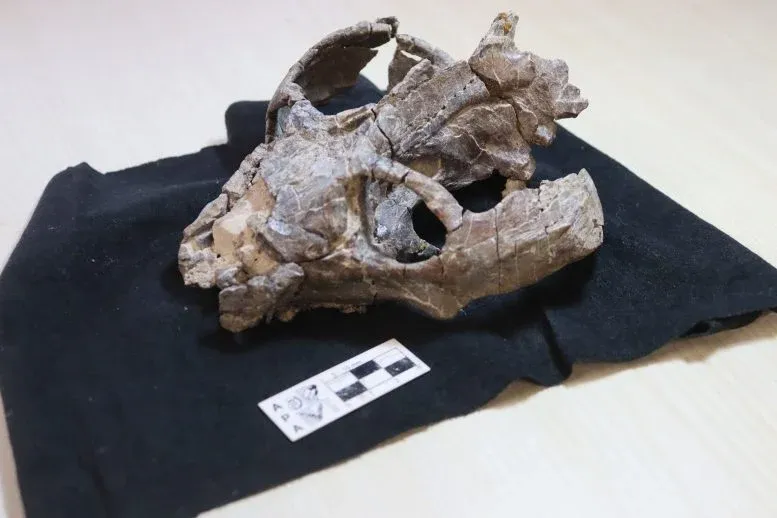
A 236-million-year-old fossil has revealed new insights into how mammal ancestors reproduced. Scientists found evidence that Chiniquodon theotonicus, an ancient cynodont, may have given birth to live young instead of laying eggs. This discovery pushes back the timeline for live birth in the mammalian lineage by 90 to 95 million years.
Dr. Leandro Gaetano, a paleontologist at CONICET in Argentina, led the study. He explained that this is the first strong evidence of live birth in a mammalian ancestor. The findings were published in Frontiers in Mammal Science.
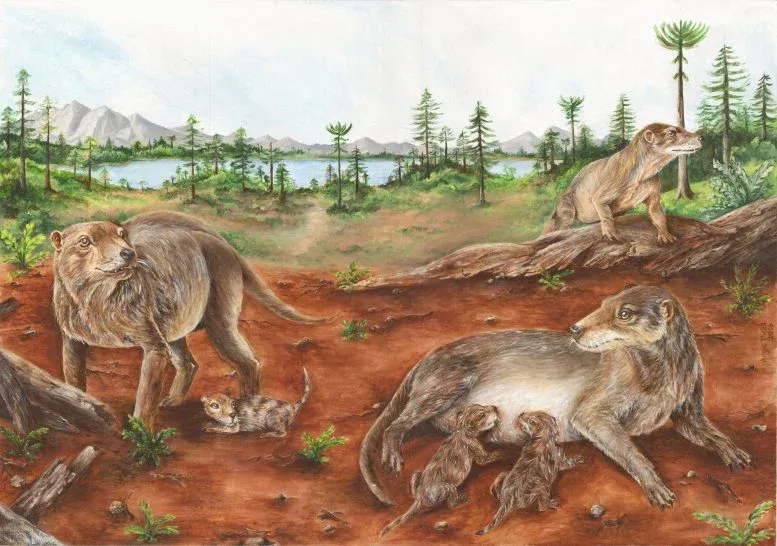
Adriana Mancuso, a senior author and CONICET researcher, noted that cynodonts thrived during the Triassic period. This was a time when ecosystems were recovering after a major mass extinction. Intense competition and harsh, dry conditions meant that live-born young would have been better protected than eggs.
We're a new kind of news feed.
Regular news is designed to drain you. We're a non-profit built to restore you. Every story we publish is scored for impact, progress, and hope.
Start Your News DetoxA Clue in the Bone
The research started when scientists noticed an unusual mark in the bone structure of a C. theotonicus fossil from Argentina. This mark looked like a "neonatal line," a growth ring that forms when an animal's growth speeds up right after birth.
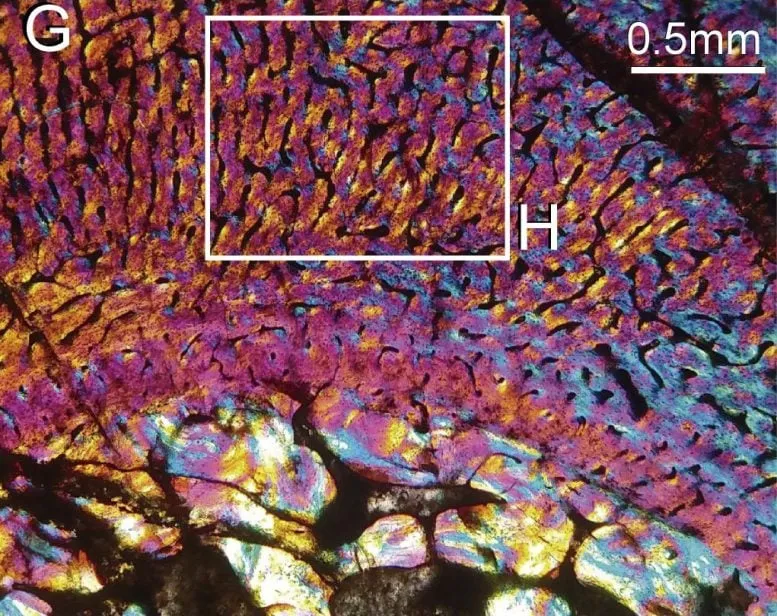
To confirm this, researchers estimated the animal's weight at birth compared to its adult weight. They then compared this ratio to thousands of living mammals, reptiles, and birds. Gaetano called their methods "ingenious" for tackling such a difficult question in the fossil record.
Birth Size Like Modern Mammals
By studying the neonatal line and the bone's surface, the team estimated that C. theotonicus weighed about 1.7 kilograms at birth. It grew to about 12 kilograms as an adult. This means its birth weight was about 14% of its adult weight.
This proportion is very different from many living reptiles. Reptiles like turtles and crocodiles produce hatchlings that are a tiny fraction of their adult size, often less than 1%. Birds have slightly higher ratios, from about 1.3% to 4.5%.
However, living mammals of similar size have much higher ratios, up to 18.77%. For example, a bay duiker antelope's newborn weighs about the same as the estimated newborn C. theotonicus. This comparison focused on placental mammals, excluding egg-laying or pouch-dwelling mammals.
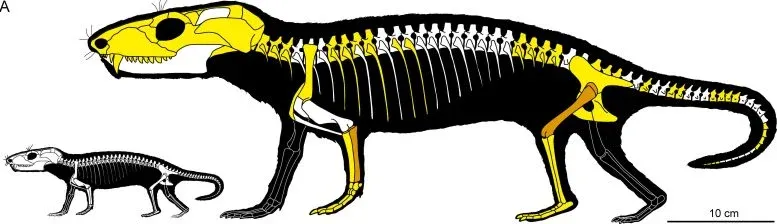
Gaetano was surprised that C. theotonicus grouped with modern placental mammals, not reptiles or birds. Co-author María Miceli Baro added that this trait, usually linked to evolutionary success, was present in these animals long before true mammals appeared.
This discovery suggests that live birth, and possibly other mammal-like traits, evolved much earlier in cynodonts than previously thought. Gaetano believes C. theotonicus might not be the only example of live birth among cynodonts. He thinks it could point to a broader shift from egg-laying to live birth early in the mammalian lineage. More evidence is needed, but it seems some cynodonts were very similar to today's mammals.
Deep Dive & References
Early origin of viviparity in the mammalian lineage - Frontiers in Mammal Science, 2026