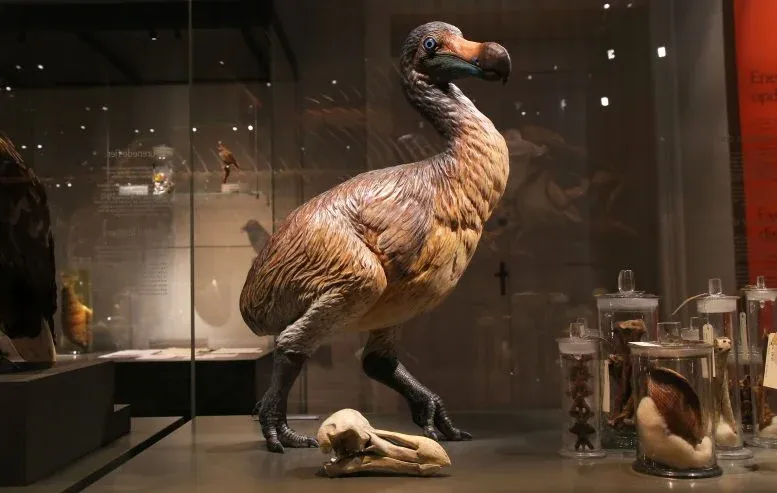
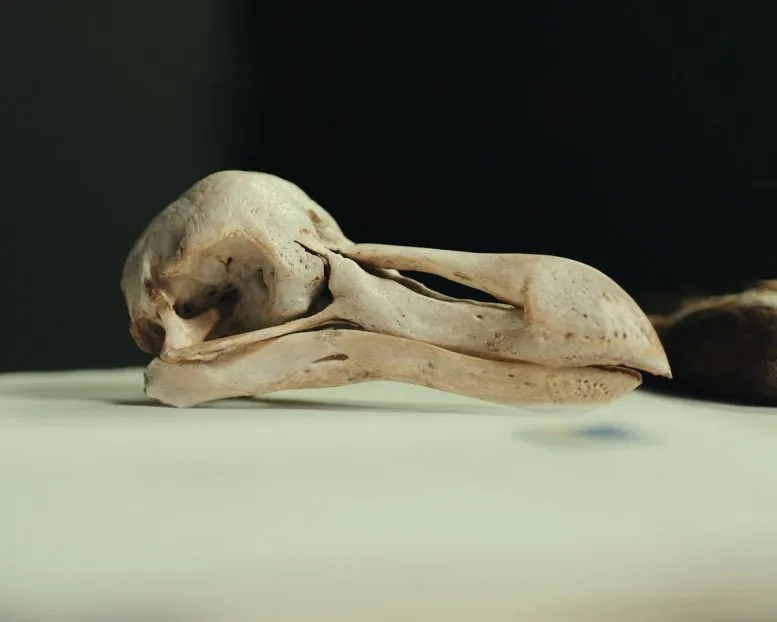
For centuries, one of the world's only two complete dodo skulls has been kept in Copenhagen. Now, this rare skull is helping researchers understand how the dodo sensed its environment. This is a question fossils rarely answer directly.
Scientists from the University of Lethbridge in Canada digitally rebuilt the space where the bird's brain once was. The brain's shape suggests the dodo experienced its world differently from living pigeons and doves. It might have been active during dawn and dusk, relied more on smell, and used its large upper beak to gather touch information.
These clues give a clearer picture of how the bird might have found food and interacted with its home on Mauritius. The dodo became extinct in the late 17th century.
We're a new kind of news feed.
Regular news is designed to drain you. We're a non-profit built to restore you. Every story we publish is scored for impact, progress, and hope.
Start Your News DetoxPeter Andrew Hosner, a professor and curator at the Natural History Museum Denmark, co-authored the study. He noted that the dodo is a well-known extinct animal, but little is known about its life. He added that having access to one of only two complete dodo skulls offered a unique chance to compare it with its closest living relatives. This helped them learn how the dodo interacted with its environment.
CT Scans Reveal Lost Senses
The Copenhagen skull has been on display at the Natural History Museum Denmark for a long time. Preparing for a new museum building, set to open in 2027, gave researchers a chance to examine the skull with high-resolution CT scanning.
The scan created a detailed 3D digital model without harming the rare skull. Researchers could then rebuild its inside, including the brain cavity. As a brain grows, it leaves marks on the bone. This means the shape of the cavity can show evidence about an extinct animal's senses.
Researchers looked at CT data from three dodo skulls. This included the only two complete ones known globally, from the Natural History Museum Denmark and the Oxford University Museum of Natural History. Digital models of both complete skulls allowed direct comparisons. This helped researchers decide which features were typical for the species.
Christy Anna Hipsley, an associate professor at the Natural History Museum Denmark and co-author, explained that studying extinct animals is like detective work. She said that even though the dodo's brain disappeared centuries ago, it left an imprint inside the skull. By digitally rebuilding these spaces and comparing them to living bird brains, they can start to understand how the dodo sensed and behaved.
How the Dodo Sensed Its World
The next step was to compare the rebuilt brain cavity with those of pigeons and doves, the dodo's closest living relatives. Several differences showed a unique mix of sensory abilities.
Its anatomy suggests the dodo might not have only been active during daylight. It could also have been active around dawn and dusk. The bird might have relied more on smell than living pigeons and doves. Its unusually large upper beak seems to have been able to process touch information from its surroundings. These clues cannot say exactly how the dodo behaved, but they help narrow down how it found food and experienced its island home.
Hipsley noted that the dodo's skull is unlike any living bird's, making it both fascinating and hard to understand. By comparing digital reconstructions of the only two complete dodo skulls, they now have a much stronger basis for identifying what features are truly unique to the species and what they reveal about the dodo's life.
Challenging the Myth of the Unintelligent Dodo
Popular stories often show the dodo as a clumsy, unintelligent animal destined for extinction. However, the anatomical evidence does not support the idea that its thinking abilities were less than those of living pigeons and doves. Instead, researchers found signs of a distinct sensory system. This system developed over millions of years of evolution on an isolated island.
There are limits to what skull anatomy can show. Researchers caution that these structures cannot give a final account of the bird's behavior. Still, combining CT scans from several specimens, including both complete skulls, helps scientists separate anatomical evidence from centuries of guesswork.
Hosner said the findings don't answer every question about the dodo. Instead, they provide a stronger way to understand its ecology and behavior. He added that the dodo has become a symbol of extinction, but it remains mysterious in many ways. Every new piece of evidence helps them move past myths and build a more accurate picture of how this amazing bird lived before it vanished.
Deep Dive & References
The sensory world of the Dodo and Solitaire revealed by endocast and skull anatomy - Zoological Journal of the Linnean Society, 2026