Imagine you're free-diving off the coast of Sicily, sonar pinging away, when something odd appears on the seafloor. Giacomo De Mola, a fisherman with a knack for discovery, thought it was just a weird rock. Then he got closer. Turns out, that "rock" was actually a massive, 7-foot-high mound of ancient ceramic jugs, stacked like a forgotten game of Jenga.
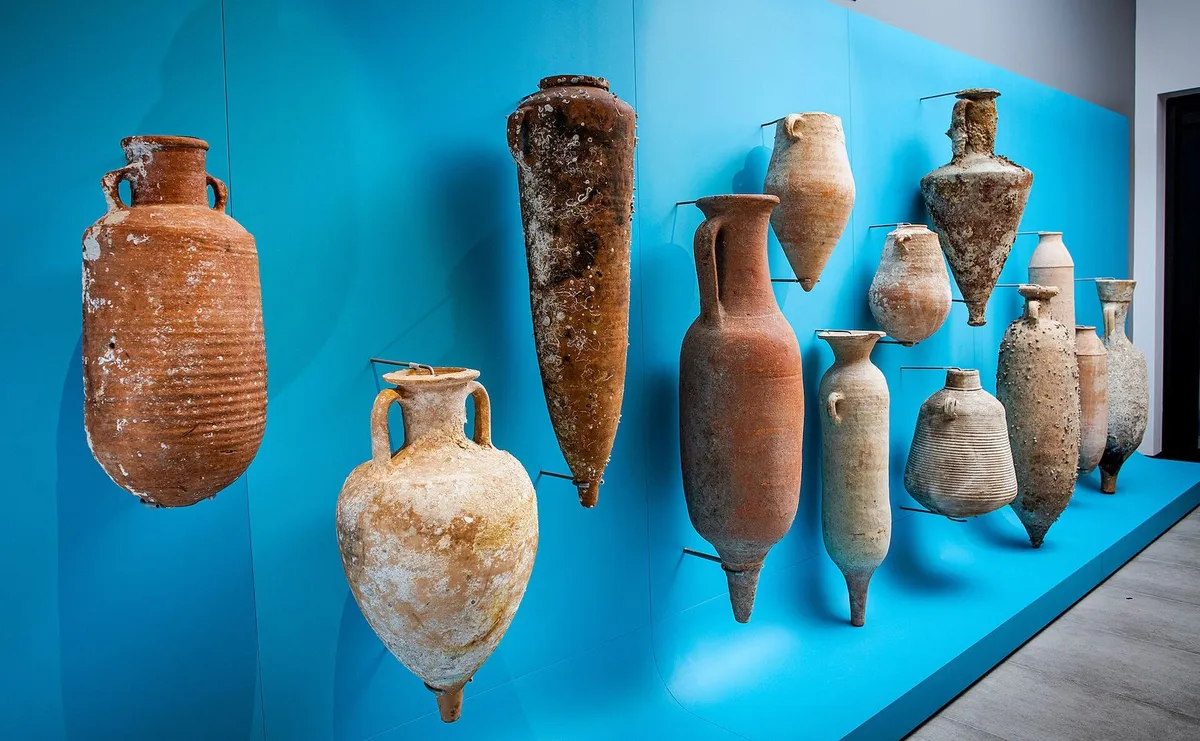
De Mola and his friend Igor Bisulli had just stumbled upon a Roman-era shipwreck, resting 150 feet deep, three miles from Mazara del Vallo. Italian authorities quickly confirmed the find: a vessel from the first or second century B.C.E., packed to the gills with amphorae—those distinctive, pointy-bottomed jars ancient Romans used, mostly, for wine. Because, priorities.
Most of these particular amphorae are Dressel 1A, a popular model in the late Roman period. But there's also a smattering of North African varieties and even some older Neo-Punic jugs, suggesting a rather cosmopolitan cargo. The whole pile stretches about 66 feet long and 20 feet wide. Nearby, divers also spotted two hefty lead anchor stocks and a lead pipe, just in case you needed more proof this wasn't just some Roman's clumsy attempt at pottery storage.
We're a new kind of news feed.
Regular news is designed to drain you. We're a non-profit built to restore you. Every story we publish is scored for impact, progress, and hope.
Start Your News DetoxItaly’s culture minister, Alessandro Giuli, wasn't shy about calling it "one of the most important underwater archaeological discoveries of recent years." Which, if you think about it, is both impressive and slightly terrifying, given how many shipwrecks are out there. This one, however, promises to spill some serious tea (or, well, wine) about ancient Mediterranean trade routes and the folks who sailed them.
For now, the site's exact location is a closely guarded secret, because apparently, even 2,000-year-old wine jugs are prime targets for looters. Experts will return to figure out the ship's origin, its destination, and exactly when it decided to take an unscheduled nap on the seabed. They're not planning to raise the entire wreck, but a few choice artifacts might make their way to the surface for a closer look. After all, someone's got to figure out if that wine was any good.