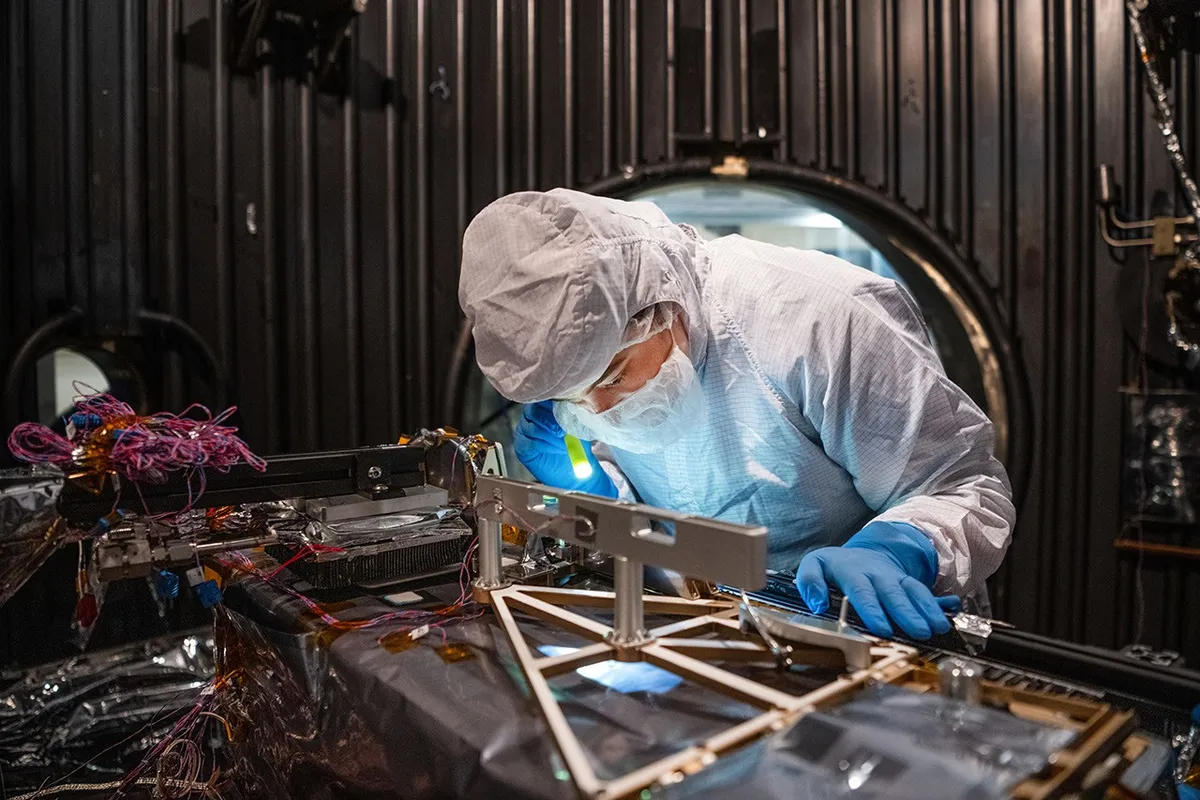
NASA has just finished building its first science instrument designed for Artemis astronauts to set up on the Moon. It’s called the Lunar Environment Monitoring Station (LEMS), and it's basically the Moon’s new ear, ready to catch all the cosmic whispers and rumbles from the lunar South Pole.
Because apparently, the Moon has secrets it’s only willing to share with very sensitive equipment.

Moonquakes and Meteorites, Oh My!
LEMS comes packed with two incredibly sensitive seismometers. Their job? To listen for ground vibrations from moonquakes (yes, those are a thing) and meteorites that decide to make a rather dramatic entrance on the lunar surface. The data they collect will help scientists figure out what the Moon’s made of deep down, and, perhaps more importantly for future residents, what kind of seismic shenanigans astronauts might face while trying to set up camp.
We're a new kind of news feed.
Regular news is designed to drain you. We're a non-profit built to restore you. Every story we publish is scored for impact, progress, and hope.
Start Your News DetoxThis isn't just a one-and-done deal, either. LEMS has a modular design, which means NASA can swap out or add new instruments as their scientific curiosity evolves. It’s built for the long haul, and for whatever new questions pop up once we’re living up there.
Joel Kearns, a NASA official, called LEMS a "major step" for lunar science, which is space-speak for "we’re really excited about this."

The Moon's Long-Running Podcast
If this sounds a bit familiar, that’s because it is. Apollo astronauts were the original lunar seismologists, dropping instruments on the Moon between 1969 and 1972. Those old-school seismometers worked until 1977, recording a cool 13,000 moonquakes. That data has been the bedrock (pun intended) of our understanding of the Moon’s insides for decades.
LEMS is the next generation: smaller, more sensitive, and way more energy-efficient. It’s about the size of a small suitcase and, thanks to the Moon's delightful low gravity, weighs a mere 11 pounds. It’s self-sufficient, too, generating its own power from a flexible solar array and sending data back to Earth monthly. It even manages its own temperature, which is no small feat when lunar nights can plunge to a casual minus 400 degrees Fahrenheit.
Mehdi Benna, the LEMS project lead, described it as a "scientific buoy for the Moon," designed to be easy to build, adaptable, and able to work independently for years. Essentially, it’s the ultimate low-maintenance roommate.
Before it gets to brave the vacuum of space, LEMS had to endure a gauntlet of tests, proving it could handle the violent shaking of a rocket launch and the brutal lunar environment. And, crucially, that it’s safe for astronauts to handle. Because nobody wants a space-science booby trap.
This new instrument is designed to operate through the two-week-long lunar night without needing extra power or heat, a significant upgrade from older instruments that relied on radioisotope heaters. Instead, LEMS uses advanced insulation and smart thermal regulation to keep things humming. This makes it lighter, more efficient, and paves the way for a continuous scientific presence at future Artemis landing sites and, eventually, that NASA-led Moon Base.
So, while we’re all down here, LEMS will be up there, listening. Just another day in the wonderfully weird world of space exploration, where our cosmic neighbors are finally getting a microphone.