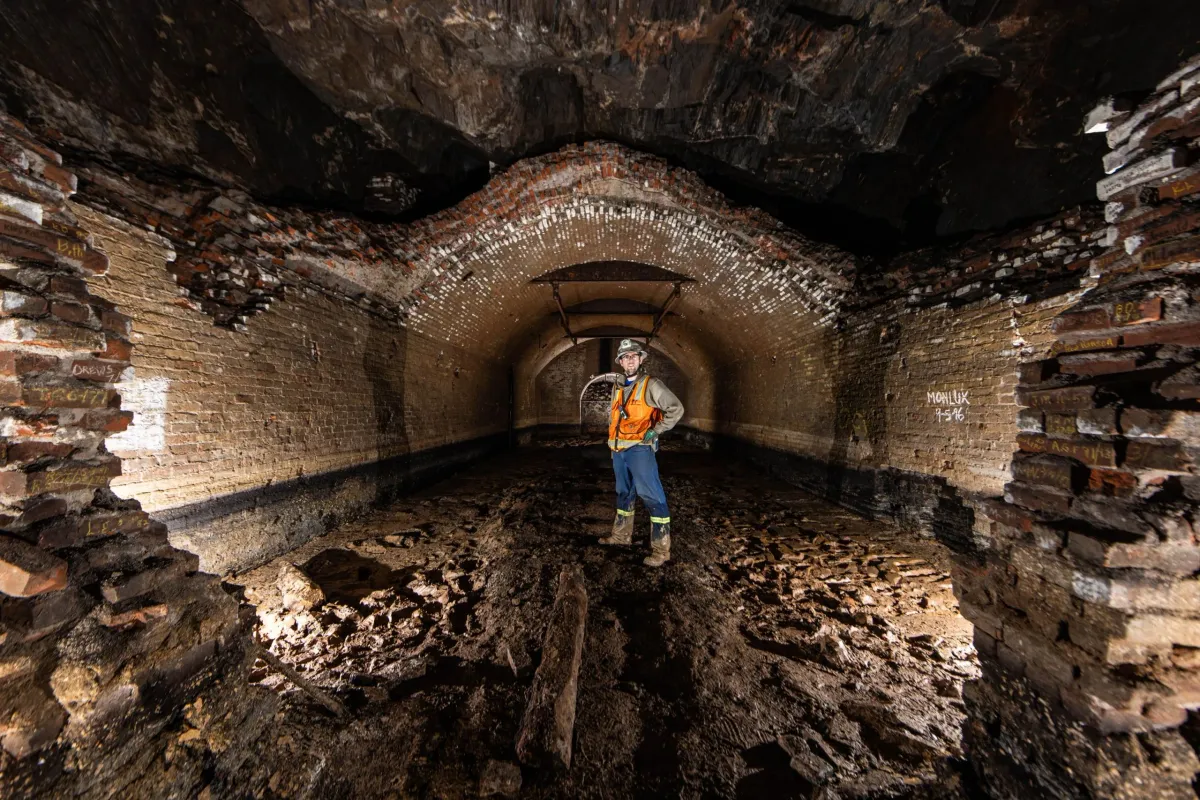
Deep beneath the Black Hills of South Dakota, at the Sanford Underground Research Facility (SURF), engineers were stumped. Their ventilation fans, crucial for keeping air fresh in a sprawling underground complex, kept acting up during heavy rain. Sometimes, air even reversed direction. Apparently, when it rains, it pours… and pushes.
Running any underground facility is a delicate dance between managing air and water. Fresh air keeps the humans alive; groundwater, often from rain, has to be constantly pumped out. SURF, home to some seriously mind-bending physics experiments, has teams working overtime to keep both systems humming. But rainstorms threw a wrench in the works.
The Case of the Backwards Breeze
Jason Connot, a mining engineer at SURF, was the one who first noticed the anomaly. During big storms, the ventilation fan at their 5 Shaft—normally an exhaust fan, pushing stale air out—would go haywire. Airflow would drop, or even flip, pulling air in instead. The same 5 Shaft, incidentally, is also where they divert excess rainwater into a deep underground pool to prevent flooding. Coincidence? Maybe not.
We're a new kind of news feed.
Regular news is designed to drain you. We're a non-profit built to restore you. Every story we publish is scored for impact, progress, and hope.
Start Your News DetoxConnot and his team were baffled. The changing airflow was too dramatic to be random. They needed more data, so they installed new, precise airflow sensors.
An earlier clue had come from an unlikely source: high school science teacher Steve Gabriel and his students. They had set up monitors that caught an odd event during a test of the shaft's deluge system. Connot later said that test, which simulated heavy water flow, was the lightbulb moment. Gabriel eventually joined SURF full-time, presumably because he just couldn't quit the underground drama.
When Water Becomes a Giant Syringe
The team’s suspicion solidified: when heavy rain overwhelmed the pumping system, the sheer volume of water rushing down the 5 Shaft was acting like a colossal, subterranean syringe. It was literally pushing air through the entire ventilation network.
Connot dug into scientific literature and found reports of the exact same phenomenon in — get this — large city sewer systems. Because apparently, the physics of giant, rushing water columns are universal, whether you're dealing with a research facility or, well, sewage. These studies even had equations.
Working with colleagues from South Dakota Mines, Connot’s team adapted the equations to SURF's specific layout. The calculations perfectly matched the bizarre airflow changes they’d observed. Turns out, the humble weight of water droplets can move a surprising amount of air.
This isn't just a quirky scientific footnote. The discovery has huge implications for safety, not just at SURF, but for underground facilities worldwide. If there's a fire, for instance, mining engineers might intentionally dump water down a shaft. Knowing that move could drastically alter — or even reverse — airflow is absolutely vital information for everyone involved.
SURF, as a research facility, had the luxury of time to unravel this mystery. An active mine might not. As Bryce Pietzyk, SURF’s director of underground operations, put it, no one had bothered to understand this issue before. Now, thanks to Connot's detailed investigation (published in Mining, Metallurgy & Exploration, no less), they can predict airflow problems and set ventilation controls correctly. Because sometimes, the biggest underground mysteries are solved by simply watching the weather.