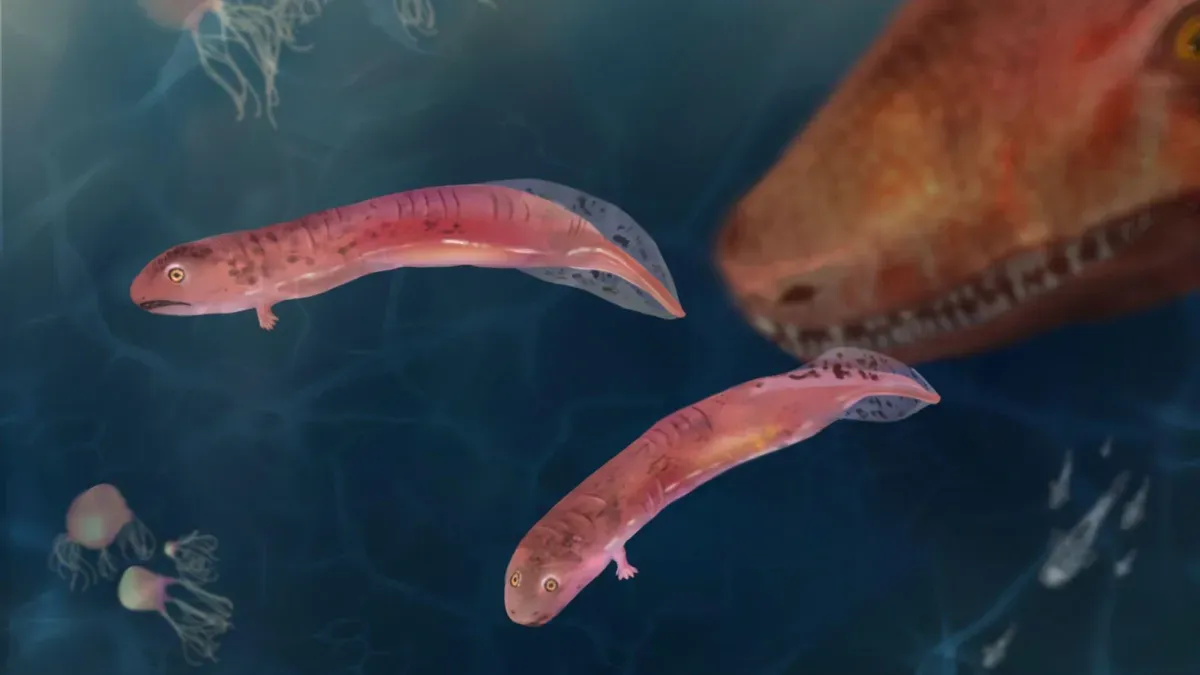
For decades, the standard textbook explanation for how life crawled out of the water went something like this: fish evolved into amphibians, then reptiles, then us. Simple, elegant, and apparently, a bit too tidy.
Turns out, the whole "first land animals were basically giant tadpoles" theory might be, as one scientist put it, "dust in the wind." Because a couple of baby fossils, resembling tiny crocodiles, just showed up to rewrite that entire chapter.
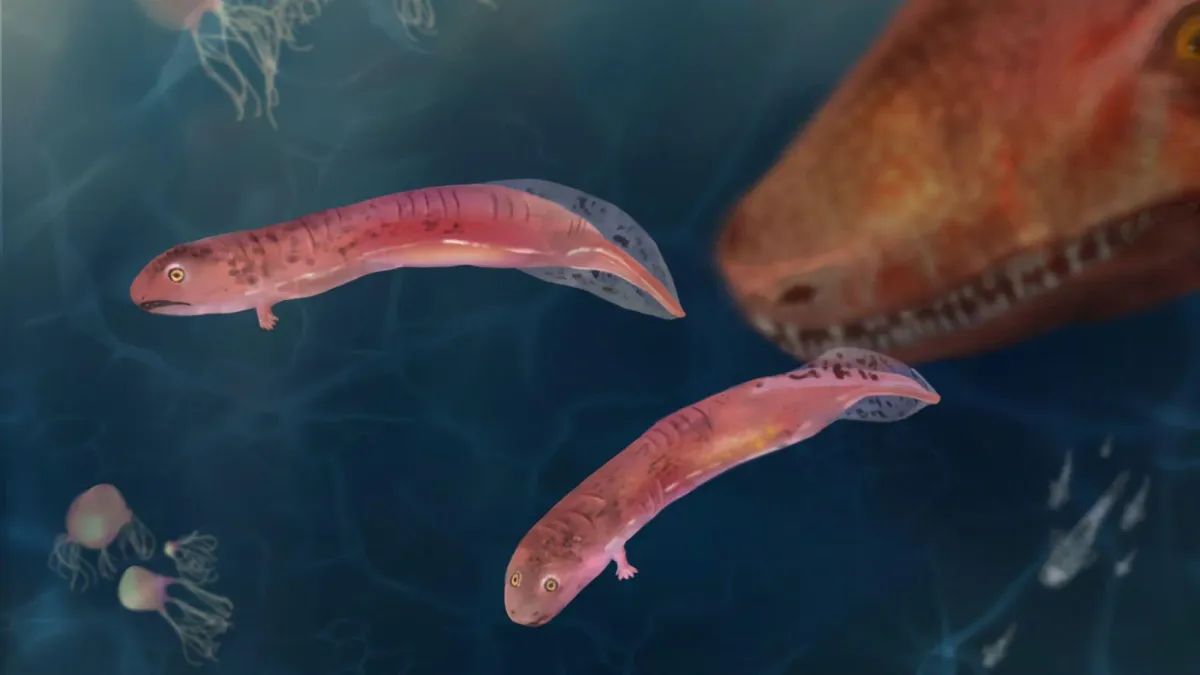
Jason Pardo, a research associate at the Field Museum, summed it up perfectly: the idea that our four-legged ancestors grew up like frogs? Incorrect. Which, if you think about it, is both impressive and slightly terrifying for anyone who just aced a biology exam.
We're a new kind of news feed.
Regular news is designed to drain you. We're a non-profit built to restore you. Every story we publish is scored for impact, progress, and hope.
Start Your News DetoxThe Tiny Crocs That Broke the Mold
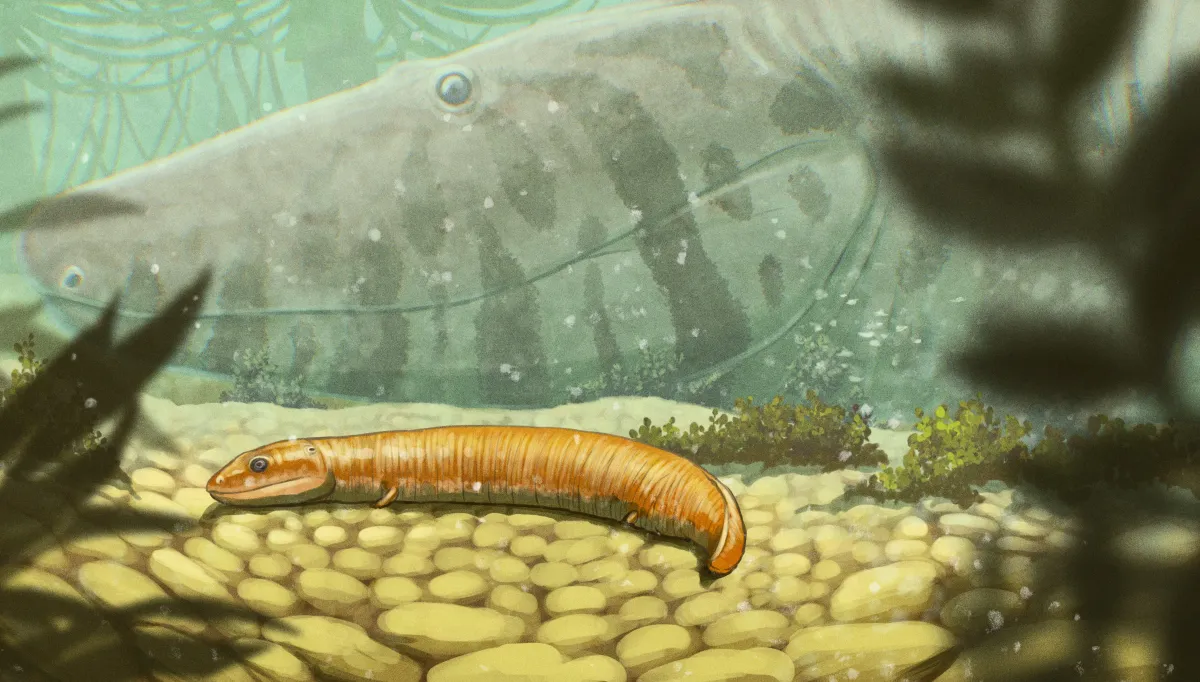
The culprits in this evolutionary shake-up are two baby embolomeres, found at Mazon Creek, a fossil hotspot about 70 miles southwest of Chicago. This place, first discovered in the 1840s, is basically a time capsule for delicate, ancient critters.
Adult embolomeres were substantial, growing over 10 feet long and patrolling ancient rivers and swamps between 350 and 280 million years ago. Imagine a really, really old crocodile. But these particular fossils? Just a few inches. So small, in fact, that when Arjan Mann, now the Field Museum’s Assistant Curator of Early Tetrapods, first saw one about a decade ago, it wasn't even identified correctly.
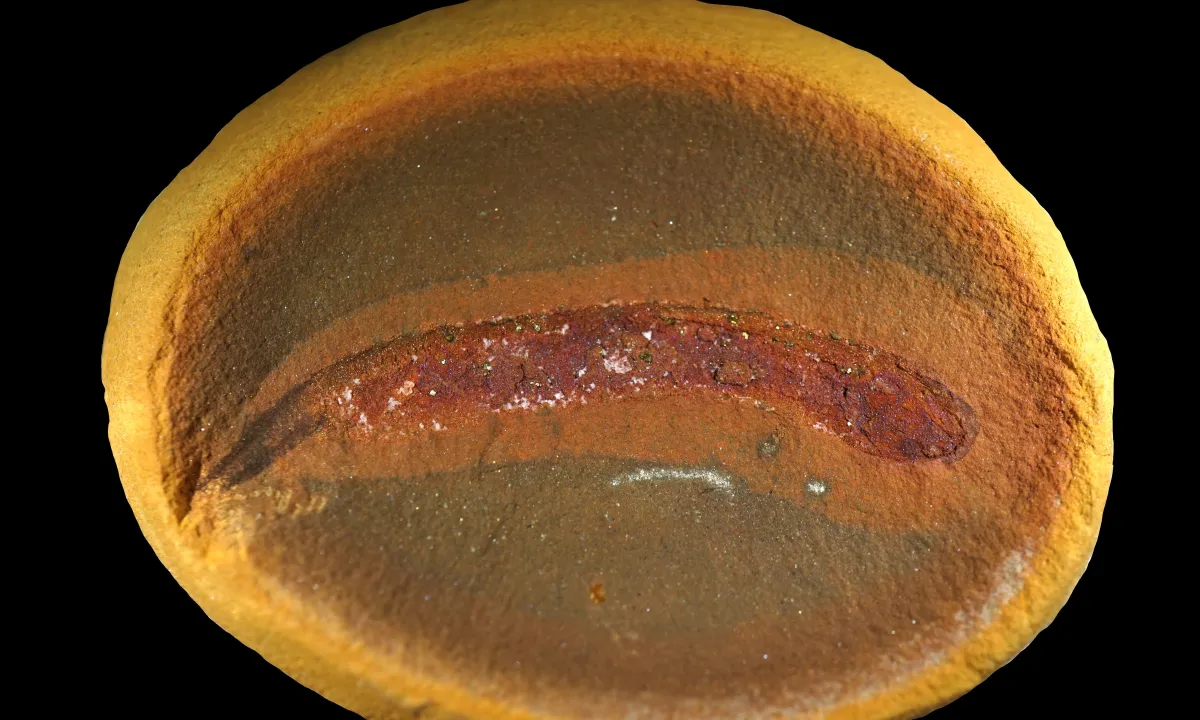
Mann and Pardo, then PhD students, spent years trying to figure out what they had. Finally, electron microscopy confirmed it: baby embolomeres. And here's where the plot twist arrives.
These tiny fossils didn't have limbs yet (those developed later), but crucially, they also didn't have external gills. No gills, no tadpole stage. No tadpole stage, no amphibian-style metamorphosis. They didn't transform from a water-breathing larva to a land-dwelling adult like a frog does.
Pardo explained that they looked across several early four-legged lineages and found the same story: no tadpoles. Their life cycles were more like ours, or like fish – direct development, not a dramatic transformation. So, the first animals to brave dry land weren't necessarily doing it with a frog's life story. They were more like direct-to-land crocodiles, apparently.
Which means that long-held theory about our amphibian ancestors? "That story doesn’t work anymore," Pardo declared. And just like that, millions of years of accepted science got a very snappy update.