For millions of years, our earliest complex ancestors were basically homebodies, clinging to the seafloor and demanding oxygen like it was going out of style. New research is giving us a much clearer, and frankly, funnier, picture of these microscopic pioneers.
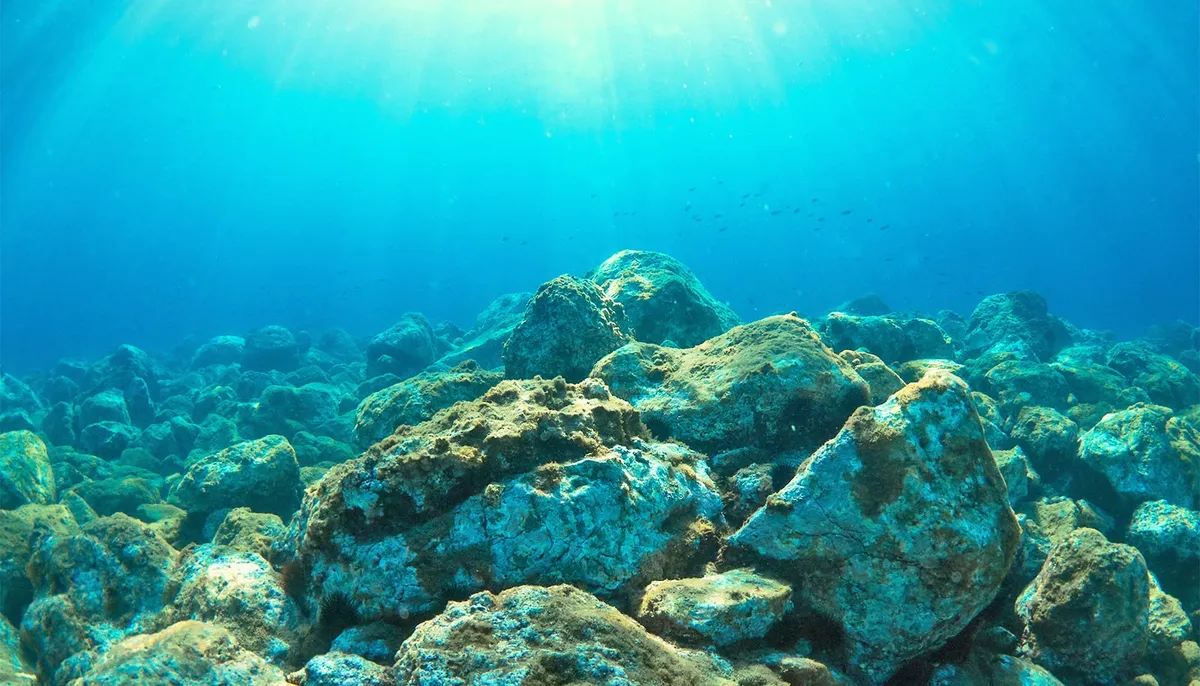
Turns out, the tiny organisms that eventually spawned everything from you to a sequoia tree weren't exactly globetrotters. They were content to hang out on the ocean floor, soaking up whatever oxygen they could get, for a solid chunk of Earth's history.
"We found that the oldest eukaryotes we've seen so far already needed oxygen," noted Leigh Anne Riedman, a paleontologist at UC Santa Barbara. "We figured out they lived on or within the seafloor based on how they were spread across samples." Let that satisfyingly specific number sink in: 1.75 to 1.4 billion years ago, these were the trendsetters.
We're a new kind of news feed.
Regular news is designed to drain you. We're a non-profit built to restore you. Every story we publish is scored for impact, progress, and hope.
Start Your News DetoxThis isn't just a quaint historical tidbit; it upends some long-held theories. Scientists used to think these early eukaryotes, the group that includes all visible multicellular life, floated around like ancient plankton. And some even questioned if they always used oxygen. ### The Original Oxygen Addicts
To figure out where these tiny pioneers lived and how much oxygen they craved, the research team dug into sediment from Australia's McArthur and Birrindudu basins. Back then, this was a shallow inland sea, with atmospheric oxygen levels less than 1% of what we breathe today. "We would not have been able to breathe," Susannah Porter, a professor at UCSB, dryly observed. Good thing we weren't around for that.
Riedman meticulously prepped microfossils from drill cores, while colleagues Max Lechte and Galen Halverson analyzed the rock layers. By cross-referencing fossil locations with mineral clues (like iron pyrite for low oxygen, or concentrations of vanadium, molybdenum, and uranium for higher levels), they pieced together a compelling story.
These ancient eukaryotes almost exclusively popped up in oxygenated seafloor environments. If they'd been floating happily on the oxygen-rich surface, their remains would have settled into oxygen-poor sediments too. But nope. They were firmly rooted to the spot, demanding their O2.
"What's striking to me is how restricted eukaryotes are at this time," Porter remarked. "The surface water seems like such an obvious place to live, especially if they need oxygen." One can almost hear the exasperation.
The Cradle of Complexity
This limited geographical range might explain why eukaryotes weren't exactly booming in diversity for nearly a billion years after they first appeared. It's hard to spread out when you're so particular about your living arrangements. The fossils from 800 million years ago and 1.7 billion years ago? "For the most part, the same cast of characters," Riedman and Porter explained.
It wasn't until the dramatic "Snowball Earth" period, around 720 million years ago, that things really kicked off. Mass extinctions cleared the stage, and when the planet thawed, the Ediacaran Period saw a burst of complex, multicellular life. All eukaryotic, of course.
This seafloor living also supports the idea that eukaryotes got their mitochondria (the energy-generating powerhouses) very early on. Living close to other organisms on the seafloor would have made that bacterial absorption a lot easier. So, our ancestors weren't just homebodies; they were also early adopters of cutting-edge cellular tech. And if that's not a conversation starter at your next dinner party, what is?