Roman concrete has lasted for thousands of years. Experts often thought this was mainly due to a chemical process called the pozzolanic reaction. This reaction happens when volcanic ash, water, and lime mix to create strong binding agents.
Now, new research suggests there's more to the story. A team led by Paulo Monteiro from UC Berkeley and Xiaohong Zhu from Beijing University of Technology found that another process, called carbonation, also plays a key role.
Carbonation's Role in Durability
Carbonation is a slow chemical reaction. It occurs between carbon dioxide (CO₂) in the air and calcium compounds in the concrete. Before this study, researchers couldn't measure its effects over such long periods.
We're a new kind of news feed.
Regular news is designed to drain you. We're a non-profit built to restore you. Every story we publish is scored for impact, progress, and hope.
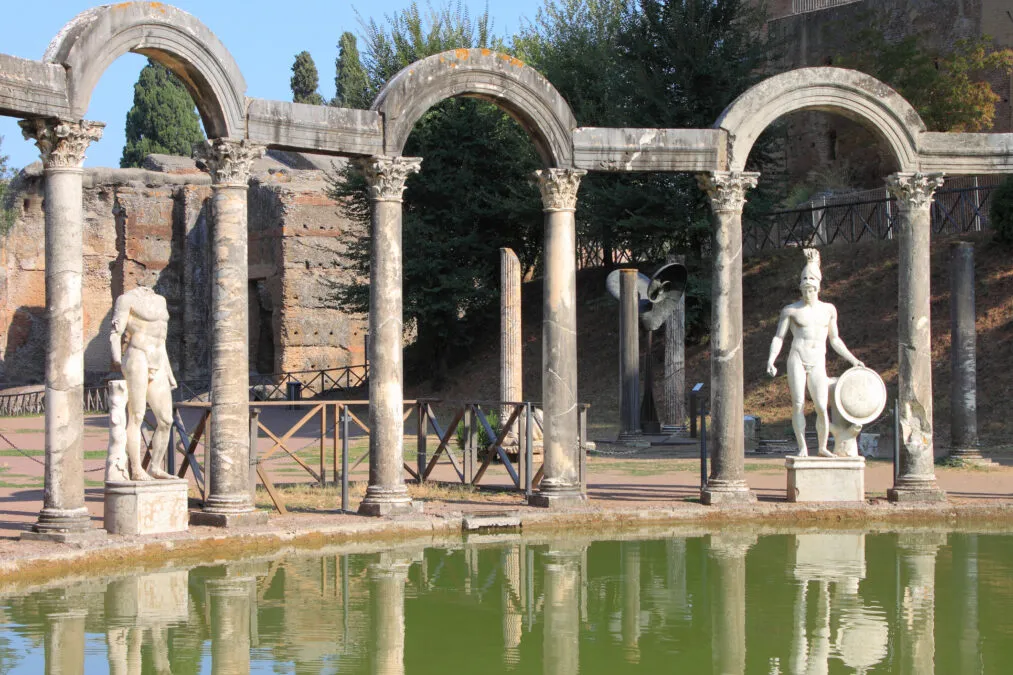
Start Your News DetoxThe team studied concrete from a latrine at Hadrian’s Villa in Tivoli, Italy. This site dates back to the second century A.D. They used advanced 3D imaging to understand how the structures remained so strong.
They found that calcium carbonate networks, formed through carbonation, helped bind and strengthen the ancient Roman concrete over time.
Monteiro, a professor at UC Berkeley, explained that the pozzolanic reaction is important. However, he noted that long-term carbonation also makes concrete more durable. It can even help seal cracks as the concrete ages.
How Calcite Seals Cracks
Monteiro said that calcite, a mineral form of calcium carbonate, helps fill small cracks, pores, and empty spaces in the concrete. Calcite is found in limestone and forms through hydration and carbonation.
This cementing process creates a dense and strong structure. It improves how weight is transferred within the concrete and limits water from getting in. This helps the concrete stay stable for a long time. Over time, the continuous growth of calcite can close small cracks, preventing more damage.
Future of Concrete
These findings could help create new concrete materials. Monteiro believes calcite could help modern concrete structures resist environmental and mechanical stress. This would help develop sustainable and strong building materials in the future.
Researchers also hope that understanding Roman concrete better will lead to new low-carbon cements. Making standard cement requires clinker, which releases a lot of carbon dioxide. For every ton of clinker produced, 0.83 tons of CO₂ are released.
Monteiro said that understanding how calcium carbonate crystallization binds concrete could offer new insights into how lime-based binders evolve and carbonate naturally. This could lead to new ways to create durable, low-clinker systems.
He added that studying ancient engineering can reveal important things. By understanding Roman secrets for durable concrete, we might achieve sustainable modern infrastructure development.
Deep Dive & References
Researchers shed new light on ancient concrete’s extraordinary durability - Science Advances, 2024