Turns out, the deep ocean isn't the barren wasteland we thought. Scientists just found that extreme pressure down there acts like a giant juicer, squeezing out nutrients from sinking particles. This unexpected food source is keeping deep-sea microbes well-fed.
For years, we figured life in the ocean's darkest depths barely scraped by. But new research from the University of Southern Denmark flipped that idea on its head. They discovered that tiny bits of organic matter, often called "marine snow," don't just sink to the bottom intact.
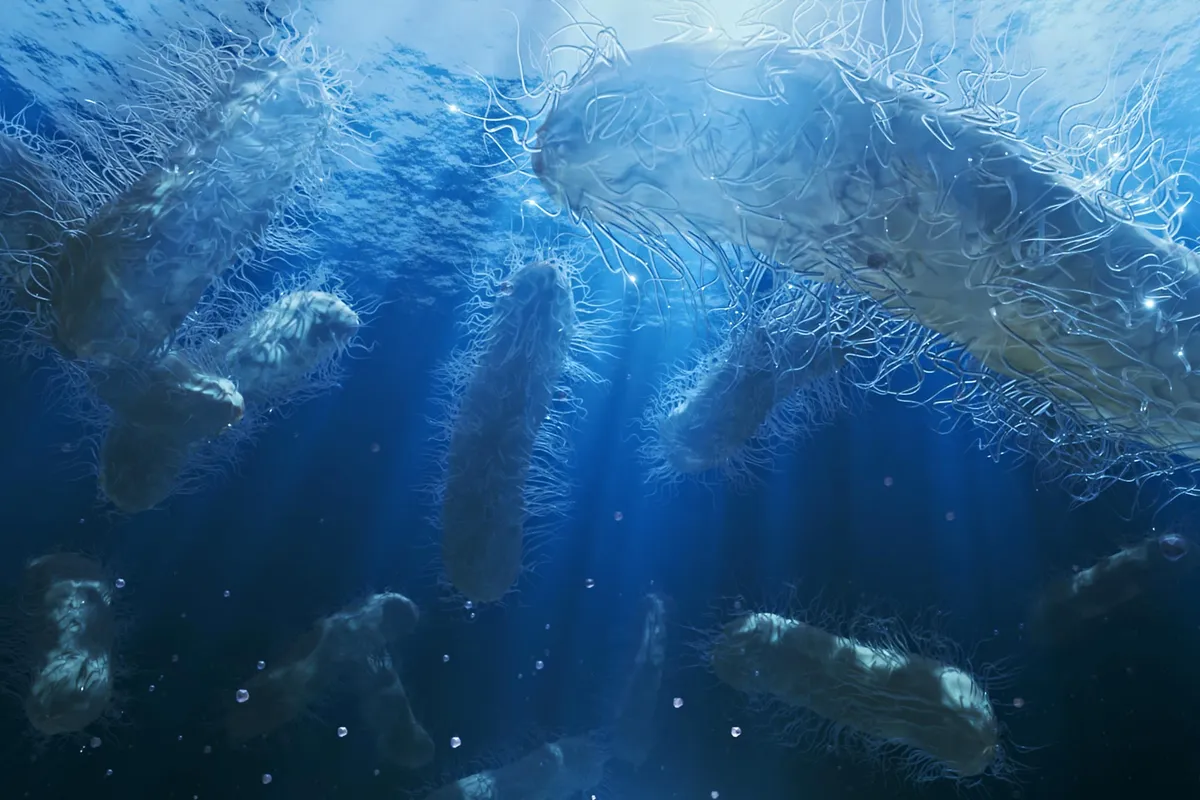
Instead, as these particles fall between 1.2 and 3.7 miles deep, the immense pressure forces them to release dissolved carbon and nitrogen. Think of it like a cosmic espresso machine. These released compounds then become an immediate buffet for the microbes floating in the surrounding water.
We're a new kind of news feed.
Regular news is designed to drain you. We're a non-profit built to restore you. Every story we publish is scored for impact, progress, and hope.
Start Your News DetoxPeter Stief, a biologist on the team, put it perfectly: the pressure works "almost like a giant juicer." His team's findings, published in Science Advances, show that these sinking particles can lose up to 50% of their carbon and over half their nitrogen during their journey.
A New Twist in the Carbon Story
This is a pretty big deal for understanding Earth's carbon cycle. If marine snow is shedding so much carbon before it even hits the seafloor, that means less carbon gets locked away in deep-sea sediments for millions of years. Instead, it stays dissolved in the deep ocean water for hundreds or thousands of years before slowly making its way back to the surface and into the atmosphere.
To figure this out, the researchers created their own marine snow using microscopic algae called diatoms. They put these tiny particles into special pressure tanks that mimicked the crushing conditions of the deep sea. They even rotated the tanks to keep the particles suspended, just like in the real ocean.
The results were wild. Within just two days, bacterial numbers in the tanks shot up 30 times. The leaked material – mostly proteins and carbs – was a quick, delicious energy boost for the deep-water microbes. This leakage happened across different diatom species, suggesting it's a widespread phenomenon.
Next up: finding direct proof in the actual ocean. The team is heading to the Arctic on a German research vessel to look for the molecular fingerprints of this pressure-cooked meal. It's a clever way to see how much the deep ocean's dinner menu really impacts our planet's long-term climate.