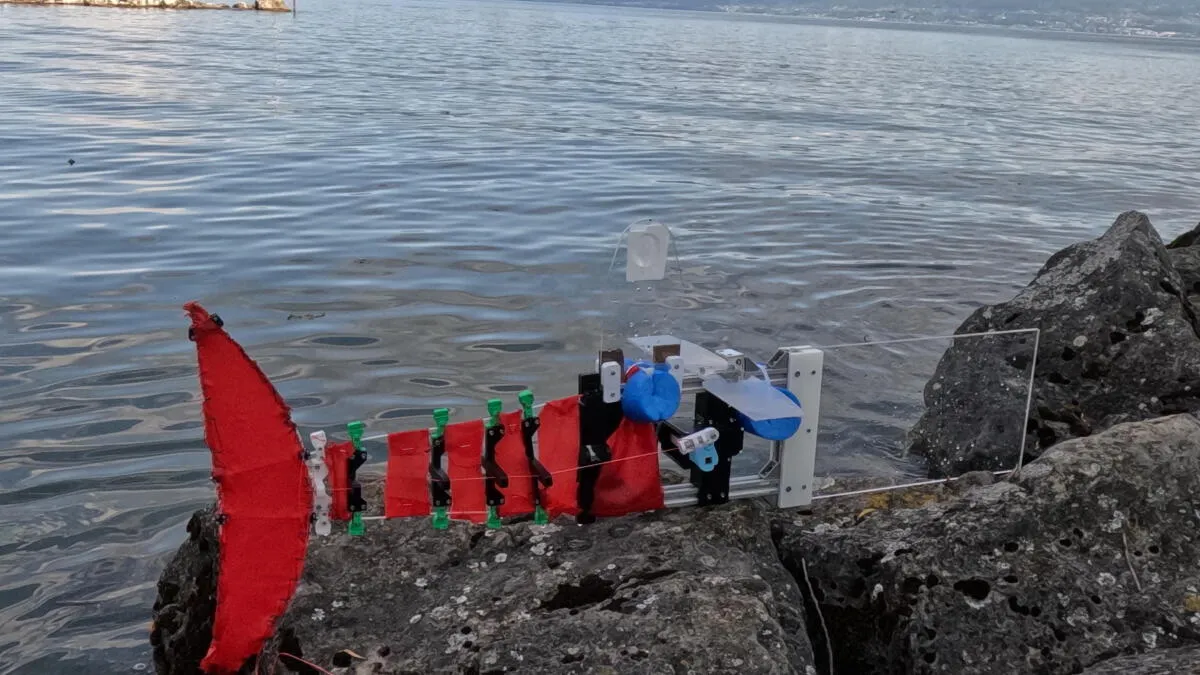
Scientists have created a tiny robotic manta ray that swims using real frog muscle. This research from the Shenyang Institute of Automation (SIA) in China shows how biological parts can power machines.
This field, called biosyncretic robotics, uses living materials instead of traditional motors. It aims to make robots smaller and more efficient.
Using Real Muscle for Power
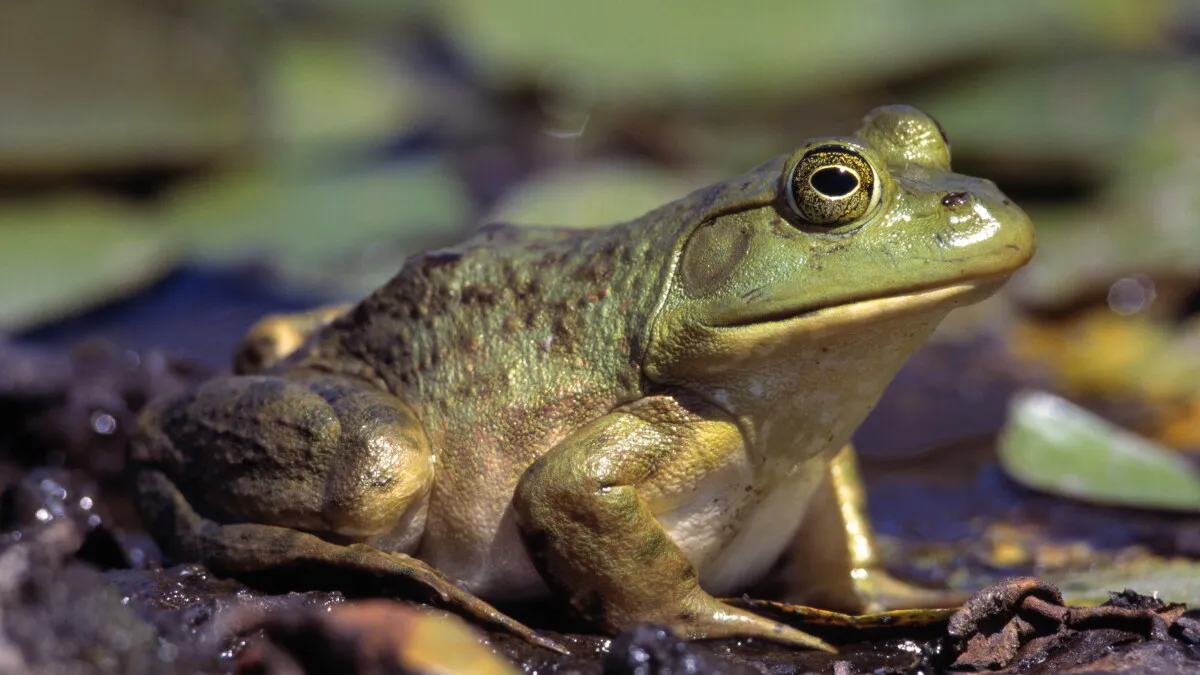
The team used skeletal muscle from a bullfrog's leg. This muscle, called the gracilis, was strong and could contract for up to 11 days. It reliably drove the robot for a week.
We're a new kind of news feed.
Regular news is designed to drain you. We're a non-profit built to restore you. Every story we publish is scored for impact, progress, and hope.
Start Your News DetoxPrevious robots used lab-grown muscle, but it was often too weak. By using natural frog muscle, the researchers found a much stronger power source. This natural tissue has a better fiber arrangement, which makes it contract more powerfully.
Dr. Chuang Zhang, an SIA researcher, noted that this is the first time native isolated skeletal muscle has been linked with a wireless light-controlled system. This proves that natural muscle can be a high-performance actuator.
Wireless Control with Light
To make the robot move, the team needed a way to power and control the muscle wirelessly. In animals, ATP provides energy, and electrical signals from nerves trigger muscle contraction.
For the robot, tiny solar cells made of gallium arsenide (GaAs) were placed on its back. An operator shines an infrared laser onto these cells. The cells turn the light into electricity, which then stimulates the frog muscle's nerves, causing it to contract.
The robot's left and right sides can be controlled separately. By directing the laser to different parts of the solar cells, researchers can make the muscles on each side contract independently. This allows for untethered control and steering.
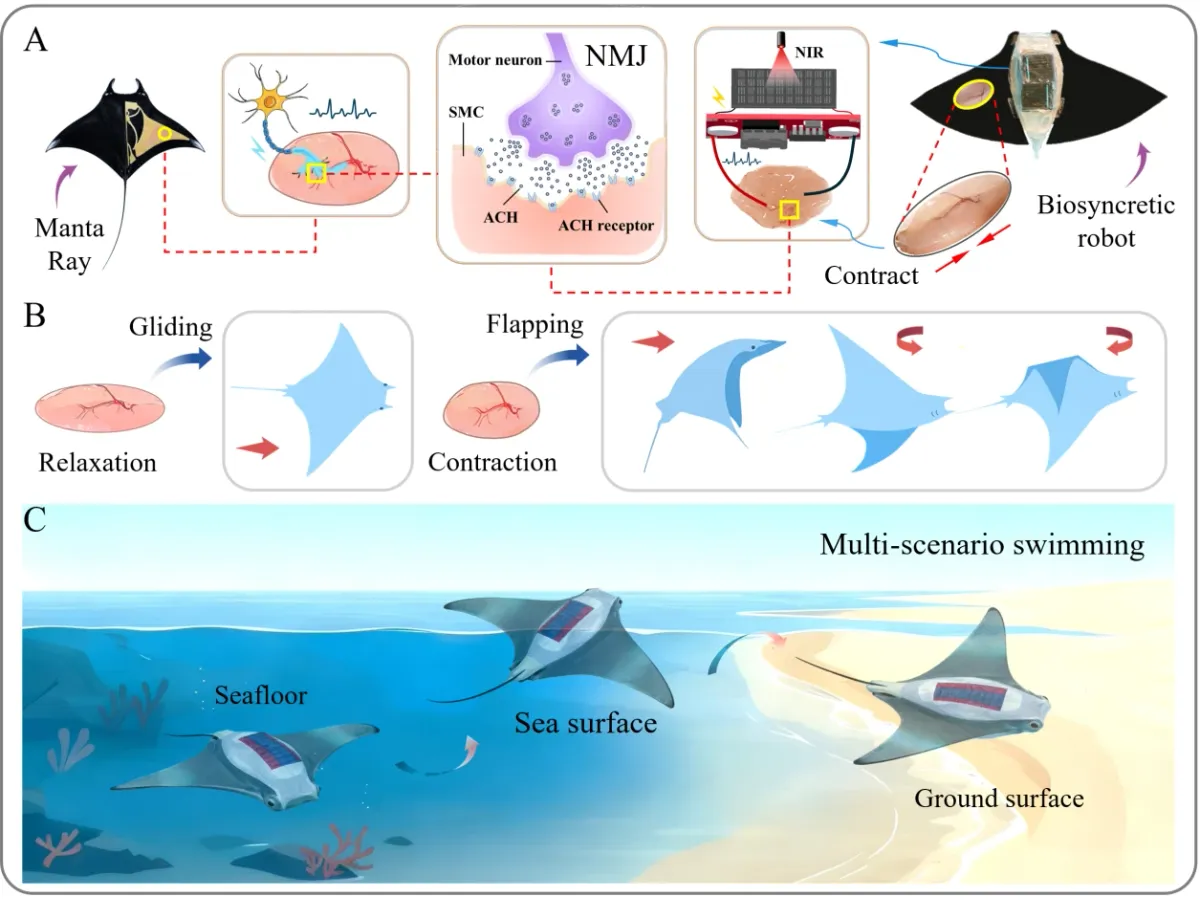 This diagram illustrates the swimming motion of the robotic manta ray
The robot can swim forward, turn, and even carry small payloads. It reached a top speed of two body lengths per second, which is the fastest for a skeletal-muscle-driven robot. It can also move across rigid surfaces.
Future Possibilities
This technology could be used for more than just manta ray robots. The natural muscle and light-control method could power other robot designs. Possible uses include monitoring shallow water environments or observing aquatic life without disturbing it.
The research also has implications for medicine. The electrical stimulation methods developed could help with muscle rehabilitation after nerve injuries or in tissue engineering.
One challenge is the limited lifespan of the biological tissue, which currently lasts about seven days. The robot also needs an external light source to operate. The team plans to extend muscle life and add onboard energy storage so the robot can store light energy and move independently.
Deep Dive & References: Frog muscle put to use in swimming robotic manta ray - Advanced Functional Materials