Imagine a natural substance in your body that helps heal wounds, keeps your skin bouncy, and even tinkers with your genes. Sounds like something out of a sci-fi movie, right? Well, it's called GHK-Cu, and it's been getting a lot of attention as a potential "fountain of youth" peptide.
This tiny triple-amino-acid-and-copper combo is naturally produced by your body. It hangs out between cells and in your blood, doing its quiet work. The only catch? By the time you hit middle age, your body's GHK levels have plummeted by about 80%. Because apparently, that's where we are now.
The Copper Connection
On its own, GHK is pretty good. But when it latches onto a copper ion, that's when it really gets to work. Think of it like a superhero gaining its powers. Decades of research show GHK-Cu is a maestro of cell repair, regeneration, and signaling.
We're a new kind of news feed.
Regular news is designed to drain you. We're a non-profit built to restore you. Every story we publish is scored for impact, progress, and hope.
Start Your News DetoxIt all started in 1973, when US biochemist Loren Pickart first described GHK. He later figured out that copper was the secret sauce. Since then, studies have linked GHK-Cu to everything from wound healing and skin repair to fine-tuning gene regulation for brain development and protection against neurological diseases. In 2018, Pickart was part of a study that found GHK-Cu could boost collagen and elasticity, all while fighting off oxidative stress and inflammation. These findings even spurred research into GHK-Cu as a potential anti-cancer treatment, showing it could alter over 4,000 human gene expressions. Which, if you think about it, is both impressive and slightly terrifying.
As we age and GHK levels drop, copper isn't transported as efficiently to our tissues. This is why GHK-Cu has become a major player in longevity science, offering wide-ranging "anti-aging" potential.
Hope, Hype, and Hospital Visits
So, should you be clearing out your medicine cabinet for a GHK-Cu overhaul? Well, yes and no.
The most promising applications are in wound healing. There's currently a human trial testing a topical gel with GHK-Cu, building on years of animal studies showing it helps close wounds, sprout new blood vessels, and crank out collagen. That's genuinely exciting.
However, for other buzzy claims—like muscle boosting, extending lifespan, or even hair regrowth—the human data just isn't there yet. Turning biology into safe, effective treatments is a marathon, not a sprint, requiring years of research, clinical trials, and significant investment. The long-term effects often remain a mystery until a treatment is widely adopted. So, beyond skin care, GHK-Cu is likely staying in the experimental zone for a while.
What makes GHK-Cu unique in the longevity space is its 50 years of scientific backing, unlike many other compounds that pop up in wellness circles with little more than a TikTok trend behind them. The problem? The hype has outpaced the evidence.
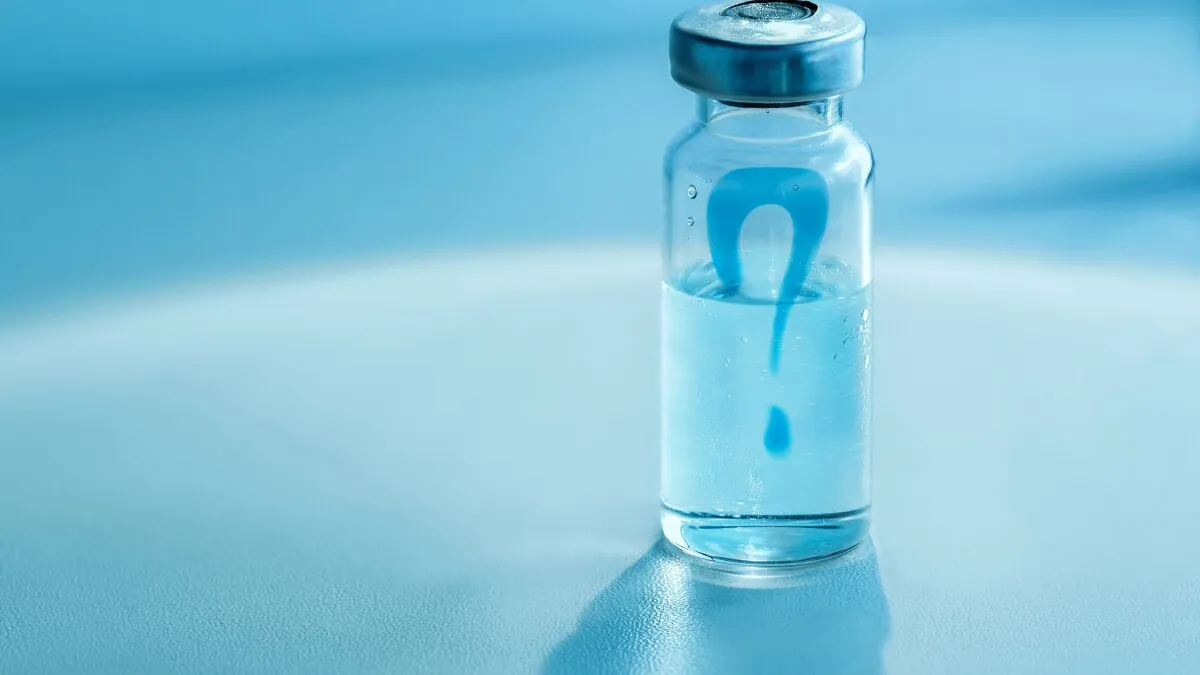
Experts generally agree topical GHK-Cu is safe. But injected forms? Largely unstudied. They carry risks like nasty immune reactions and exposure to dangerous toxins. Healthcare professionals are practically shouting warnings about unregulated injectable peptides. Case in point: two women ended up in critical condition after "anti-aging" peptide shots at a festival in 2025. Because apparently, that's a thing.
Dr. Mike Mrozinski noted that the success of regulated GLP-1 drugs (like Ozempic) has made people a little too comfortable with injections. He points out that seeing results from pharmaceutical-grade peptides can lead people to wrongly assume all peptides are safe. A dangerous assumption, it turns out, when your "fountain of youth" comes in an unregulated vial.