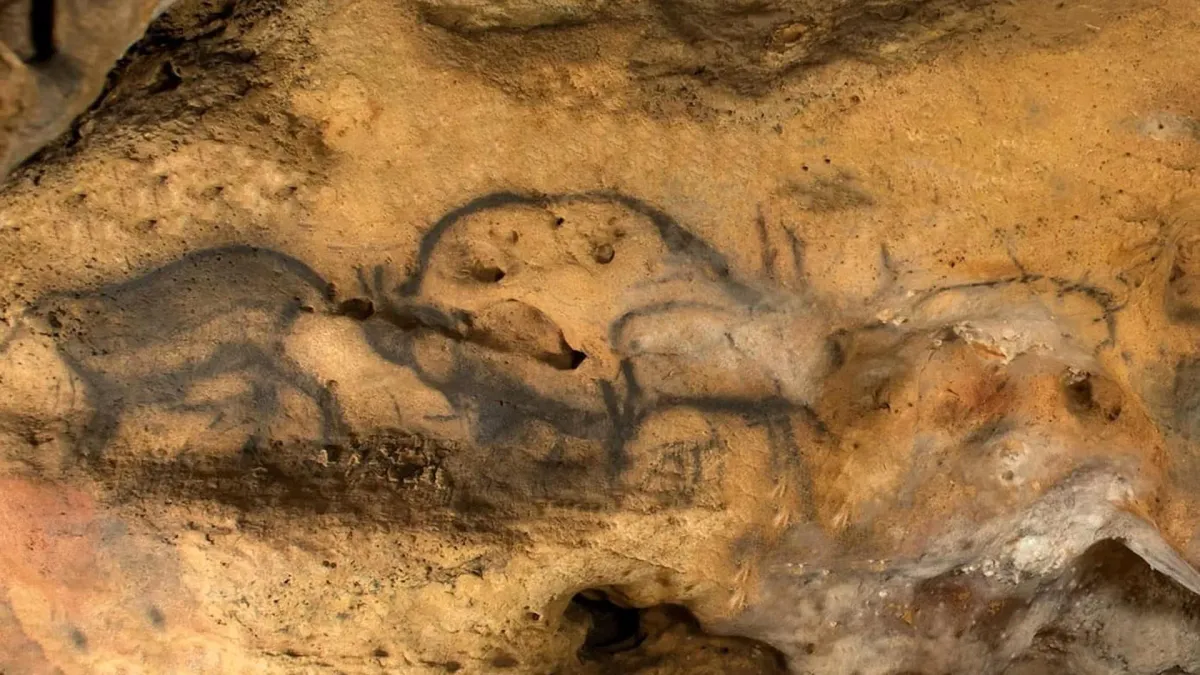
For ages, scientists scratched their heads over prehistoric paintings in France's Font-de-Gaume cave. They knew the art was old, but how old? Pinpointing the exact age was tricky because, well, rocks don't exactly come with birth certificates.
Turns out, the answer was hiding in plain sight — or rather, in the black pigments that everyone assumed were just mineral-based. Because apparently, no one had actually checked to see if there was anything else in there. Spoiler: there was.
The Case of the Missing Carbon
Radiocarbon dating is the go-to for ancient organic stuff. You find some charcoal, measure the carbon-14, and boom — you've got a date. But the black pigments in these cave paintings were thought to be iron and manganese oxides, which are about as organic as a gravel driveway. No carbon, no date. End of story, right?
We're a new kind of news feed.
Regular news is designed to drain you. We're a non-profit built to restore you. Every story we publish is scored for impact, progress, and hope.
Start Your News DetoxWrong. A team of intrepid researchers, probably tired of everyone just assuming, decided to actually look at the chemical makeup of two black figures: a bison and a rather mysterious mask-like figure. They pulled out the big guns: Raman microspectrometry and hyperspectral imaging. These are fancy ways of saying they zapped the paintings with light to figure out what they were made of, without actually touching them. Because, you know, ancient art.
And what did they find? Charcoal. Tiny, evenly distributed specks of charcoal woven into the black lines. This wasn't some ancient graffiti artist adding a flourish later, or a clumsy tourist dropping a burnt marshmallow. This was part of the original paint.
A Bison, a Mask, and a Very Long Story
With charcoal confirmed, getting a tiny sample for carbon-14 dating became a possibility. And the results? The bison, once thought to be a bit older, is now firmly placed in the Upper Paleolithic period, roughly 13,000 years ago. Let that satisfyingly precise number sink in: between 13,461 and 13,162 calibrated years Before Present. Slightly newer, but still incredibly old.
The mask-like figure, though, is where things get really wild. Instead of one consistent date, samples from different parts of the mask showed three wildly different age ranges. One section? About 9,000 years old. Another? A cool 16,000 years old. And a third? Somewhere in between, around 15,000 years old.
This isn't just one artist's masterpiece; it's more like a prehistoric collaborative art project that spanned thousands of years. Imagine working on a painting, then your descendants pick up the brush 7,000 years later. It suggests these caves weren't just one-off art galleries, but important places revisited and reinterpreted across countless generations. Which, if you think about it, is both impressive and slightly terrifying.
This new dating method, combining chemical imaging with super-sensitive radiocarbon measurements, means a whole lot of other "undatable" cave art might soon be giving up its secrets. More precise dates mean we can finally start to piece together how artistic styles evolved, and maybe, just maybe, get a better handle on the communities who spent millennia leaving their mark on the walls of the Earth.