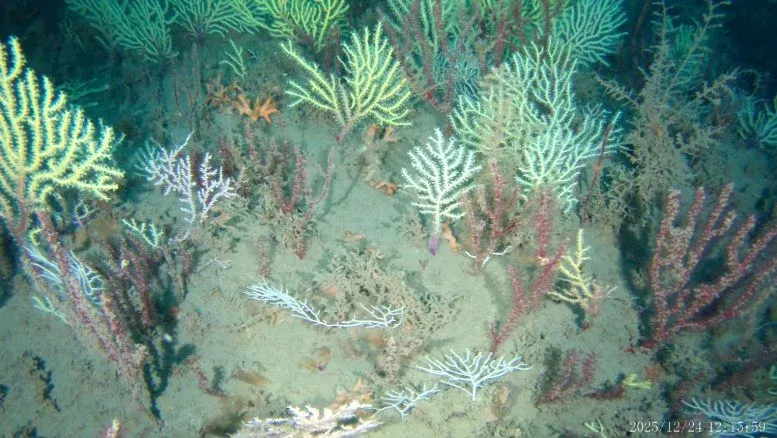
Researchers recently found a thriving coral community off the coast of Benin. This reef was once thought to be dead. It sits more than 50 meters deep.
Scientists in the 1960s had identified a deep-water reef in the area. However, they believed it was no longer alive. Decades later, new sonar technology and underwater cameras proved them wrong.
Gérard Zinzindohoué, from the Institut de Recherches Halieutiques et Océanologiques du Bénin, led the research. He described the challenging but rewarding field campaign. Seeing the first images of the seafloor was a mix of excitement and disbelief for the team.
We're a new kind of news feed.
Regular news is designed to drain you. We're a non-profit built to restore you. Every story we publish is scored for impact, progress, and hope.
Start Your News DetoxRediscovering a Hidden Ecosystem
The earlier surveys had noted a possible reef deeper than 50 meters. Zinzindohoué and his team suspected it might be a mesophotic coral ecosystem. These ecosystems survive in deeper water with less sunlight.
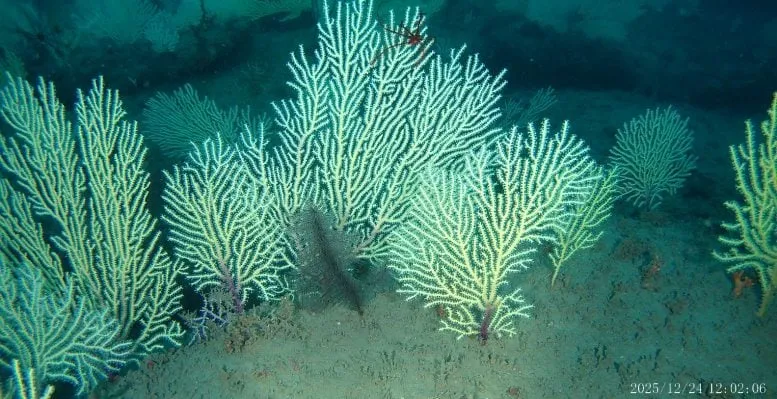
Zinzindohoué explained that mesophotic corals live deeper than typical shallow reefs. They don't always form one continuous structure. Instead, they can appear as scattered coral patches.
The scientists used old survey records to narrow their search. They mapped 11.5 kilometers of seabed with sonar. This revealed two possible reef signals. Then, an underwater drone and the Deep Sea Camera System examined the most promising spots.
The footage showed a healthy reef. Researchers identified eight types of coral and eight fish species. These included golden African snappers and Guinean angelfish.
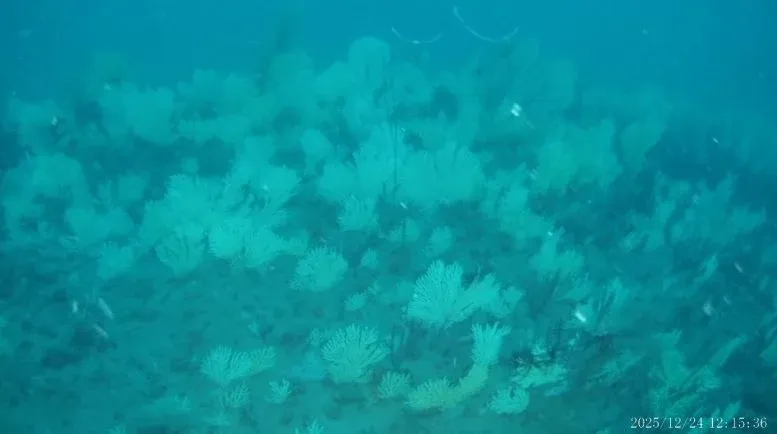
The reef is not a single barrier. It consists of separate coral patches on rocky areas. More exploration could find even more reefs.
The Future of Deep-Sea Exploration
Zinzindohoué believes this is the first confirmed living mesophotic coral ecosystem in the Gulf of Guinea. He thinks it shows how little we know about West African coastal regions. Many other reefs might still be undiscovered or forgotten.
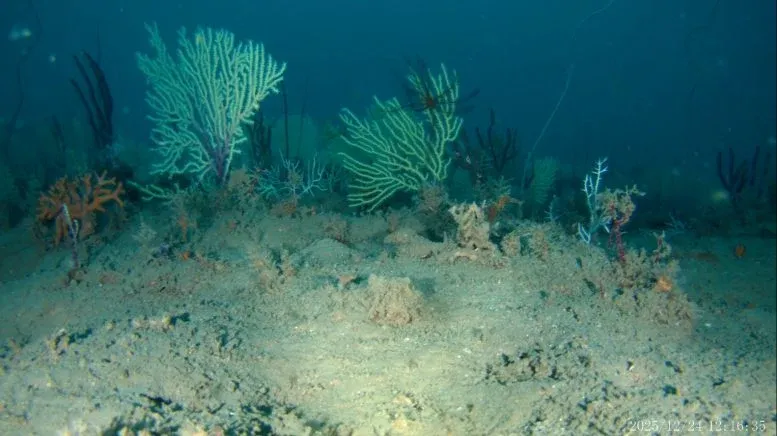
The scientists have not yet collected physical coral samples. So, species identifications are not fully confirmed. It's also unclear if the reef was truly dead in the 1960s or if its condition was misjudged. More research is needed to understand its history and find other coral communities.
Zinzindohoué hopes to return to the site for a proper scientific diving and sampling program. He noted that these ecosystems are poorly understood in this part of the world. Every new piece of information is important. He is most excited about understanding the reef's history and what it reveals about ocean changes over time.
Deep Dive & References
First evidence of live mesophotic coral reefs on the Benin continental shelf - Frontiers in Marine Science, 2026