Deep within colossal rocky exoplanets, scientists are now theorizing that oceans of molten rock might be doing something truly wild: generating powerful magnetic fields. This, it turns out, is excellent news for any potential alien neighbors trying to avoid a cosmic sunburn.
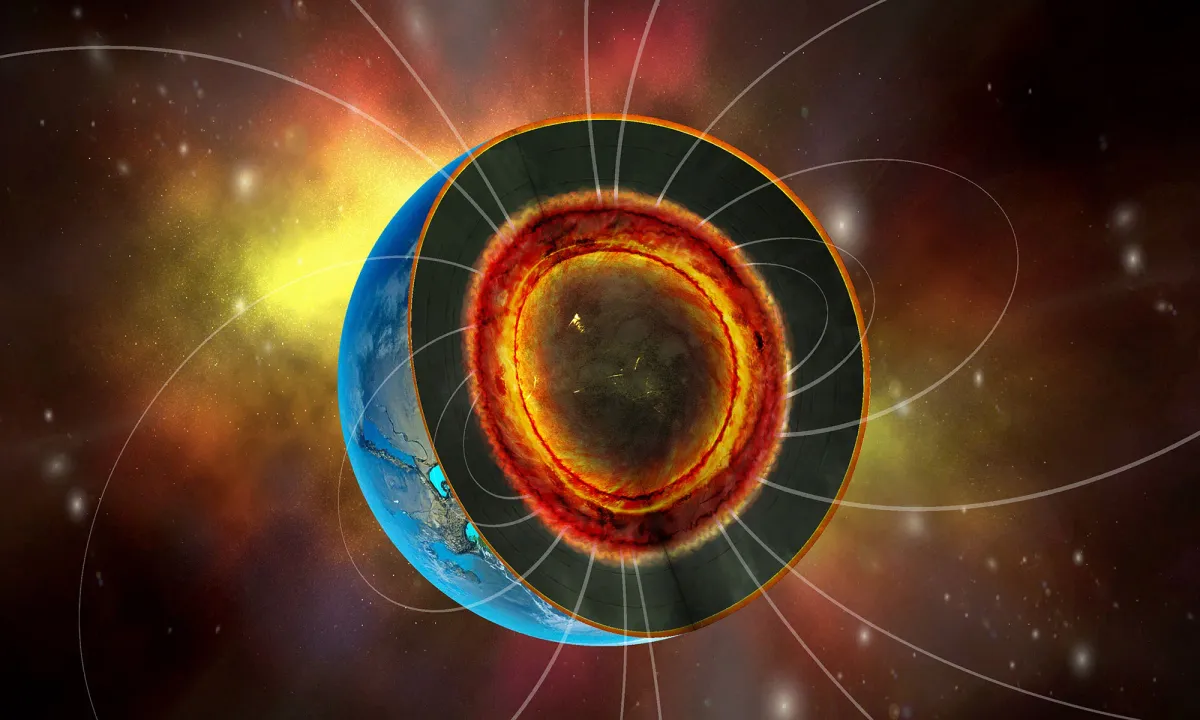
Here on Earth, our protective magnetic field comes courtesy of our liquid iron outer core, a process charmingly called a dynamo. But for those much larger rocky planets, things get a bit more complicated. Some super-Earths might have cores that are either entirely solid or entirely liquid, which would make the whole 'magnetic field' thing a non-starter the traditional way.
The Magma Ocean Solution
Enter the brilliant minds at the University of Rochester, led by Associate Professor Miki Nakajima. They've pinpointed a different source for these planetary force fields: a deep, hidden layer of molten rock they're calling a basal magma ocean (BMO). This idea isn't just a neat trick; it could fundamentally shift how we scout for habitable worlds.
We're a new kind of news feed.
Regular news is designed to drain you. We're a non-profit built to restore you. Every story we publish is scored for impact, progress, and hope.
Start Your News DetoxNakajima points out that a strong magnetic field is basically a VIP pass for life to exist. Many of our own solar system's rocky planets, like Venus and Mars, are missing this crucial shield. Their cores just don't have the right conditions. But super-Earths, with their potential for core or magma dynamos, suddenly look a lot more appealing for, well, life.
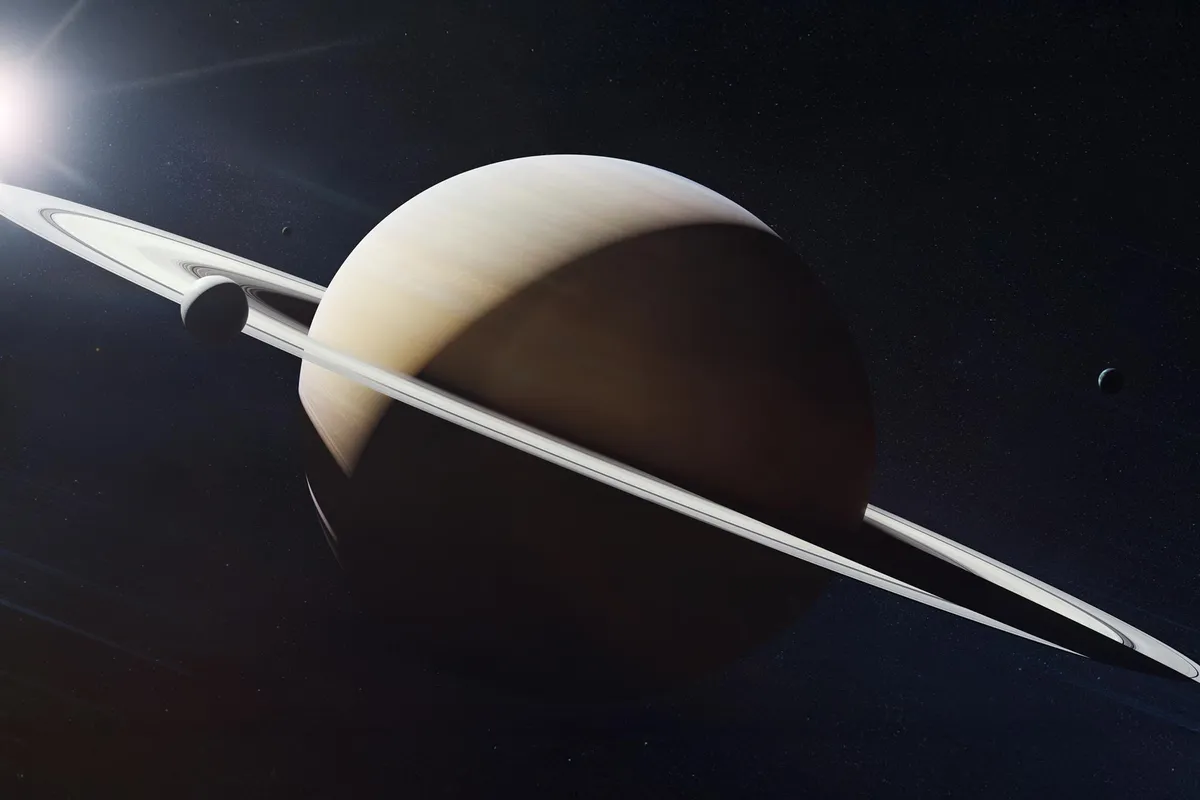
Now, for those playing along at home: what exactly is a super-Earth? Think of them as the Goldilocks of the galaxy – bigger than Earth, but smaller than those icy giants like Neptune. They're mostly rock, solid surfaces, no thick gassy layers like Jupiter. And here's the kicker: they're the most common type of planet out there, yet we don't have a single one in our own neighborhood. The "super" just refers to their size, not their heroic deeds (yet).
These planets are basically cosmic Rosetta Stones, helping scientists decode how planets form and evolve. Many of them orbit in those sweet, sweet habitable zones where liquid water could exist. So, understanding their guts – their structure, atmospheres, and magnetic fields – is like finding cheat codes for where life might thrive.
Lasers and Lava
Earth might have had its own basal magma ocean eons ago, a molten layer at the base of the mantle that significantly impacted its early magnetic field, heat flow, and chemistry. Super-Earths, being, well, super, have way more internal pressure. This means they're far more likely to cling to these molten layers for billions of years. BMOs are therefore crucial for understanding their inner workings and their potential to host a bustling alien metropolis.
Nakajima and her team dove into these extreme conditions using laser shock experiments at the University of Rochester’s Laboratory for Laser Energetics. They then mixed in quantum mechanical simulations and planetary evolution models, all to figure out how molten rock behaves under the intense pressures found deep inside a BMO.
What they found is genuinely fascinating: at high pressures, molten rock deep inside a planet's mantle becomes electrically conductive. And not just for a minute – we're talking billions of years. This suggests that super-Earths, roughly three to six times the size of Earth, could generate powerful, long-lasting magnetic fields driven by these magma dynamos. They might even be stronger than Earth's, which, if you think about it, is both impressive and slightly terrifying. It certainly ups the ante for these planets supporting life.
Nakajima, ever the scientist, calls the work both exciting and challenging, and is now eagerly awaiting future observations of exoplanet magnetic fields to put their hypothesis to the ultimate test. Imagine that: looking at a distant world and knowing its internal lava lamp is keeping life safe. That's a story worth sharing.