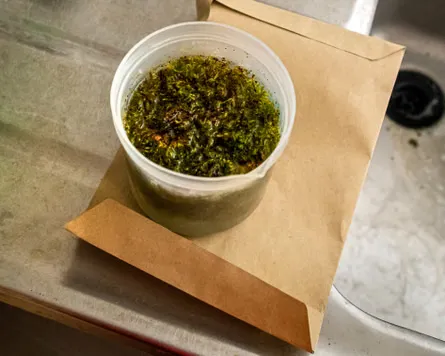
Witek Morek is searching for tardigrades on the Wellcome Sanger Institute campus in Cambridgeshire. He carefully collects moss and lichen samples from an old wall and a walnut tree. This is part of a huge project to sequence the DNA of all life on Earth.
Morek is a postdoctoral researcher and an expert on tardigrades. He works with Professor Mark Blaxter, who leads the institute's Tree of Life program.
Understanding Genomes
A genome is like a set of instructions for building an animal, written in DNA. Genomics studies all the DNA, including the parts between genes. Creating "reference genomes" helps scientists learn about how organisms grow and change. It can also help find new medicines.
We're a new kind of news feed.
Regular news is designed to drain you. We're a non-profit built to restore you. Every story we publish is scored for impact, progress, and hope.
Start Your News DetoxIn 1998, a tiny nematode worm was the first animal to have its entire genome sequenced. The human genome was first sequenced five years later, though it wasn't fully completed until 2021.
Sequencing genomes used to take many years. Blaxter sequenced only 18 genomes in his first 25 years of research. Now, thanks to new technology, the Tree of Life program sequences 48 genomes every week. So far, they have sequenced 2,600 genomes, mostly from British and Irish species, ranging from whales to fungi.
Now, it's the turn of tardigrades. These microscopic creatures were the popular winner of last year’s Guardian invertebrate of the year contest.
About 1,500 species of tardigrades, also called "slow steppers," have been found worldwide. They are known for being incredibly tough. They can survive extreme heat, cold, and even outer space. They do this by drying out and entering a suspended state until water brings them back to life.
The Sequencing Process
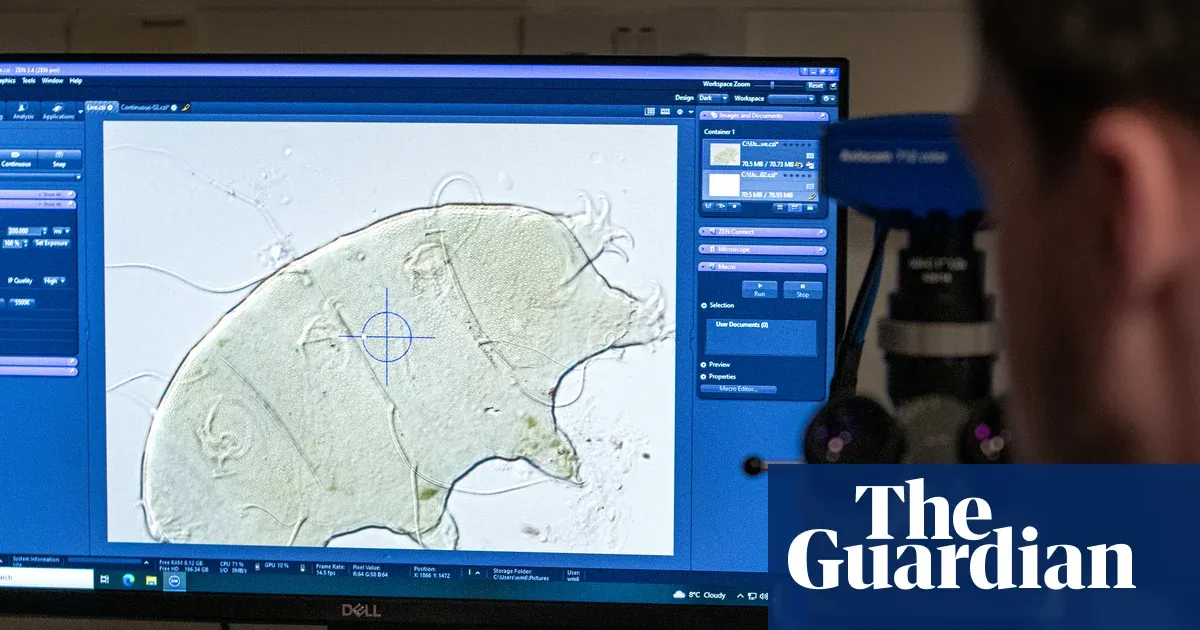
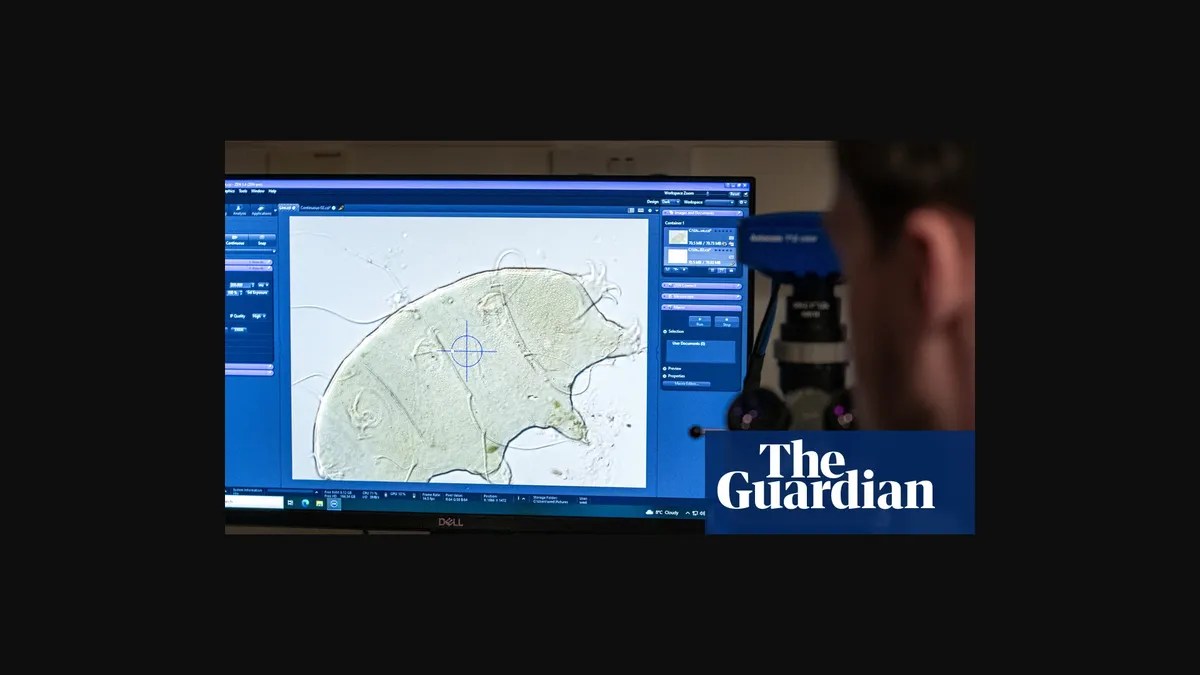
Morek starts by putting his moss and lichen samples into water. After about 30 minutes, the tardigrades begin to wiggle. He places small pieces of moss under a microscope and finds a tardigrade. It's a translucent, medium-sized one, about 350 micrometers long. For comparison, a human hair is 50 micrometers wide. Morek can see what it recently ate inside its gut.
 Photograph: Ali Smith/The Guardian
Morek has collected about 20 of the 50 known British tardigrade species. He believes there are many more. To identify the exact species, he needs to see its eggs. Some tardigrade eggs are smooth, while others have shapes like mushrooms or needles on their surface.
Tardigrades can be fierce hunters, chasing and eating nematodes. Morek also noted that they can show parental care. A mother sometimes sheds her skin with eggs inside, keeping the skin attached to her legs until the eggs hatch.
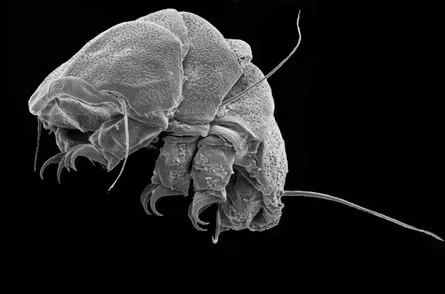 Photograph: Wellcome Sanger Institute
Morek makes a temporary slide to examine the tardigrade and confirm its type. He then transfers the live tardigrade to a barcoded tube and freezes it at -71C for later sequencing.
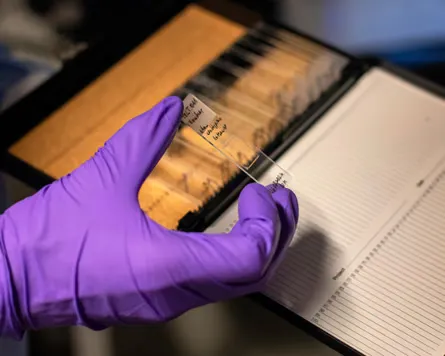 Photograph: Ali Smith/The Guardian
Currently, there are four high-quality tardigrade genomes in public databases. Morek is working on 14 more, and about 50 species are waiting to be sequenced.
Before DNA extraction, Morek must break apart the specimen. He can cut a 200-micrometer tardigrade by hand or mash it while frozen in ice.
Tardigrades have very little DNA, only 200 to 500 picograms. A picogram is one trillionth of a gram. In the past, researchers needed about 1,000 tardigrades to get enough DNA, which was hard for rare species. Another method was to use a single female to create many genetic copies.
The Wellcome Sanger Institute uses a different method called the picogram input multimodal sequencing protocol. This technique extracts both DNA and RNA from the tardigrade and separates them. Then, a polymerase chain reaction (PCR) is used to make many copies of these fragments, creating enough material for sequencing.
 Photograph: Ali Smith/The Guardian
The quality of the DNA is checked, and samples go to the scientific operations team. After sequencing, the data is stored on the institute's computers. The sequence itself is millions of letters long, made of the four DNA bases: adenine, cytosine, guanine, and thymine (ACTG).
Tardigrade genomes are small, about 30 times smaller than the human genome. This means scientists need less data to put together a tardigrade's genome, even though the PCR process is complex.
Future Discoveries
Morek believes sequencing tardigrade genomes will help show how different species are related. Some tardigrades are separated by 550 million years of evolution.
Genome sequencing could also reveal how tardigrades' amazing abilities, like surviving freezing, lack of oxygen, and drying out, might help humans.
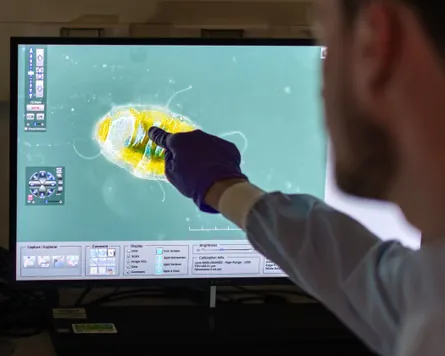 Photograph: Ali Smith/The Guardian
Blaxter noted that since most life on Earth is small, this new sequencing method could help sequence all life. These genomes could lead to new ideas in medicine and biotechnology.
By sequencing, scientists can find the genes and proteins responsible for these survival traits. For example, if a protein is key to surviving drying, could it be used to make dry vaccines or drought-resistant crops?
Morek said there are many research questions. The more they learn, the more questions arise, making it an ongoing journey of discovery.
Invertebrate of the Year 2026
The tardigrade won last year's contest. Now, the third annual invertebrate of the year contest has begun.
Animals with spines, like humans, make up only about 5% of all animal life. There are at least 1.3 million invertebrate species. These creatures, such as snails, spiders, and wasps, are vital for our planet. They pollinate plants, create soil, clean water, and control pests.
As biologist E.O. Wilson said, "The truth is that we need invertebrates but they don’t need us."
You can nominate your favorite invertebrate for this year's contest. Writers will create a shortlist of 10, and the winner will be announced on August 17.