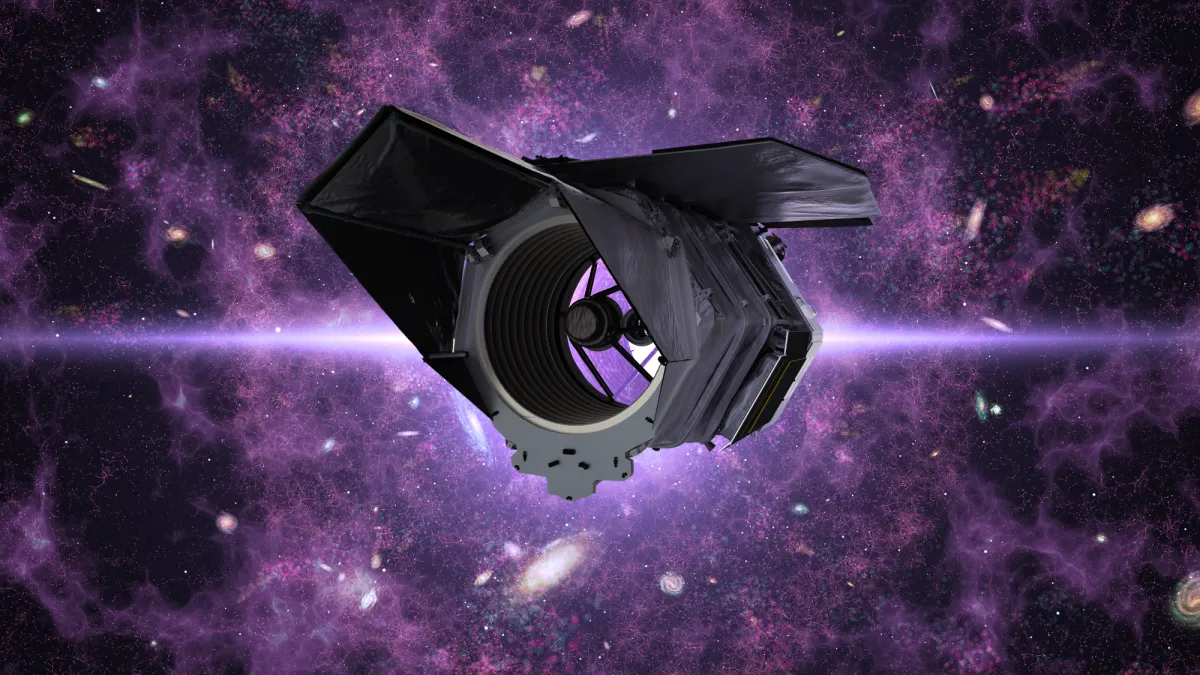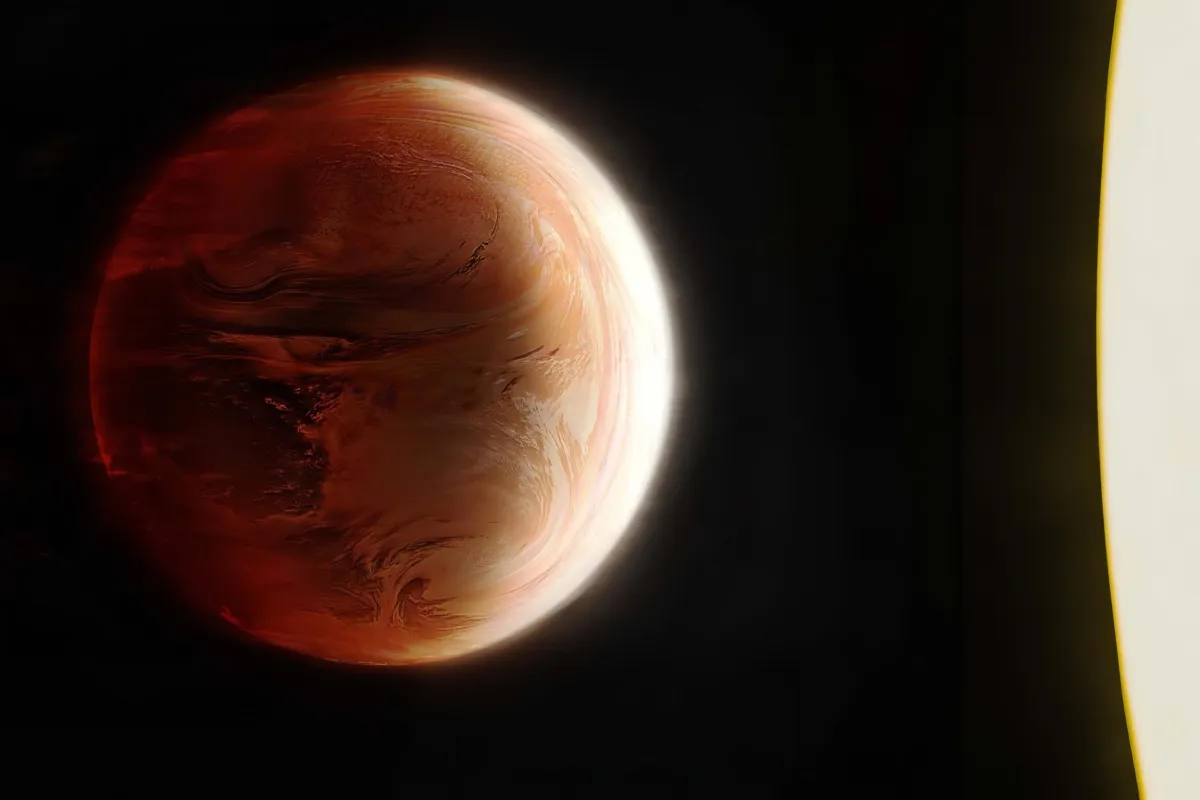
The James Webb Space Telescope has found a striking difference between the sunrise and sunset sides of an extremely hot alien planet called WASP-121 b. This gas giant is far from our solar system.
Astronomers saw clear evidence that the conditions at the planet's day-night line, called the terminator region, are very different from one side to the other. This discovery gives the best look yet at these atmospheric changes.
Cyril Gapp, a PhD student at the Max Planck Institute for Astronomy (MPIA), led the research team. They detected atmospheric differences that scientists had only predicted with computer models before. Now, they have directly observed them in great detail.
We're a new kind of news feed.
Regular news is designed to drain you. We're a non-profit built to restore you. Every story we publish is scored for impact, progress, and hope.
Start Your News DetoxDawn and Dusk Differences
The team made this discovery by measuring infrared light from WASP-121 b's star. They watched as the planet passed in front of its star. When this happens, some starlight shines through the planet's atmosphere before reaching Earth. By studying how this light changes, astronomers can learn about the atmosphere's temperature and what chemicals it contains.
The observations showed that the two sides of the planet's terminator absorb infrared light differently. This imbalance suggests big differences in temperature and atmospheric chemistry between the morning (dawn) and evening (dusk) regions.
Cyril Gapp noted that the James Webb Space Telescope's amazing quality lets them see distant planets in more detail than ever. He explained that by measuring how starlight absorption changes as WASP-121 b rotates, they can study its atmosphere longitude by longitude.
The data showed that the evening terminator absorbs more starlight than the morning terminator. This fits with current ideas that strong winds carry heat from the super-hot dayside to the cooler nightside. As these winds move eastward with the planet's rotation, they warm the evening side. Higher temperatures make the atmosphere in that area expand, making the planet appear larger and absorb more starlight.
The James Webb Space Telescope's NIRSpec instrument also found a stronger signal of carbon monoxide (CO) towards the end of the transit. There was also a slight overall drop in brightness. Researchers think the stronger signal comes from temperature changes, not more carbon monoxide.
However, water (H2O) seems to tell a different story. The measurements suggest a real decrease in water molecules in the atmosphere. The upper atmosphere gets hot enough to break water molecules apart. This shows that strong winds are heating the evening terminator.
A Planet with Permanent Day and Night
To spot these small atmospheric differences, scientists used a common feature of many hot gas giant exoplanets. These planets orbit very close to their stars. Because of this, the star's gravity slowly makes the planet's rotation and orbit match. This means one side always faces the star, while the other side is always dark.
WASP-121 b is an extreme example of this. Co-author Tom Evans-Soma from the University of Newcastle, Australia, explained that WASP-121 b is particularly extreme. The dayside averages about 2,770 Kelvin, while the nightside is closer to 1,000 Kelvin.
These temperatures mean the dayside is nearly 2,500 degrees Celsius (4,525 degrees Fahrenheit). The nightside is about 725 degrees Celsius (1,340 degrees Fahrenheit).
As the planet crosses in front of its star, it rotates slightly. This small change lets astronomers see different parts of the atmosphere during the transit. Most of the visible side is the nightside. But the way they view it also gives partial looks at the brighter dayside through both the dawn and dusk regions. The side leading the orbit is morning, and the side trailing is evening.
Scientists use spectrographs to split light into its different colors, like a prism. Since different gases absorb specific colors of light, researchers can identify the chemicals in the atmosphere.
Tracking Atmospheric Changes
As WASP-121 b rotates during its transit, the atmospheric signal changes over time. These changes can show differences across the planet's longitude.
During a full transit, WASP-121 b rotates about 30 degrees. This is enough to clearly tell the morning (dawn) and evening (dusk) terminators apart.
Usually, astronomers combine all the data from a transit to get a clearer signal. But for this study, Gapp and his team let the signal change throughout the transit as the planet rotated. Statistical analysis showed this method fit the observations much better. This strongly suggests that the atmospheric differences they found are real.
Mineral Clouds Might Play a Role
To see if temperature differences could explain what they saw, the researchers used atmospheric models. These models simulate how heat moves through the upper layers of a gas giant.
The models successfully showed the general asymmetry expected from temperature changes in the atmosphere. However, the actual observations showed a stronger effect than the simulations predicted.
This difference made researchers think that other cooling processes might be happening on the planet's morning side. Clouds are one possibility.
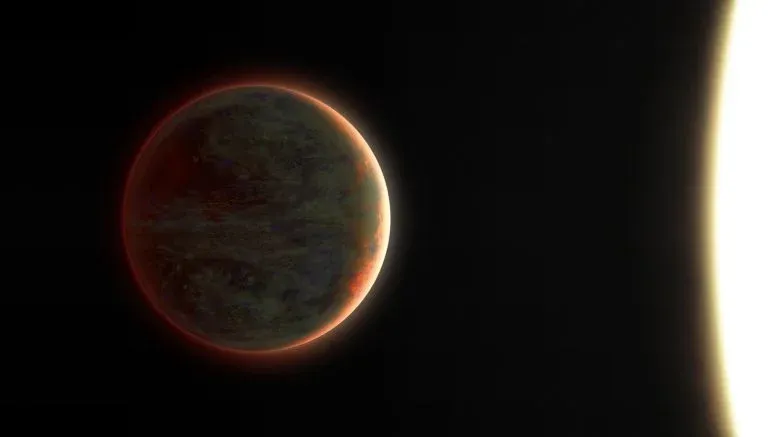
Earlier studies suggested that WASP-121 b might have clouds made of minerals like silicates, not water droplets. Such clouds can block infrared light coming from hotter layers below. This would make the atmosphere appear cooler than it actually is.
It is very hard to model how clouds form, condense, and evaporate in a constantly changing planetary atmosphere. Because of this, many atmospheric models, including those in this study, do not fully include clouds. This can lead to incomplete predictions.
When the researchers changed their simulations to estimate the effects of clouds on infrared light, the results matched the observations more closely. Still, more advanced modeling is needed before scientists can confirm the presence of clouds.
A New Way to Study Extreme Exoplanets
Future improvements to atmospheric models are expected to make this technique even better.
The researchers have already found other ultra-hot gas giant planets with the right temperatures and rotation rates for similar observations. By using the same method on more planets, astronomers hope to build a larger sample. This will show how atmospheric conditions change across longitude and if common patterns appear among these extreme planets.
Deep Dive & References
Atmospheric asymmetries in WASP-121 b revealed by rotational transits detected with JWST - Nature Astronomy, 2026