The Jiangmen Underground Neutrino Observatory (JUNO) in China has shared its first major scientific findings. These results offer very precise measurements of how some of the universe's most mysterious particles, called neutrinos, behave.
The findings were featured as a cover story in Nature on June 10. Scientists hope these new measurements will help solve the mystery of neutrino mass.
Understanding Neutrinos
Neutrinos are tiny particles with no electric charge and very little mass. They interact weakly with other matter. This means countless neutrinos pass through Earth, buildings, and even people every second without being noticed.
We're a new kind of news feed.
Regular news is designed to drain you. We're a non-profit built to restore you. Every story we publish is scored for impact, progress, and hope.
Start Your News DetoxBecause they are so hard to detect, neutrinos are still one of the least understood particles, even though they are common throughout the universe.
JUNO started collecting data in August 2025. Its main goal is to figure out the order of neutrino masses. This is a big unanswered question in particle physics. The experiment also aims to measure three of the six neutrino mixing parameters with high accuracy. It will also study neutrinos from sources like supernovae, the Sun, and Earth's interior.
JUNO's Impressive Early Results
The JUNO Collaboration used 59 days of data from late 2025. They measured two basic neutrino oscillation parameters with much greater precision. The uncertainty in these measurements was reduced by 1.6 times compared to all previous experiments combined.
Experts have praised the study. One reviewer noted that the results confirm JUNO's detector works well and that JUNO is now a key player in neutrino physics. They added that this work will help understand the three-flavor neutrino model and determine the neutrino mass order.
Nature also highlighted the importance of the work. They stated that understanding neutrinos is crucial for a complete picture of matter and forces. The first results from JUNO build confidence that the detector can determine the neutrino mass ordering. This marks a new era for precise neutrino measurements.
Earlier this year, Chinese Physics C featured JUNO's detector performance. Professor Arthur McDonald, a Nobel Prize winner for his work on solar neutrino oscillation, said that JUNO has met its design goals. He noted its excellent radiopurity, energy resolution, and stability. He added that the experiment is ready to pursue its goals, including finding the neutrino mass ordering and exploring physics beyond the Standard Model.
How the JUNO Detector Works
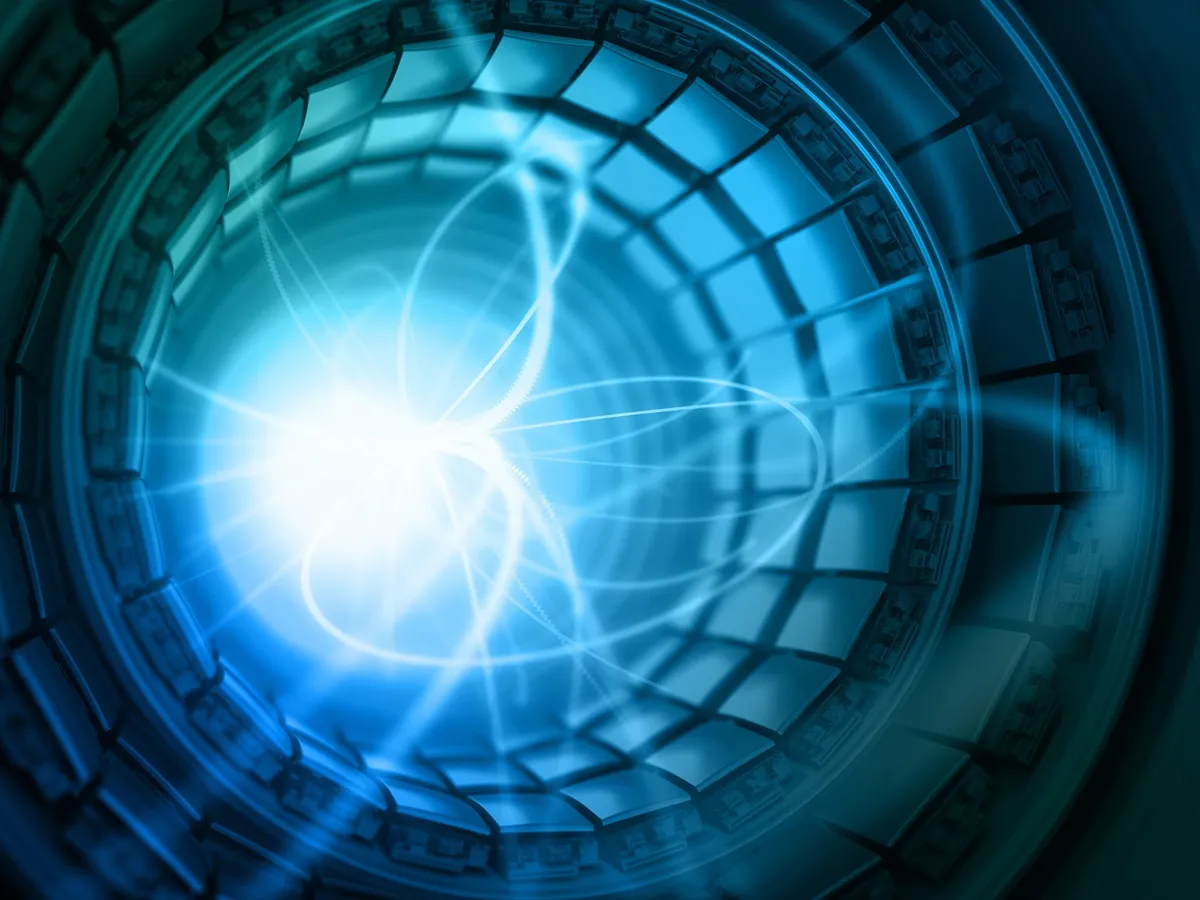
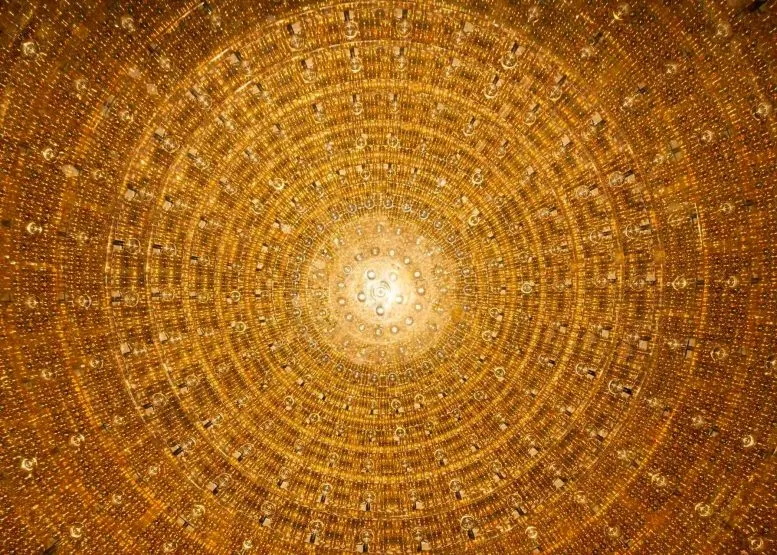
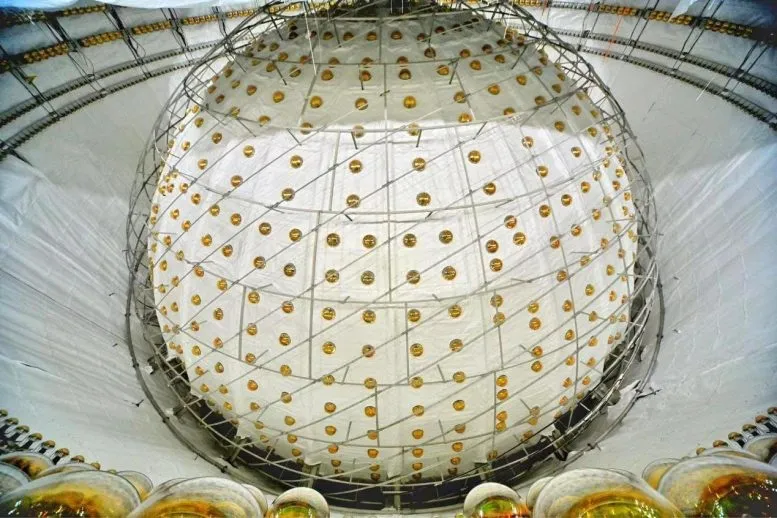
The JUNO observatory is located 700 meters underground. Its core is a liquid scintillator detector with an effective mass of 20,000 tons. This detector sits inside a 44-meter-deep water pool.
A large stainless steel structure holds a 35.4-meter acrylic sphere. This sphere contains the liquid scintillator, along with 20,000 20-inch photomultiplier tubes (PMTs) and 25,600 3-inch PMTs.
When neutrinos interact inside the detector, they create tiny flashes of light. The PMTs capture this light and turn it into electrical signals. By analyzing these signals, scientists can accurately measure the neutrinos' energy and find important oscillation parameters.
What's Next for JUNO
JUNO has been running successfully for nine months. As more data is collected, researchers expect to release new scientific results starting this summer. These future measurements could help answer big questions about neutrinos and reveal more about these mysterious particles.