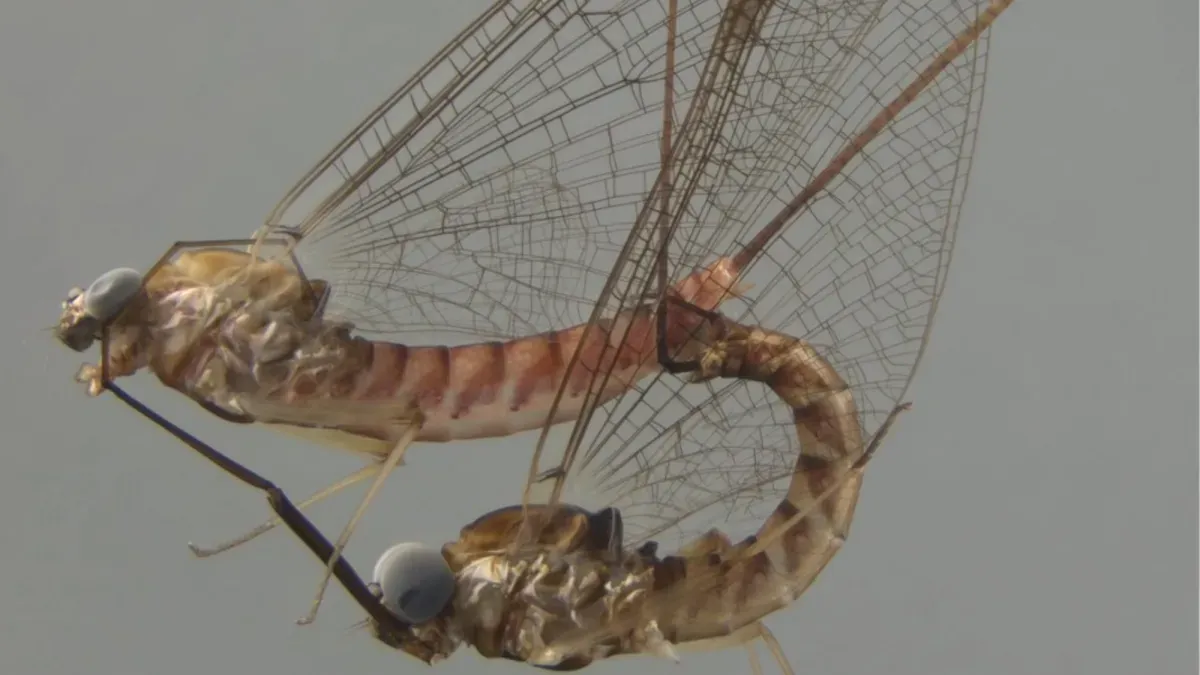
Ever wonder how mayflies get it on? Probably not. But a team of dedicated (and slightly unhinged) researchers did, and their methods involved nets, freezing spray, and a whole lot of commitment to entomological voyeurism.
Their study, charmingly titled, "When mayflies have an erection: functional morphology of the genitalia in Ecdyonurus," reveals a world of aerial acrobatics and surprisingly complex plumbing. Because, apparently, that's where we are now.
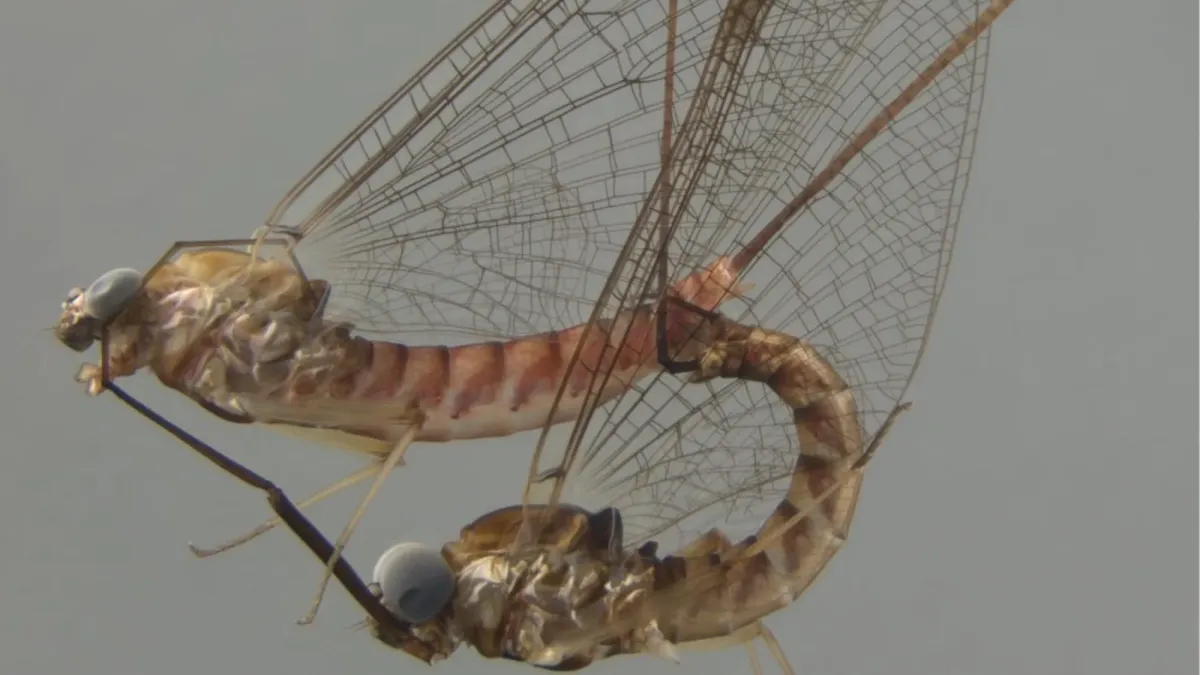
Frozen in the Act
Mayflies are the ultimate YOLO insects. They spend most of their lives as aquatic larvae, then emerge as adults with one purpose: get busy, then die. They don't even eat. Just pure, unadulterated, winged romance.
We're a new kind of news feed.
Regular news is designed to drain you. We're a non-profit built to restore you. Every story we publish is scored for impact, progress, and hope.
Start Your News DetoxThe problem? Their entire adult life cycle is a blur. Mating happens mid-air, at speed, and then it's over. Previous studies lacked the, shall we say, intimacy required to truly understand the mechanics.
Enter the German research team. Armed with long-handled nets, they stalked Ecdyonurus venosus mayflies in the Black Forest, waiting for nature to take its course. When a pair locked in a mid-air embrace, the net swooped in. Most couples, understandably, broke apart. But a few hardy pairs stayed connected, frozen not by love, but by science.

Then came the freezing spray. Yes, they literally flash-fropped mating mayflies to preserve the moment. Because nothing says scientific rigor like an insect-sized cryogenic chamber. These frosty couples were then preserved in ethanol, destined for the lab.
Once there, the researchers employed synchrotron X-ray microtomography (µCT) — basically, a super-powered 3D scanner — to create digital models. The goal: understand the intricate dance of mayfly genitals, and specifically, how the male's bits change shape during the act.
A Tale of Two Penises
Mayfly mating is less a gentle waltz and more a high-stakes aerial grapple. Males swarm over water, females join the party, and BAM! Instant mid-air hookup. The male, ever the gentleman, attaches from below, using his front legs to grip her wing bases. Then he bends his abdomen up and over, deploying special claspers for an extra-secure hold. Because, apparently, other males are always trying to cut in.
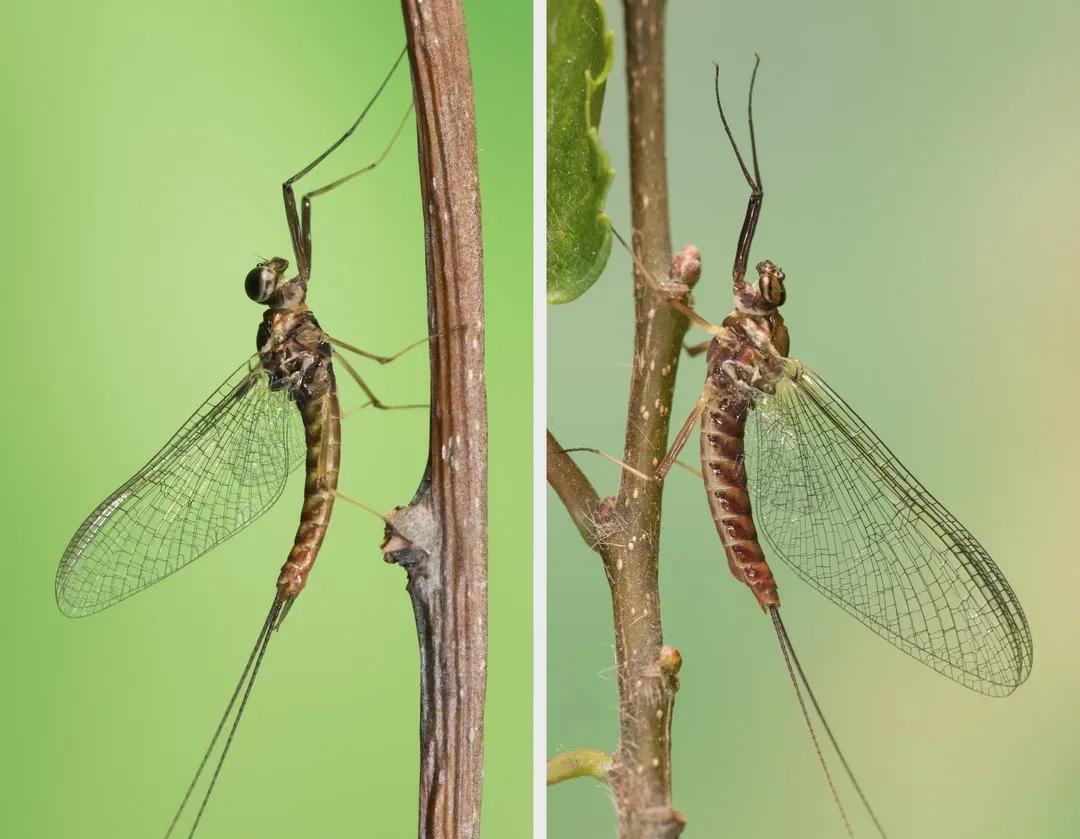
Females have a backward-opening copulatory pouch. Males, however, are rocking two separate penis lobes, complete with spines and claspers. The µCT scans showed that these double-barreled penises are anything but static. Strong muscles deform the shaft, causing the lobes to fold over while the spines extend, pricking into the female's pouch membrane. This stretches the pouch, allowing it to receive a surprisingly large amount of sperm, which gets stored in a folded membrane up front.
It's a complex, spiky, and surprisingly effective system designed for a quick, secure transfer in a chaotic environment. After all that effort, the happy couple doesn't exactly get a honeymoon. Males die of exhaustion shortly after their swarming flight. Females lay their fertilized eggs upstream, and then they, too, shuffle off this mortal coil. Talk about a whirlwind romance.