Forget the usual popularity contests. The third annual Invertebrate of the Year competition is officially open, inviting you to cast your vote for the unsung heroes of the animal kingdom: the spineless.
Because, let's be honest, those vertebrates — us included — are a bit overrepresented. They make up less than 5% of all animal life on Earth. The other 95%? That's the invertebrate party, and it's time they got their moment in the sun.
Maybe you're a classic earthworm enthusiast, a cephalopod connoisseur, or a beetle buff. If not, don't sweat it; there are 1.3 million other species to choose from. Consider the wētāpunga, a giant grasshopper from New Zealand that somehow manages to neither fly nor jump, which feels like a missed opportunity. Or the fen raft spider, which casually walks on water, because why not?
We're a new kind of news feed.
Regular news is designed to drain you. We're a non-profit built to restore you. Every story we publish is scored for impact, progress, and hope.
Start Your News DetoxThen there's the tongue-biting louse, a tiny crustacean with a truly unique approach to freeloading. It moves into a fish's gills, attaches itself to the poor fish's tongue, and proceeds to eat its food. The kicker? It leaves just enough for the fish to survive for years. Which, if you think about it, is both impressive and slightly terrifying.
Why We Should All Be Team Invertebrate
While we're busy admiring puppies and pandas, invertebrates are out there doing the actual heavy lifting. Snails, spiders, corals, wasps, and crabs aren't just decorative; they're the invisible gears of our planet. They pollinate our plants, create our soil, clean our water, and keep pests in check. Without them, human civilization would basically grind to a halt. As biologist E. O. Wilson once so pointedly put it, "The truth is that we need invertebrates but they don’t need us."
How to Make Your Nomination Count
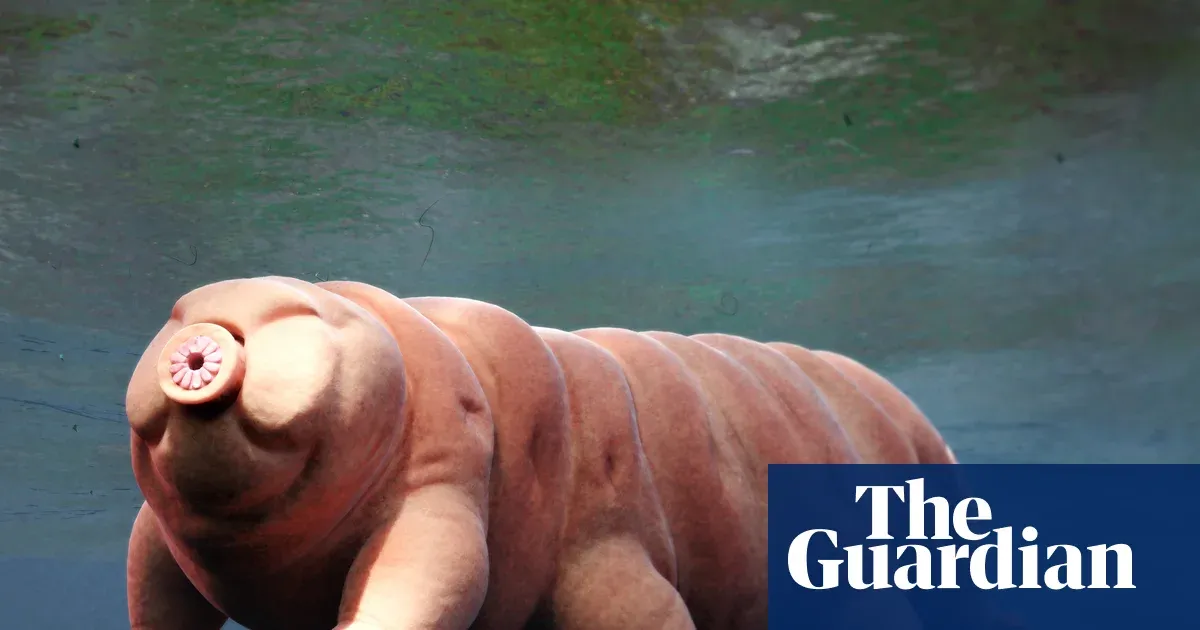
There are only two rules for entry. First, no repeat winners. So, last year's champ, Milnesium tardigradum (a microscopic critter described as looking like a "piglet in a duvet"), is out. As is the inaugural 2024 winner, the common earthworm, which snagged a respectable 38% of the vote.
Second, and this feels like it shouldn't need to be said, nominate actual invertebrates. No, politicians, regardless of how you feel about their backbone (or lack thereof), do not qualify.
Need some inspiration? The all-female common rotifer can reportedly survive being frozen for thousands of years. Meanwhile, the dark-edged bee fly is a pollinator whose larvae have a rather dark secret: they feast on the offspring of solitary bees. Because apparently that's where we are now.
Nominations are open until midnight on Monday, July 13th. A shortlist of ten will be announced on August 3rd, with public voting to follow. The Invertebrate of the Year 2026 will be crowned on August 17th. Choose wisely. The fate of the spineless hangs in your hands.