More than 500 million years ago, the Cambrian explosion dramatically changed life on Earth. This period saw the rise of almost every major animal group we know today. However, one group, bryozoans, seemed to be missing from the fossil record of this time. Bryozoans are tiny animals that live in colonies and cover modern reefs and seafloors. Their absence was a big mystery in evolution.
Now, scientists have found incredibly well-preserved fossils in southern China. These fossils are about 520 million years old. They show that bryozoans were indeed thriving during the Cambrian explosion. This discovery changes the idea that bryozoans evolved much later. It also provides strong proof that most major animal groups appeared during this important evolutionary period.
These fossils are special because of their age and how well they are preserved. They show tiny details of the animals' bodies. This allowed researchers to confirm they were bryozoans. The find settles a long-standing debate and pushes the origin of bryozoans much further back in time.
We're a new kind of news feed.
Regular news is designed to drain you. We're a non-profit built to restore you. Every story we publish is scored for impact, progress, and hope.
Start Your News DetoxSolving an Ancient Puzzle
Scientists from China, Sweden, Australia, and Germany published their findings in Nature. They describe fossils from the Xiannüdong Formation in southern Shaanxi Province, China. The fossils include new examples of Protomelission gatehousei and a new species, Dayingomelission hexaclitia. Both are from the early Cambrian period, about 520 million years ago.
Dr. Timothy Topper, a co-author from Northwest University and the Swedish Museum of Natural History, noted that bryozoans were the "elephant in the room" of Cambrian paleontology. Every other major animal group had a Cambrian representative except them. These new fossils finally close that chapter.
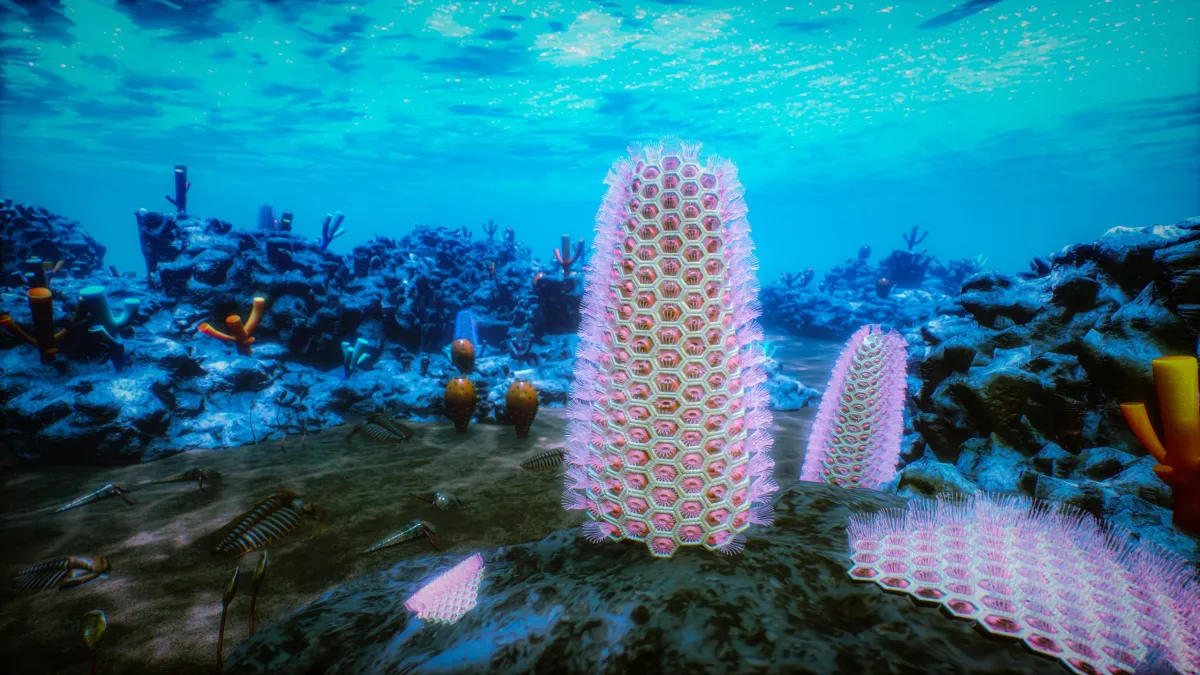
The fossils are important because of their age and the detail they preserve. The small colonies, only a few millimeters wide, were fossilized in three dimensions. Even their internal soft tissues were preserved and turned into minerals by phosphate.
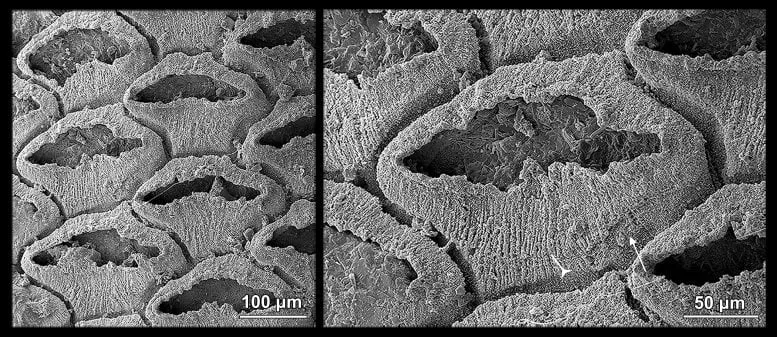
Using advanced imaging, researchers found tiny body parts. These included membranous sacs, structural spines called styles, and even individual muscle fibers. They also saw the unique hexagonal, modular arrangement of zooid skeletons. This structure is typical of bryozoan colonies. These skeletal and soft tissue details strongly confirm they are bryozoans.
Professor Zhifei Zhang of Northwest University, the study's lead author, called these specimens "remarkable." He explained that having soft tissues mineralized inside their skeletons after half a billion years is extraordinary. He suggested these bryozoans lived in shallow, clear-water reef environments. This might explain why they were hard to find, as most well-preserved Cambrian fossils come from deeper waters.
Changing the Timeline of Life
These fossils do more than just fill a gap in the fossil record. They also change how scientists understand the bryozoan family tree. A genetic analysis places both Cambrian species within the Stenolaemata, one of the three main groups of living bryozoans. Since these fossils are already an advanced branch of the group, bryozoans must have appeared even earlier. They might have originated in the Ediacaran period, before the Cambrian explosion.
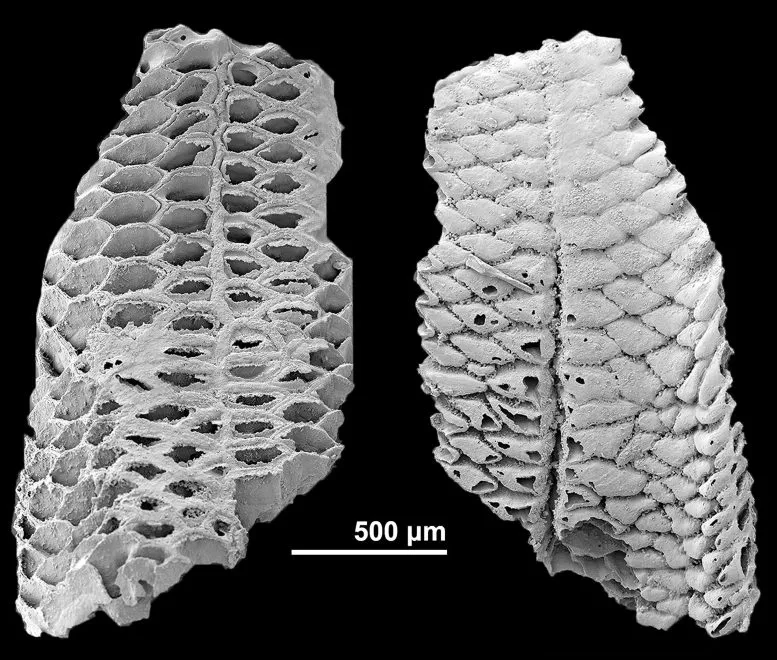
The new evidence also challenges earlier ideas that P. gatehousei might not be a bryozoan. Some thought it could be a green alga or parts of another organism. However, the newly preserved soft tissues and detailed comparisons of colony size, shape, and internal structure rule out those ideas. They clearly link the fossils to bryozoans.
Baopeng Song, the study's lead author, explained that these are not simple early forms. They are complex, modular colonies. He noted that the combination of skeletal structure and internal anatomy proves these are true bryozoans. It shows the group was already diverse during the Cambrian radiation.
These two Chinese species, along with earlier Cambrian fossils from South Australia, suggest bryozoans were more widespread in early Cambrian oceans than previously thought. They also show these animals were already highly developed. Their colonial body plan, where identical individuals work together within a shared skeleton, now seems to be a key innovation of the Cambrian explosion, not a later development.
Deep Dive & References
High-fidelity modular skeletons authenticate a Cambrian origin for Bryozoa - Nature, 2026