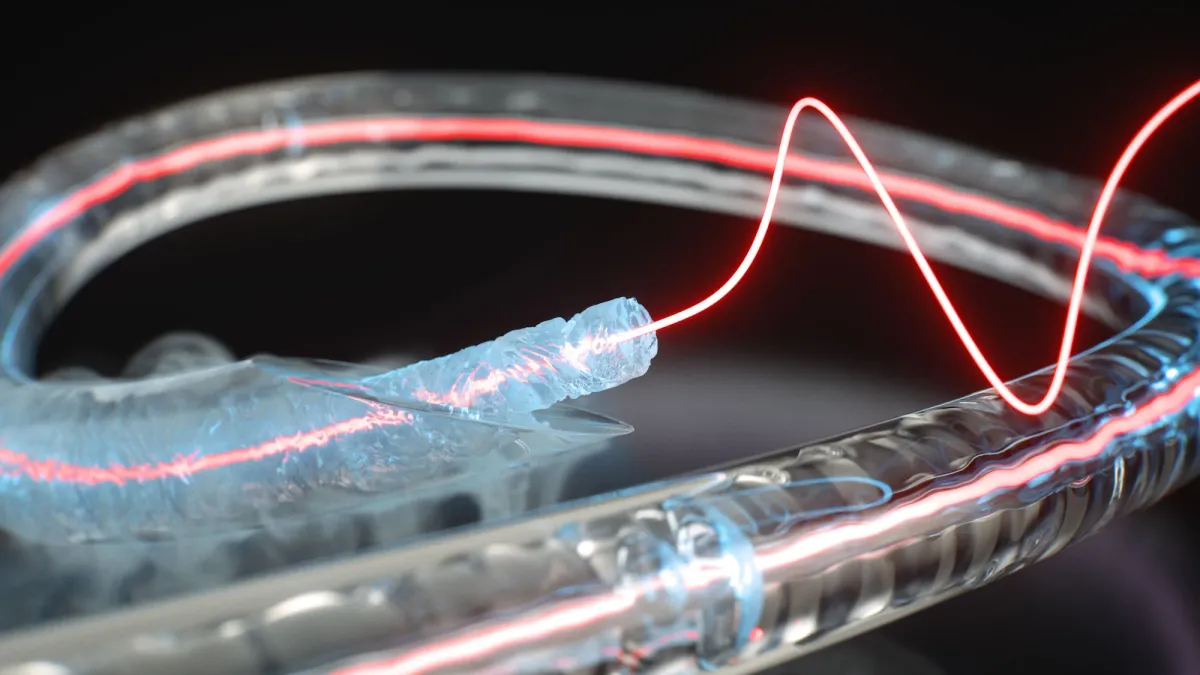
Heat is usually a bit of a rebel. You want it to go one way, it decides to spread out everywhere, like a toddler with a box of crayons. But what if you could make it march in a straight line, like a well-behaved soldier? Scientists just figured out how to do exactly that, and they did it at room temperature, which is the scientific equivalent of teaching that toddler to do your taxes.
For the first time ever, researchers have observed quantum heat waves, called phonons, moving in focused, ray-like paths at regular room temperature. Previously, this party trick — known as phonon focusing — only happened when things were so cold they'd make a polar bear shiver. This new discovery could fundamentally change how we manage heat in everything from your phone to supercomputers, and it opens up some seriously cool doors for quantum computing.
Heat, But Make It Laser-Focused
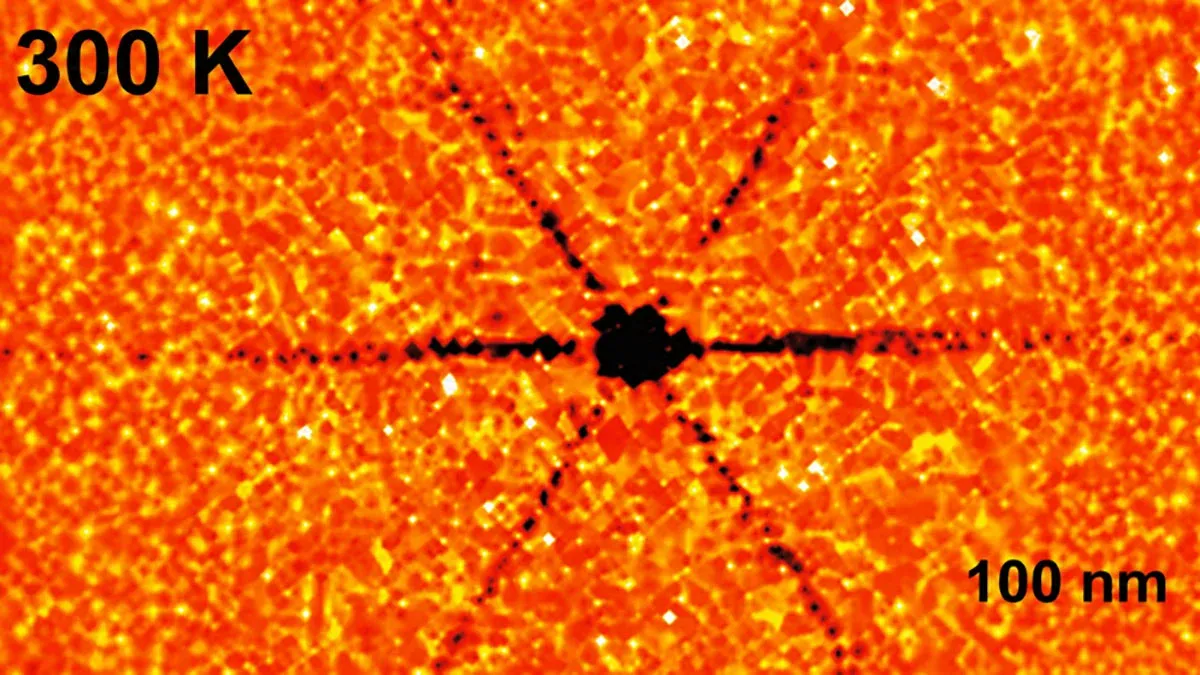
Think about it: Heat typically diffuses in all directions, making it a nightmare to control. But Professor Yongjie Hu and his team at UCLA's Samueli School of Engineering found that in a specific crystal semiconductor called boron arsenide, these quantum vibrations follow precise routes dictated by the material's internal structure. Instead of radiating outwards, the heat forms distinct rays, almost like tiny heat-lasers.
We're a new kind of news feed.
Regular news is designed to drain you. We're a non-profit built to restore you. Every story we publish is scored for impact, progress, and hope.
Start Your News DetoxIt’s like the difference between a floodlight and a fiber optic cable. Most materials are the floodlight, spraying heat everywhere. Boron arsenide? It’s the fiber optic, directing heat with impressive precision. The team published their findings in Nature Physics, confirming that this material has an unusually weak phonon scattering rate, allowing the wave-like heat transport to persist even when things aren't chilling near absolute zero.
To actually see this effect, the researchers had to get clever, developing a nanoscale temperature mapping method. In most materials, their heat maps looked like blurry circles. But in boron arsenide, the patterns formed clear, distinct rays. Even more fascinating, these patterns shifted predictably when the crystal's orientation changed, creating six-sided, eight-sided, and four-sided arrangements of focused heat. Which, if you think about it, is both impressive and slightly terrifying.
The Future Is Less Overheated
This isn't just a neat parlor trick. Being able to guide heat with atomic-scale precision could be a game-changer for overheating issues that plague AI hardware, microelectronics, and even aerospace systems. High temperatures are often the silent assassins of device performance and reliability, limiting how powerful and compact our tech can get.
Professor Hu noted that this finding lays the foundation for "quantum thermal engineering." Imagine a world where your devices don't just try to remove unwanted heat, but actively steer it away from sensitive components. It’s like having a tiny, invisible traffic cop for thermal energy.
This also means researchers might be able to fine-tune how phonons, electrons, and other energy carriers interact, which is a big deal for future quantum information and sensing technologies. So, the next time your laptop isn't melting your thighs, you might just have some well-behaved quantum heat waves to thank.