A new type of optical fiber, frozen at -196 °C, offers a powerful way to control how light and sound interact. This innovation could lead to breakthroughs in computing and sensing.
When liquids like molten lava or lake water cool, they turn solid. This changes their physical properties, including how sound and light move through them. Optical fibers are usually made by heating glass until it's soft enough to be stretched into thin strands. These fibers are crucial for telecommunications, carrying information quickly over long distances.
Special fibers also exist for lasers, medical endoscopes, and sensors. For example, hollow core fibers can hold gases or liquids, measure temperatures, or act as tiny chemistry labs.
We're a new kind of news feed.
Regular news is designed to drain you. We're a non-profit built to restore you. Every story we publish is scored for impact, progress, and hope.
Start Your News DetoxFreezing a Liquid Core to Guide Light
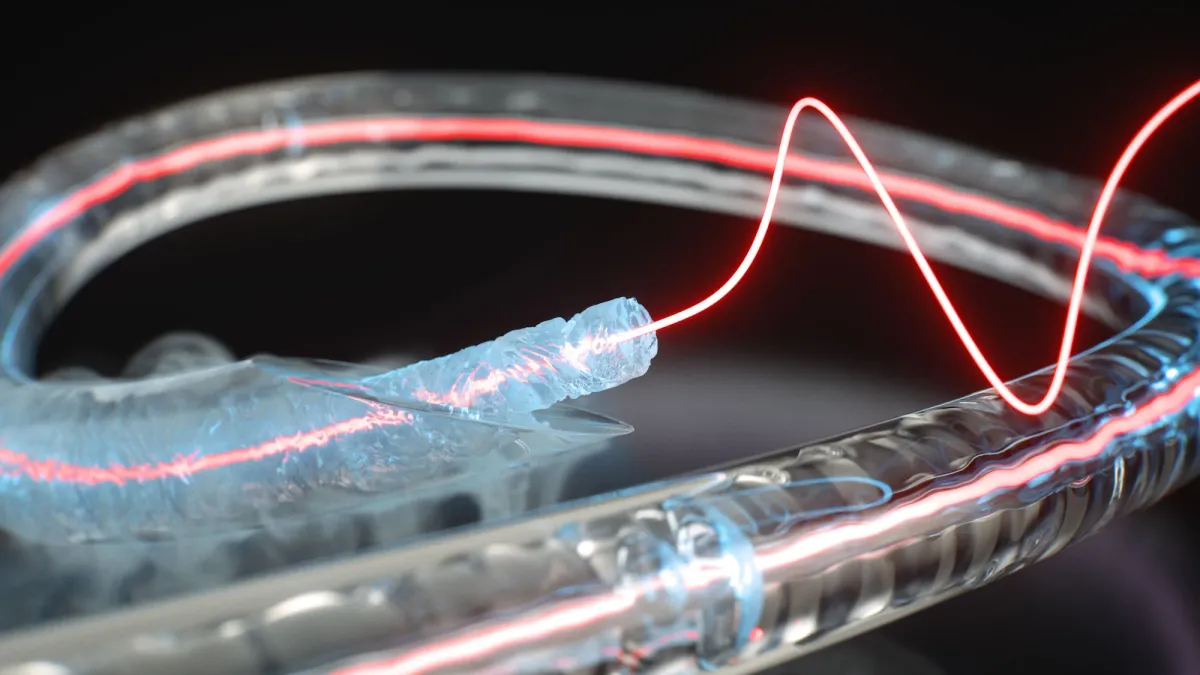
Researchers from the Max Planck Institute, Leibniz University Hannover, and the Leibniz Institute for Photonic Technologies created a new optical fiber. They took liquid core optical fibers (LiCOF) and cooled them to -196 °C using nitrogen. This extreme cold turned the liquid core into a solid.
Simon Seiderer, a lead author and researcher, explained that the frozen part of the LiCOF still guides light. Both the liquid and frozen sections of the fiber also guide hypersonic sound waves.
This new fiber creates a very strong interaction between light and sound, known as Brillouin-Mandelstam scattering. While this effect happens in regular optical fibers, freezing the LiCOF makes the interaction over 1,000 times stronger than in standard fibers. This is because the frozen core is dense and keeps the light and sound tightly confined.
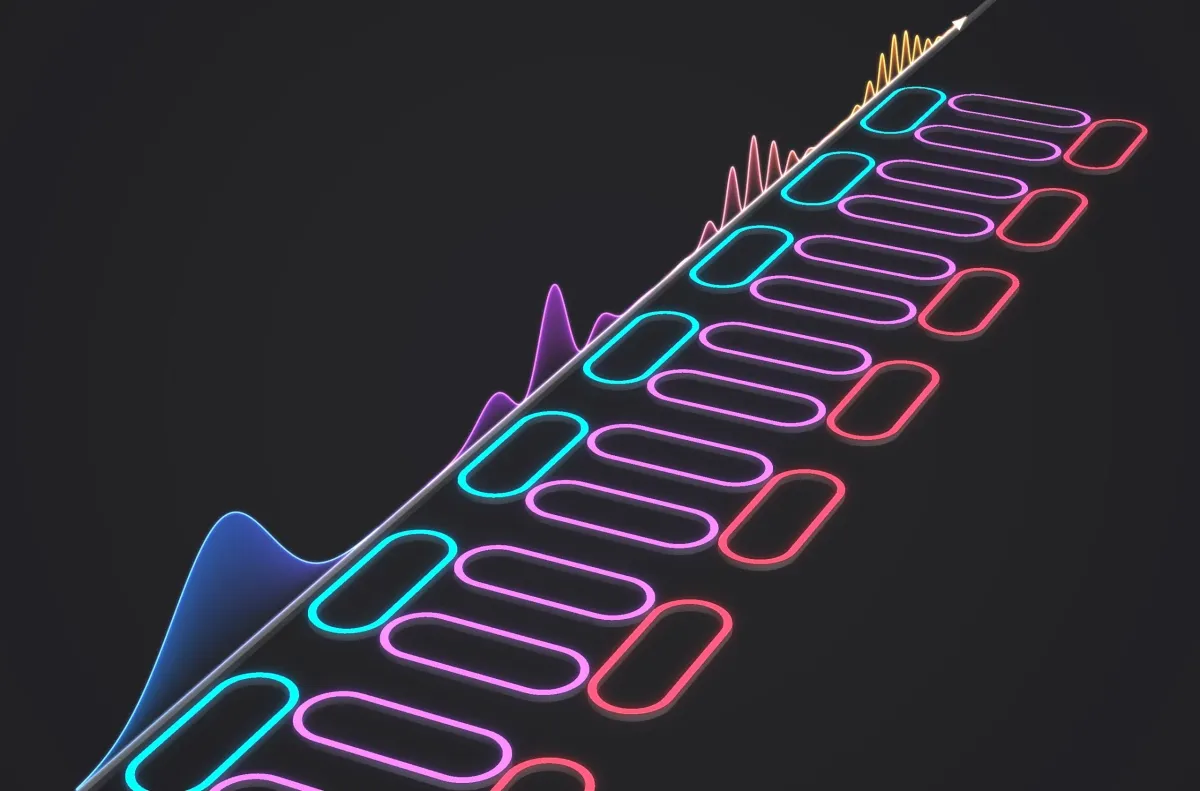
The team used this strong interaction to show optoacoustic memory. This is a key part of photonic neuromorphic computing, which mimics how the brain works. Light travels much faster than sound. So, information from a fast light wave can be stored temporarily in a slower sound wave, then turned back into light.
The strong connection inside the frozen LiCOF could greatly reduce the energy needed for photonic computing systems.
New Applications for a Unique Fiber
This research builds on work with Professors Markus Schmidt and Mario Chemnitz at IPHT Jena, who are pioneers in liquid core optical fibers. Freezing the LiCOF core added a step that led to these powerful nonlinear effects.
 Project leaders of the collaborative project: Jun.-Prof. Mario Chemnitz, Prof. Birgit Stiller, Prof. Markus A. Schmidt (from left to right). Credit: MPL
Professor Birgit Stiller, who leads the project, noted that freezing the liquid core created a completely new physical platform. It offers extreme nonlinearities while being easy to use.
She added that demonstrating efficient optoacoustic memory is a great first step. This strong light-sound coupling opens up new possibilities for neuromorphic computing, quantum information processing, microwave photonics, and highly precise sensing.
Deep Dive & References
Giant Brillouin gain in frozen CS₂ capillaries - Optica, 2026