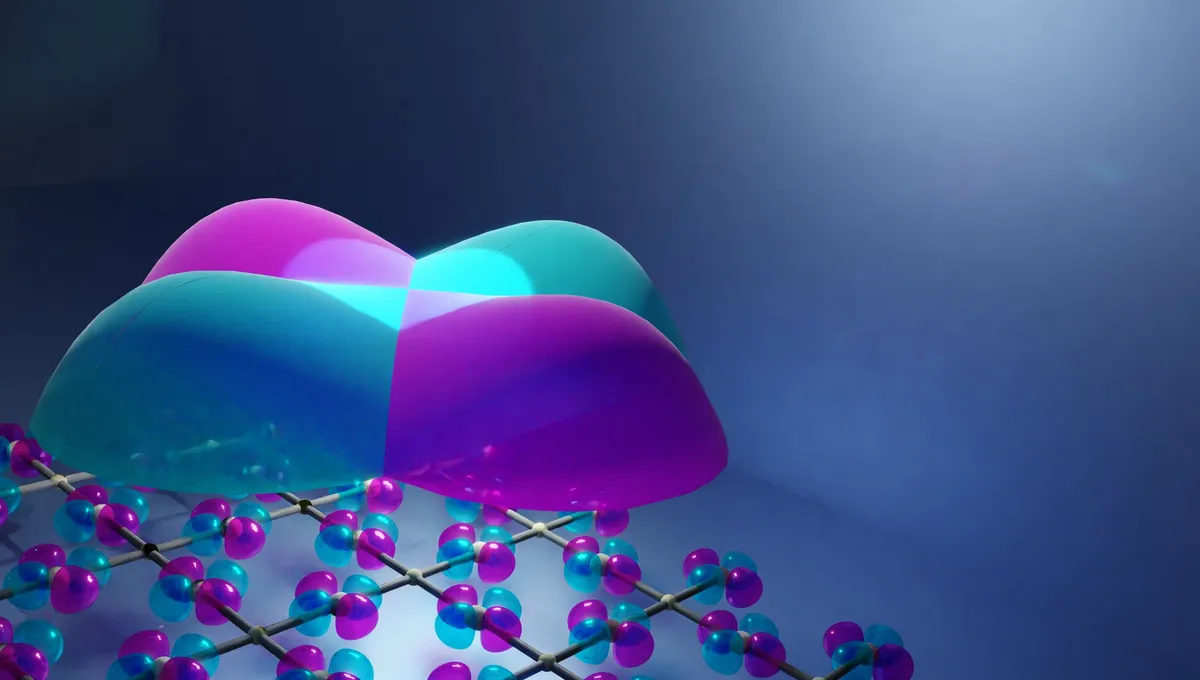
A new method allows scientists to create nanocrystals from metal nitrides. This was previously thought impossible. Researchers at the University of Chicago and Argonne National Laboratory developed this technique.
This breakthrough could lead to more durable materials for flexible electronics and other devices. The work was published in Nature.
Unlocking New Materials
Nanocrystals are tiny crystals. Millions or billions can fit on a fingernail. Materials at this size have unique properties, like producing bright light or speeding up chemical reactions. The 2023 Nobel Prize in Chemistry recognized research in this field.
We're a new kind of news feed.
Regular news is designed to drain you. We're a non-profit built to restore you. Every story we publish is scored for impact, progress, and hope.
Start Your News DetoxUntil now, scientists could only make nanocrystals from a limited range of materials. Metal nitrides are important in technology, but they were too difficult to turn into nanocrystals.
Ruiming Lin, a graduate student at UChicago, was the lead author of the study. He noted that the team showed how to make nearly a dozen materials that traditional methods could not create.
Metal nitrides are already used in many technologies. Gallium nitride is found in LED lights and laptop screens. Making these materials into nanocrystals could expand their uses. They could be mixed into plastics, printed with inkjet printers, or woven into flexible fabrics.
Dmitri Talapin, a professor at UChicago and scientist at Argonne, said this work pushes the boundaries of what was thought possible. It creates a foundation for using nitrides as nanomaterials.
Overcoming Strong Bonds
Metal nitrides are very strong and resistant to heat and corrosion. These qualities make them useful for electronics and medical implants. However, their strong chemical bonds also make them hard to form into nanocrystals.
For a crystal to form, its ions must constantly rearrange. In metal nitrides, the bonds are so strong that the ions resist moving. Talapin explained that if bonds don't break during this process, nanocrystals cannot form correctly.
The Molten Salt Solution
The researchers found a solution using two key steps. First, they used molten salts as a liquid medium to help stabilize the nanocrystals as they formed. This idea came from an earlier discovery by Talapin's lab.
Next, they found a specific combination of temperature and ammonia pressure. This allowed the strong bonds between metal and nitrogen atoms to break and reform more easily. Talapin described this process as "very unusual" and against common sense in the field.

Using this method, the team created nanocrystals from gallium nitride and about ten other related materials. These include titanium nitride, used in medical implants, and niobium nitride, an industrial superconductor. Molybdenum nitride, a common catalyst, also became accessible.
These materials are useful and affordable. Turning them into nanocrystals could open up many new technologies. Lin hopes his discovery will lead to many practical applications.
Deep Dive & References
Ammonia pressure controls colloidal metal nitride synthesis in molten salts - Nature, 2026