The 2026 Europhysics Prize, a top honor in condensed matter physics, has been awarded for a groundbreaking discovery. Professors Jairo Sinova and Tomas Jungwirth, along with Dr. Libor Šmejkal, received the prize for finding altermagnetism. This is a new, fundamental type of magnetism.
Their work shows that there is a third basic form of magnetism, alongside ferromagnetism and antiferromagnetism. This discovery changes what scientists have understood about magnetic order for over a century. It has also opened up a new area of research. This new field has big implications for quantum materials, condensed matter physics, and future information technology.
Sinova, who directs the Spin Phenomena Interdisciplinary Center (SPICE) at Mainz University, noted that the award recognizes a discovery that challenged established ideas in physics. He added that finding a new magnetic phase hidden for over 100 years shows that even mature scientific fields can still hold surprises.
We're a new kind of news feed.
Regular news is designed to drain you. We're a non-profit built to restore you. Every story we publish is scored for impact, progress, and hope.
Start Your News DetoxThe partnership between Sinova's team at Johannes Gutenberg University Mainz and Jungwirth's group in Prague was key to developing altermagnetism. Šmejkal worked in Mainz for eight years, leading the development of theoretical ideas that led to the discovery. The team used modern symmetry theory and spintronics to uncover this new magnetic order.
Their predictions quickly led to experimental confirmations worldwide. Altermagnetism is now one of the fastest-growing research areas in condensed matter physics, with programs across Europe, North America, and Asia.
Rewriting Physics Textbooks
For more than 100 years, physicists thought all magnets fit into two groups. Ferromagnets have a net magnetization and are used in magnetic memory. Antiferromagnets have no net magnetization and different electronic properties.
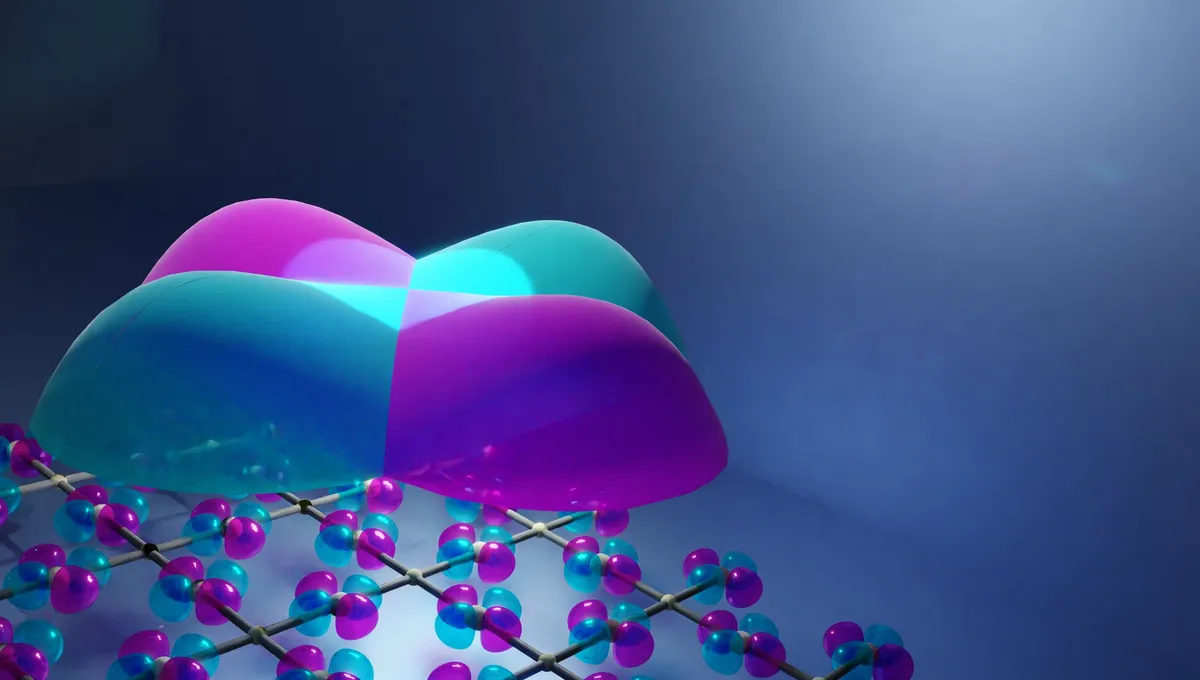
Altermagnetism revealed a third option. These materials have no net magnetization, like antiferromagnets. However, they also show electronic properties previously only seen in ferromagnets. This combination allows for highly spin-polarized electrical currents and very fast magnetic changes. This makes altermagnets good candidates for new spintronic devices.
Beyond technology, this discovery has deep meaning for basic physics. Altermagnetism creates a new class of matter based on symmetry. It also connects to topological physics, unusual superconductivity, and strongly correlated quantum materials.
From Idea to Global Research
The first steps toward altermagnetism came from earlier work on unusual magnetic transport. This included predicting the crystal anomalous Hall effect. Researchers then realized these properties were not just specific to certain materials. Instead, they pointed to a new magnetic phase ruled by overlooked spin symmetries.
In 2022, they fully classified altermagnetism and found hundreds of possible materials. Since then, experimental groups globally have confirmed altermagnetism using various methods. These include angle-resolved photoemission spectroscopy (ARPES) and electrical transport measurements.
The field has grown very fast, with hundreds of papers published in just a few years. Altermagnetism is now a major topic at international conferences. The EPS Europhysics Prize will be given in September 2026 in Graz, Austria.
Deep Dive & References
- Simple magnetic materials could enable altermagnets - Phys.org, 2025
- Discovery of Hall effect that can violate Onsager reciprocity - Phys.org, 2023