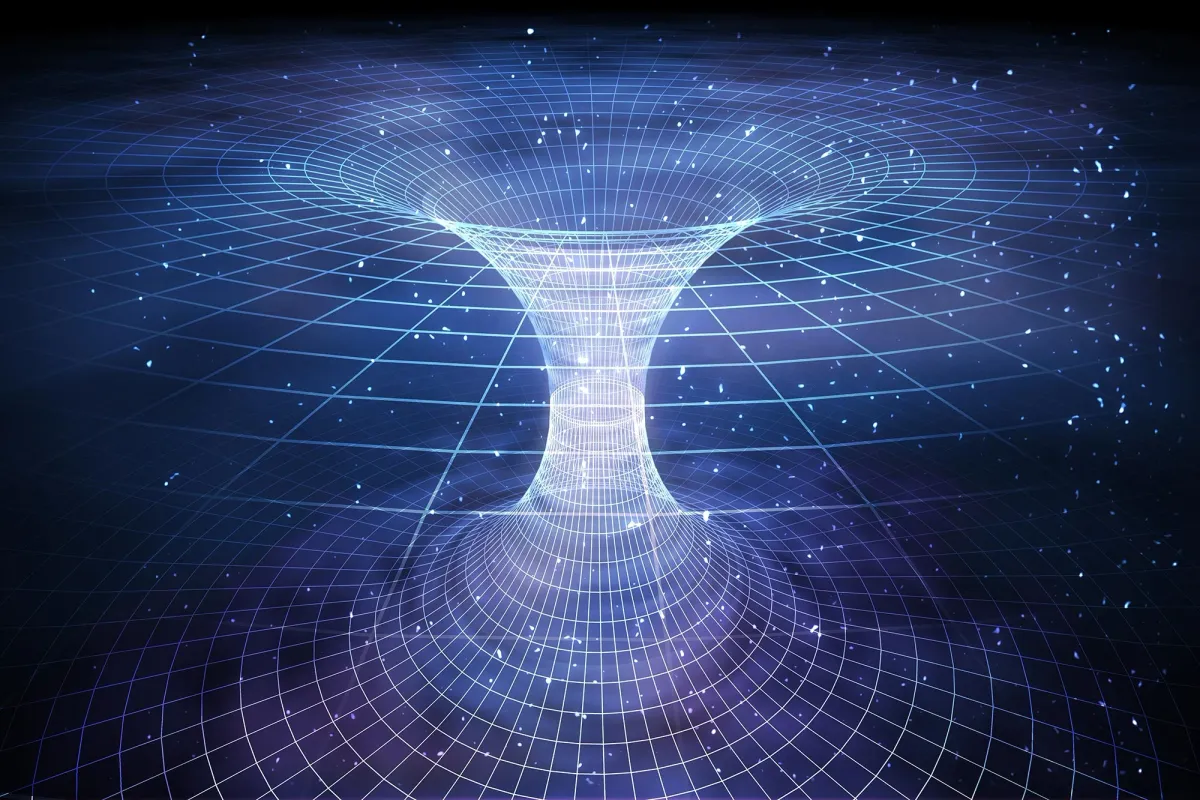
New research explores how gravity and thermodynamics might connect, using a theory called Gravity from Entropy (GfE). This theory could help explain a long-standing puzzle in cosmology.
The Universe has grown more complex over time, forming galaxies, stars, and even life. But the second law of thermodynamics says that the total disorder, or entropy, in an isolated system should always increase. This creates a paradox: how can order increase while overall disorder also increases?
Albert Einstein believed the second law of thermodynamics was one of the most important principles in physics. It states that entropy in an isolated system always goes up. Cosmologists have struggled to explain how the early Universe, thought to start with low entropy, could then form complex structures while its total entropy continued to rise.
We're a new kind of news feed.
Regular news is designed to drain you. We're a non-profit built to restore you. Every story we publish is scored for impact, progress, and hope.
Start Your News DetoxReframing the Entropy Puzzle
Professor Ginestra Bianconi, a mathematician at Queen Mary University of London, looked at this problem using the Gravity from Entropy (GfE) theory. This quantum gravity theory uses statistical mechanics to explain gravity from the tiny parts of spacetime geometry.
Her analysis shows that the Universe's total entropy increases over time, but the entropy per unit volume actually decreases. This difference allows for new ways to understand how organized structures can form in specific areas, even as the Universe's overall disorder grows.
The idea that gravity and thermodynamics are linked isn't new. Jacob Bekenstein and Stephen Hawking showed in the 1970s that black holes have entropy and emit radiation. This suggested a deeper connection between spacetime, information, and heat.
Gravity from Spacetime Information
Gravity from Entropy (GfE) suggests that gravity comes from a tension between the physical spacetime metric and another metric created by matter and curvature. A metric is a mathematical tool that describes distances and shapes in spacetime.
This idea is part of the GfE equations through something called Quantum Geometric Relative Entropy (QGRE). QGRE measures the relationship between these two metrics. When energy is low and curvature is weak, the GfE theory matches Einstein's General Relativity. But under stronger conditions, the theories start to differ.
Beyond these weak conditions, the GfE equations also show a changing dark energy term. Because this dark energy changes over time, it could lead to observations that help physicists test the theory.
Expansion and Entropy
Professor Bianconi studied the thermodynamics of GfE in Friedmann–Robertson–Walker spacetimes. These are mathematical models that describe a Universe that is expanding and generally uniform.
Her findings suggest that the local parts of spacetime follow the first law of thermodynamics. In this view, the changing dark energy acts like internal energy. The Quantum Geometric Relative Entropy (QGRE) represents the local entropy per unit volume. The theory also naturally produces forms of temperature and pressure, hinting that the quantum state behind GfE might have a thermal nature.
The local volume, defined by the physical metric, is very important. As the Universe expands and this volume increases, the total entropy goes up. However, the amount of QGRE within each unit of volume decreases. This difference between total and local entropy gives the theory its unique thermodynamic behavior.
A Theoretical Bridge
This framework suggests that gravity and spacetime might be deeply connected to both thermodynamics and information. If further developed, it could offer a new way to explore how gravity, quantum theory, cosmology, and the rise of complexity are related.
The theory is still in its early stages. However, Professor Bianconi believes it could help bridge the gaps between general relativity, thermodynamics, quantum mechanics, and cosmology.
Professor Bianconi noted that this work shows how the Gravity from Entropy theory can address the challenge of reconciling the second law of thermodynamics with the emergence of complexity in our Universe. She believes these results could open new paths for understanding how cosmological irreversibility, complex structures, and ultimately life, connect with fundamental gravitational dynamics.
Deep Dive & References
Thermodynamics of the gravity from entropy theory - Physical Review D, 2026