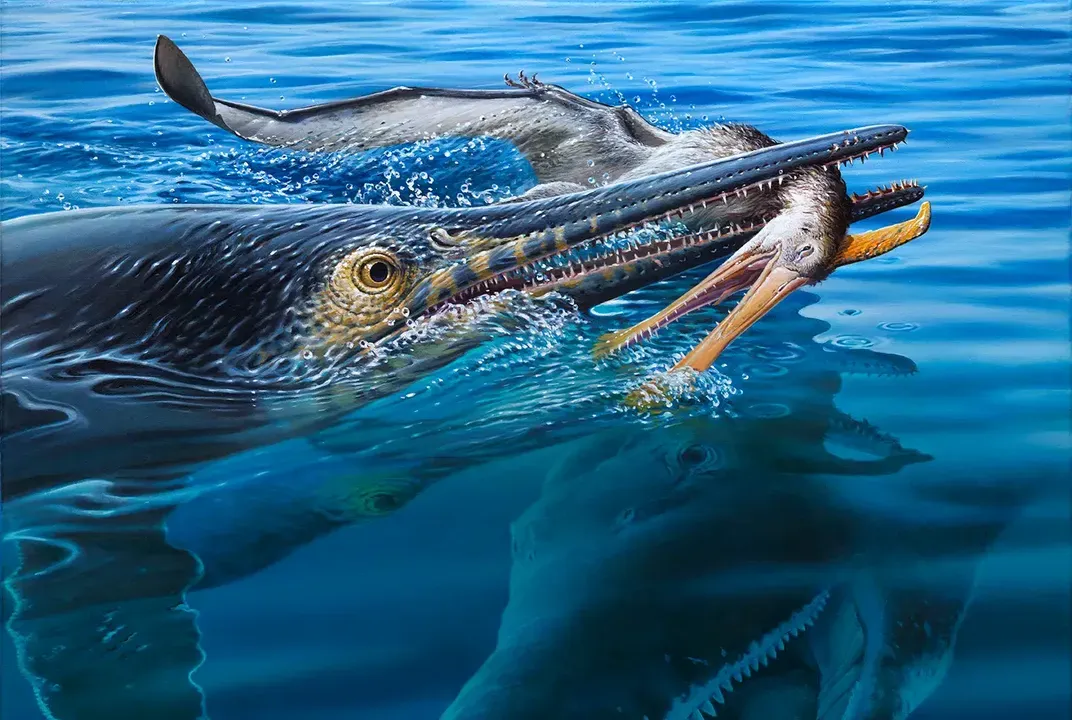
Roughly 100 million years ago, a swimming ichthyosaur ate a flying pterosaur. Soon after, an enormous pliosaur then partially ate the ichthyosaur. This incredible chain of events has been pieced together from a rare Early Cretaceous fossil.
This fossil shows a three-tier predator interaction. Scientists call it a "three-way chomp fest." This unique find helps paleontologists better understand prehistoric creatures and their environment.
Matt White, a paleontologist at the University of New England in Australia, described it as a "marine reptile crime scene." He is the lead author of the paper published in Gondwana Research.
We're a new kind of news feed.
Regular news is designed to drain you. We're a non-profit built to restore you. Every story we publish is scored for impact, progress, and hope.
Start Your News DetoxThe Discovery of B.O.B.
The story of the fossil began in August 2019. Recreational fossil hunters Mike and Cathy Freeman, along with Gary and Barb Flewelling, found several large bones. They were digging near Richmond, Australia, in a designated "fossicking" site.
They donated the remains to the Kronosaurus Korner museum. Staff there nicknamed the creature B.O.B., short for "bag of bones."
Three years later, museum curator Kevin Petersen returned to the site. He unearthed the rest of the skeleton. He realized it was a massive ichthyosaur, an air-breathing marine reptile. It looked like a mix between a crocodile and a dolphin.
This ichthyosaur was a Platypterygius australis species. Scientists believe it was between 19 and 23 feet long when alive.

Today, Queensland's outback is dry and hot. But 95 million to 120 million years ago, it was underwater. The shallow Eromanga Sea covered about a third of Australia. This created a rich marine environment filled with ancient reptiles, fish, and other aquatic life.
A Three-Tier Meal
Researchers examined the ichthyosaur's skeleton. They found severe injuries: split vertebrae, missing ribs, and large bite marks. Only a pliosaur, a powerful, carnivorous marine reptile, could have caused such damage.
Scientists think the pliosaur was a Kronosaurus queenslandicus. This apex predator had crushing teeth. Matt White called it "basically the T. rex of the ocean."
Researchers believe a pliosaur attacked the ichthyosaur. The mangled carcass then drifted to the seafloor. There, it was preserved in mud for millions of years.

During their study, scientists found unusual spherical masses near the ichthyosaur's skull. Three-dimensional imaging showed what was inside: bits of fish, cephalopods, and some bones of a pterosaur. Pterosaurs were large, flying reptiles that ruled the skies.
The team believes these were the ichthyosaur's stomach contents. They likely ended up near its head after the violent pliosaur attack.
Before the pliosaur attack, the ichthyosaur might have caught the pterosaur as it swooped down for a fish. Another idea is that the ichthyosaur found an already dead pterosaur. Either way, this fossil is the first known example of an ichthyosaur eating a pterosaur.
David Unwin, a paleobiologist not involved in the study, noted the ichthyosaur's "impressively varied" stomach contents. He suggested it was a "super-scavenger of the seas," eating anything available, including pterosaurs.
Deep Dive & References
Three-way chomp fest between ancient species shows who was eating who in the Lower Cretaceous - IFLScience A three-tier food chain from the Early Cretaceous of Australia: An ichthyosaur eating a pterosaur while being eaten by a pliosaur - Gondwana Research, 2026 Outback Queensland: Richmond fossil discovery marine reptiles - Australian Broadcasting Corporation Queensland fossil reveals world-first prehistoric food chain - Dinosaur Experiences Australia Extraordinary ichthyosaur fossil shows its last meal was a pterosaur - New Scientist