Get ready, sky-gazers. August 2026 is less a month and more a celestial buffet, serving up everything from a solar eclipse to a lunar eclipse, with a side of meteor shower and a dazzling Venus just for good measure. Clear your calendar, charge your binoculars, and maybe invest in some certified eclipse glasses – because the universe is apparently feeling generous.
First up, on August 12, a total solar eclipse will sweep across the northern reaches of Russia, Greenland, Iceland, and northern Spain. Even a sliver of Portugal gets in on the action. For those of us in parts of the United States (from Alaska to North Carolina), you'll catch a partial eclipse, where the Moon takes a polite nibble out of the Sun. How big that nibble is depends entirely on your zip code.
Quick reminder: looking directly at the sun during an eclipse is a one-way ticket to regret. Use certified eclipse glasses or a safe solar viewer. Your regular sunglasses? Not invited to this party. And for the love of all that is bright, put down the binoculars, telescope, or camera unless it's sporting a special solar filter.
We're a new kind of news feed.
Regular news is designed to drain you. We're a non-profit built to restore you. Every story we publish is scored for impact, progress, and hope.
Start Your News DetoxLater that very same night, as if the universe hadn't done enough, the Perseid meteor shower hits its peak. Picture this: a New Moon on August 12 means the sky will be exceptionally dark. Perfect conditions for catching Earth's annual collision with the dusty remnants of Comet Swift-Tuttle. Those tiny bits of cosmic grit burn up in our atmosphere, giving us those glorious streaks of light. To catch them, look northeast after dark, spot the constellation Perseus, and let your eyes adjust for about 30 minutes. The meteors might seem to originate from Perseus, but they’ll streak across the entire sky. Find a dark, open spot, and prepare to be impressed.
Venus, the Moon, and Earth's Shadow Play
Not done yet? Good. From August 14-16, Venus takes center stage, reaching its greatest eastern elongation. This means it’ll be strutting its stuff farthest from the Sun in the evening sky. Look low in the western sky just after sunset, and you can't miss it. Venus will be a beacon, outshining every other star in its vicinity. If you happen to have a telescope, you'll see it as a tiny, half-lit crescent, like a miniature Moon.
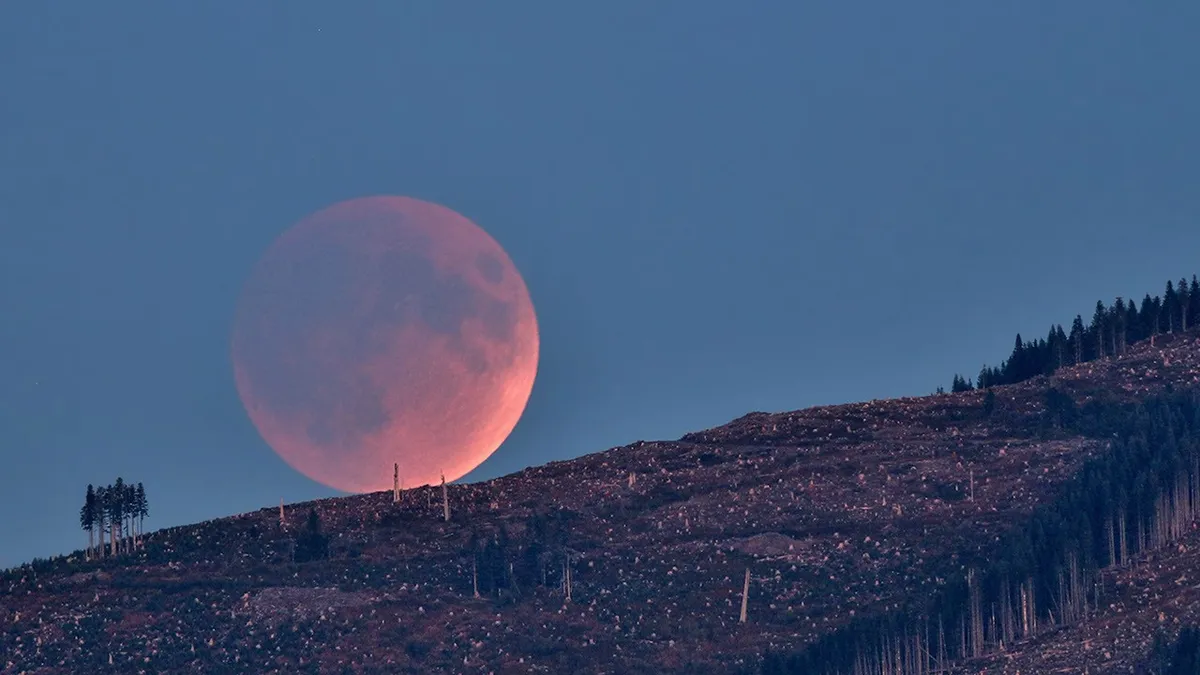
And for the grand finale, on the night of August 27 (extending into August 28 for some time zones), the Full Moon will sashay right through Earth’s shadow, gifting us a partial lunar eclipse. This celestial shadow play will be visible across much of North and South America, and parts of Europe and Africa.
At its peak, a whopping 93% of the Moon will be swallowed by Earth’s dark central shadow, called the umbra. It won't vanish completely, but it will dim considerably, possibly even sporting a rusty, coppery fringe along its shadowed edge. The best part? Unlike its solar counterpart, a lunar eclipse is perfectly safe to watch with your bare eyes. Though, if you want a closer look at Earth’s curved shadow creeping across the lunar surface, binoculars or a small telescope will certainly enhance the experience. Because apparently, the sky decided to go all out next August, and we're just here for the show.