For years, physicists have been trying to make light-based computer chips (photonic chips) that can bend light around corners without it getting lost or scrambled. The go-to solution has been "topological photonics," which sounds like a magic trick, but basically means light travels along the edges of a special material.
Problem was, only the edges worked. The rest of the material just sat there, like an empty parking lot next to a perfectly good road. Not exactly efficient.

Enter a team of researchers in China, who decided that wasn't going to fly. They figured out how to turn almost the entire chip into a multi-lane superhighway for light. We're talking four distinct microwave signals, cruising side-by-side, all within the same tiny space. Because apparently that's where we are now.
We're a new kind of news feed.
Regular news is designed to drain you. We're a non-profit built to restore you. Every story we publish is scored for impact, progress, and hope.
Start Your News DetoxThis isn't just a neat parlor trick. It's a huge leap toward smaller, denser, and way more efficient photonic chips, which could revolutionize everything from communications to quantum computing. Your next phone might just have a light-speed highway inside it.
The Great Light Remodel
Imagine those old topological chips as a road with massive, unused safety barriers on either side. They do their job, but they hog a ton of space. The new approach is like making every inch of those barriers also part of the road.

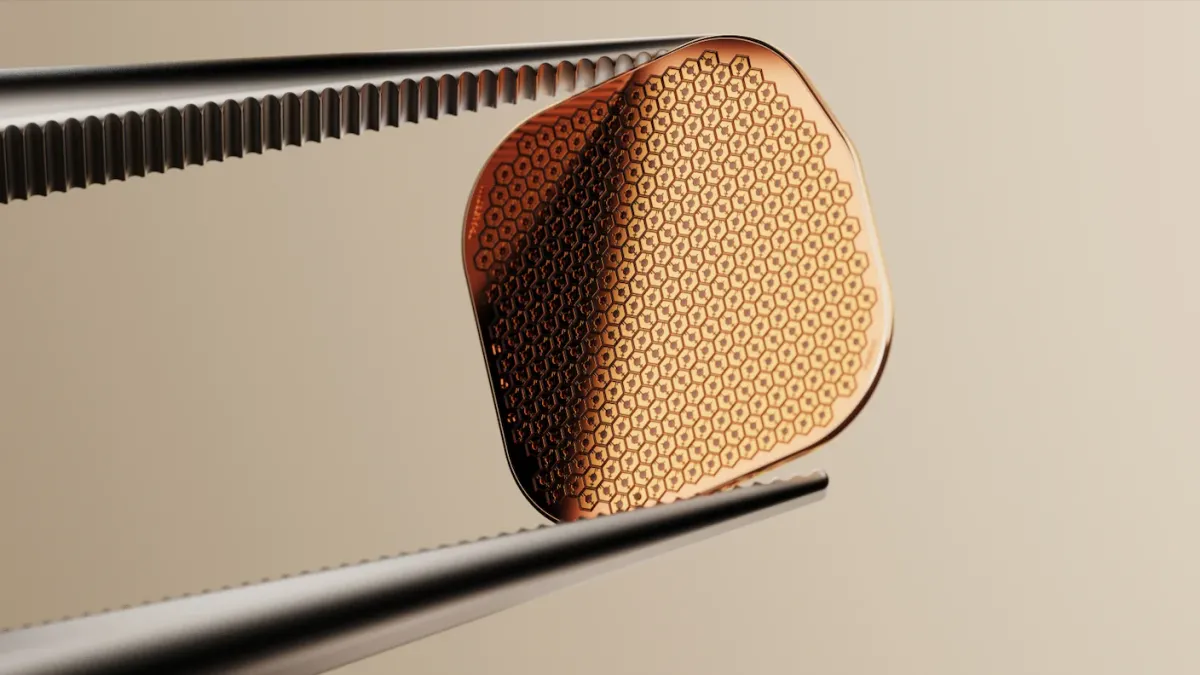
The researchers started with a honeycomb pattern of magnetic rods. Instead of building two separate, light-blocking sections, they tweaked the design so the crystal itself naturally sorted electromagnetic waves into different “valleys.” In physics, “valleys” are essentially different momentum states light can have, acting like separate, invisible traffic lanes within the same material.
Then, they crafted four variations of this honeycomb. Here’s the clever bit: for waves traveling in one “valley,” the material was an open road. But for waves trying to move in the opposite “valley,” the exact same material became a barrier. It's like a one-way street that's also a solid wall for traffic coming the other way.
This dual nature was the secret sauce. Instead of surrounding each light channel with dead space, they arranged the four regions so each one carried its own signal and blocked unwanted waves from its neighbor. Each lane was both a road and a guardrail for the lane next to it. The result? A topological waveguide with four parallel, one-way channels, two in each direction, packed together without losing strength. Let that satisfying number sink in.

Testing the Limits (of Light)
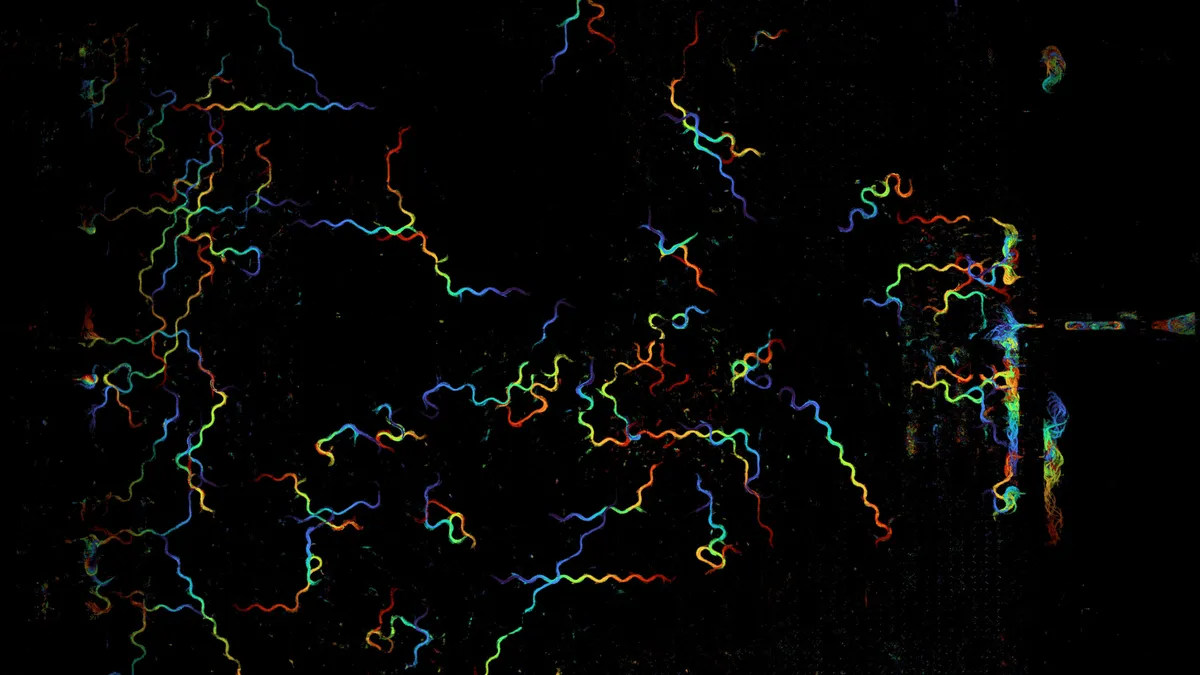
To prove their concept, they built this structure for microwave frequencies and sent signals through it. The microwaves zipped around sharp turns and squeezed through narrow spots without reflecting backward or leaking into adjacent channels. Even when they deliberately messed with the shape, the one-way transport held steady. Talk about robust.
Unlike older designs where light clung to a narrow edge, this new setup uses 100% of the available space for transport. It’s the kind of efficiency that makes engineers (and anyone who hates wasted space) do a little happy dance.
Currently, this tech is humming along at microwave frequencies. The next challenge is scaling it up to the much higher optical frequencies needed for actual photonic circuits. They’ll also need to tackle manufacturing and material loss issues. But if they pull it off, we’re looking at chips that can pack far more information into the same tiny footprint, all while keeping that topological robustness. Plus, it just blew up the long-held belief that protected light transport had to happen only at the edges. Which, if you think about it, is both impressive and slightly terrifying.