For over a century, physicists thought magnets only came in two types. Now, a new discovery called altermagnetism has added a third. This breakthrough has earned Professor Jairo Sinova, Dr. Libor Šmejkal, and Professor Tomas Jungwirth the 2026 Europhysics Prize.
This prize is one of Europe's top honors in condensed matter physics. It recognizes their work in showing that altermagnetism is a new basic form of magnetism, alongside ferromagnetism and antiferromagnetism. This finding changes how we understand magnetism and could impact quantum materials and future information technology.
"This award celebrates a fundamental discovery that challenged a long-held idea in physics," said Professor Jairo Sinova. He is the Director of the Spin Phenomena Interdisciplinary Center (SPICE) at Mainz University. "Finding a completely new magnetic phase hidden for over a hundred years shows that even old scientific fields can still surprise us."
We're a new kind of news feed.
Regular news is designed to drain you. We're a non-profit built to restore you. Every story we publish is scored for impact, progress, and hope.
Start Your News DetoxA New Kind of Magnetism
Altermagnetism came from a long partnership between Sinova's team at Johannes Gutenberg University Mainz and Jungwirth's team in Prague. Dr. Šmejkal worked with Sinova's group for eight years. He helped develop many of the ideas behind this discovery.
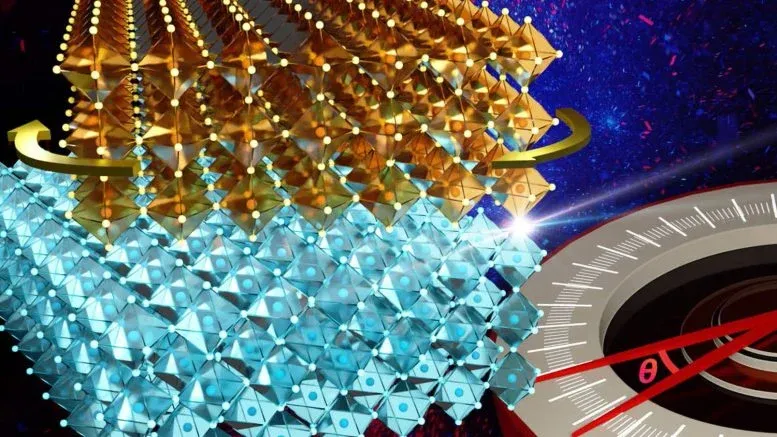
The researchers used modern symmetry theory and spintronics to find this new magnetic order. Spintronics is a field that uses the spin of electrons to store and process information. Their predictions quickly led other research groups to look for this effect. Experiments then confirmed altermagnetism in several materials.
Now, research on altermagnetism is growing fast across Europe, North America, and Asia.
How Altermagnetism Changes Things
For decades, magnets were put into two groups. Ferromagnets have a net magnetic pull, which is key for traditional memory. Antiferromagnets have opposing magnetic forces that cancel each other out. They behave very differently electronically.
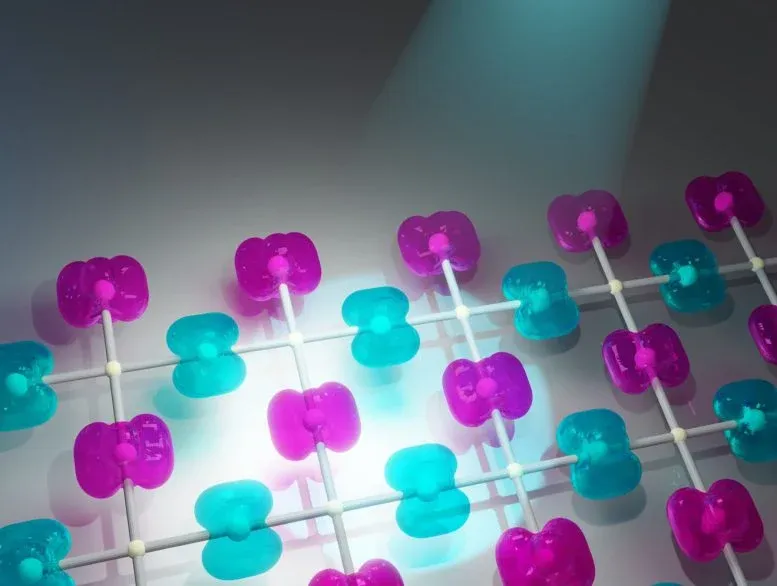
Altermagnets show that these two groups don't cover everything. Like antiferromagnets, they have no overall magnetic pull. But they also have electronic properties that were only seen in ferromagnets before.
This mix allows for highly spin-polarized electrical currents and very fast magnetic changes. These features make altermagnets promising for future spintronics. This technology aims to control electron spin, not just electrical charge.
The discovery also goes beyond devices. Altermagnetism creates a new class of matter and connects to other areas like topological physics and superconductivity.
Uncovering Hidden Symmetries
The journey to altermagnetism started by studying unusual magnetic transport effects. One such effect was the crystal anomalous Hall effect. At first, these seemed like unique traits of certain materials.
But more analysis showed a bigger picture. The strange behavior came from a distinct magnetic phase. This phase was controlled by spin symmetries that earlier classifications had missed.
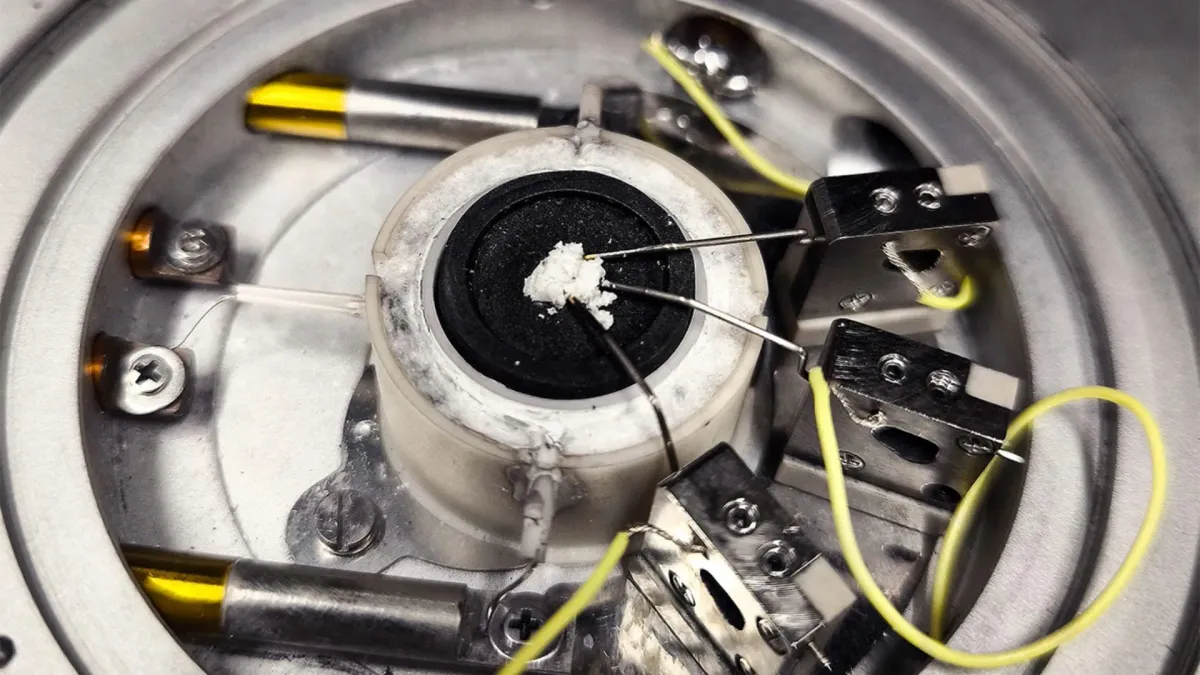
In 2022, the researchers fully classified altermagnetism based on symmetry. They also found hundreds of materials that could show this property. Since then, experiments have confirmed altermagnetic behavior using methods like angle-resolved photoemission spectroscopy (ARPES) and electrical measurements.
Major Recognition for a New Field
In just a few years, altermagnetism has led to hundreds of scientific papers. It has also become a big topic at international physics conferences.
The EPS Europhysics Prize has recognized major advances in condensed matter physics since 1975. It honors discoveries that significantly move the field forward, especially those with a lot of research done in Europe.
Sinova, Šmejkal, and Jungwirth will receive their award in September 2026 in Graz, Austria.
Deep Dive & References
Altermagnetic lifting of Kramers spin degeneracy - Nature, 2024