A £3 million investment from the UK could help NASA search for life on planets near Earth. British astronomers are working on technology to find faint planetary signals despite the bright glare of their stars. This effort could secure a major role for the UK in NASA's future missions.
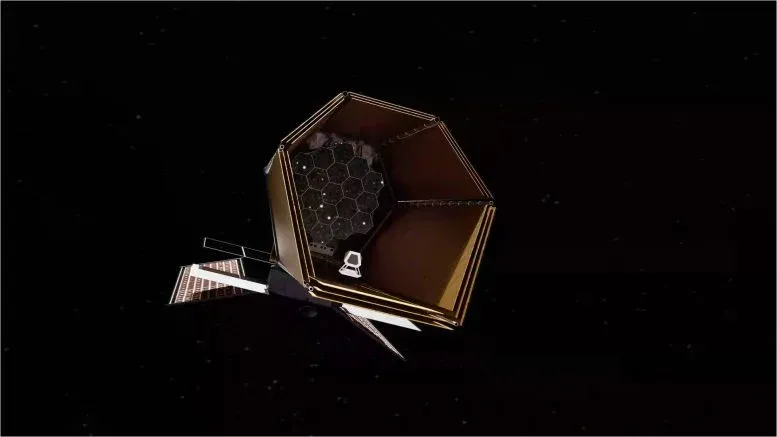
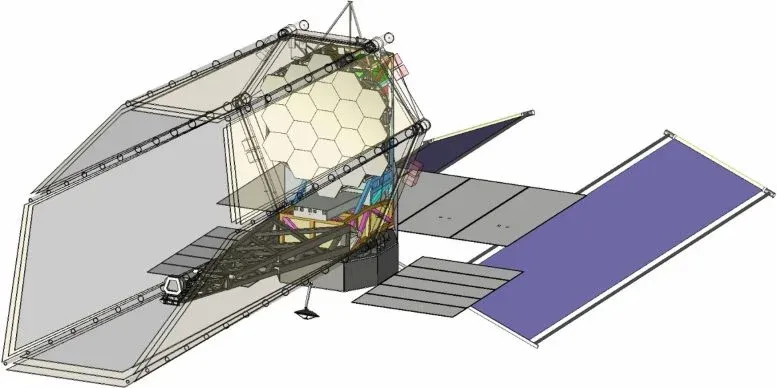
The UK Space Agency (UKSA) has given £3 million to researchers. This money will help develop a key instrument for NASA’s Habitable Worlds Observatory (HWO). The HWO is set to launch in the 2040s. It will be NASA’s next big space telescope after the Nancy Grace Roman Space Telescope.
Searching for Life Beyond Earth
Professor Martin Barstow from the University of Leicester is a leader in the UK's involvement. He said the HWO is one of the most exciting space missions being developed. Its goal is to answer if we are alone in the universe. The HWO will look for Earth-like planets and study their atmospheres for signs of life.
We're a new kind of news feed.
Regular news is designed to drain you. We're a non-profit built to restore you. Every story we publish is scored for impact, progress, and hope.
Start Your News DetoxFinding a planet like Earth will need extreme precision. The HWO's 8-meter mirror must stay stable to about the width of an atom. This is while the telescope blocks the bright light from the planet's star. It's like trying to photograph a moth next to a flamethrower. Without precise light blocking, the planet's faint light would disappear.
Professor Barstow noted that the UK has a history of helping with NASA's major observatories, like Hubble and the James Webb Space Telescope. He believes the UK is in a strong position to lead the development of one of HWO’s main instruments.
Vincent Van Eylen, an Associate Professor at UCL’s Mullard Space Science Laboratory, called HWO "one of the most exciting missions of my lifetime." He highlighted the potential achievement if it finds evidence of life. He also praised the UK Space Agency for ensuring UK scientists and engineers play a leading role.
UK's Role and Future Challenges
UK researchers are working on HWO’s proposed High Resolution Imager (HRI) and Multi-Object Spectrograph (MOS). These are expected to be central parts of the observatory. The new £3 million award will help advance the technology needed to build these instruments.
Dr. Caroline Harper, Head of Space Science at the UK Space Agency, said this funding is a big step for the UK. It helps secure the UK's place in one of the most ambitious space missions ever. She added that the HWO needs both technological and scientific breakthroughs.
The collaboration includes researchers from Durham University, The Open University, the University of Leicester, RAL Space, the University of Portsmouth, the University of Oxford, the UK’s Astronomy Technology Centre (ATC), and UCL’s Mullard Space Science Laboratory.
The HWO is about two decades away from operating. This means younger scientists today will use its data and lead discoveries. However, Professor Barstow warned that funding cuts could affect institutions and programs. He said that developing hardware alone won't guarantee a meaningful British role. Long-term support is needed to keep the technical skills and scientific knowledge required.
Focusing on Nearby Stars
The HWO will mainly look for Earth-like planets around nearby stars. It will then analyze their atmospheres for signs of life. Instead of surveying the entire Milky Way, it will focus on Earth’s local cosmic neighborhood. Astronomers expect it to examine worlds within about 30 light-years.
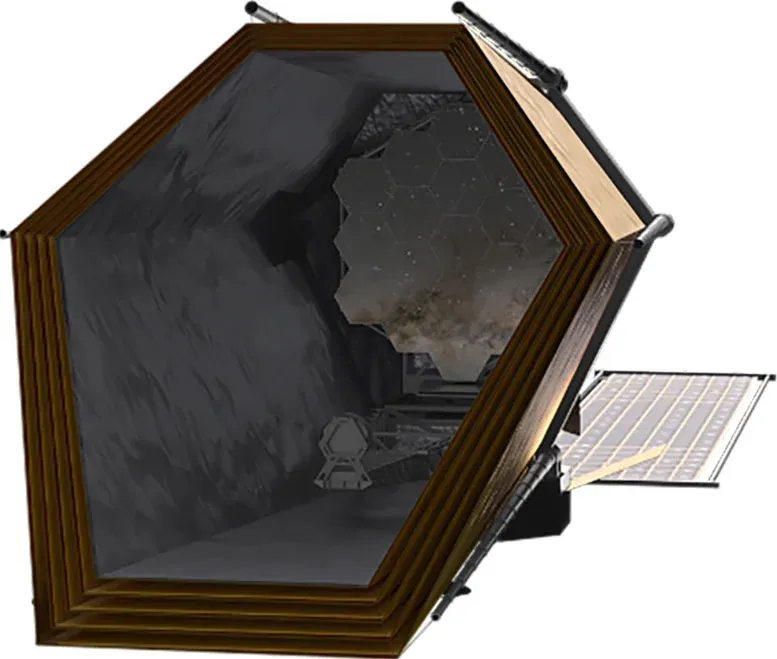
The telescope will also work as a general observatory. Like Hubble and James Webb, it will support research on planets, stars, distant galaxies, and the universe's history. NASA will lead the project, with international partners providing major parts. The UK plans to design and build one of the cameras. British researchers also expect to help with other systems.
The UK astronomy community has held workshops to identify scientific priorities. British scientists have contributed to Hubble and led the Mid-Infrared Instrument (MIRI) on JWST. The next round of UK instrument studies will begin soon. NASA continues to develop HWO with scientists and engineers worldwide.
The HWO aims to be the first of NASA’s next "Great Observatories." It will build on Hubble and Webb to investigate planets, stars, and galaxies. It will also pursue the question of whether life exists elsewhere in the universe.
Deep Dive & References
RAS response to UKRI/STFC funding announcement - Royal Astronomical Society