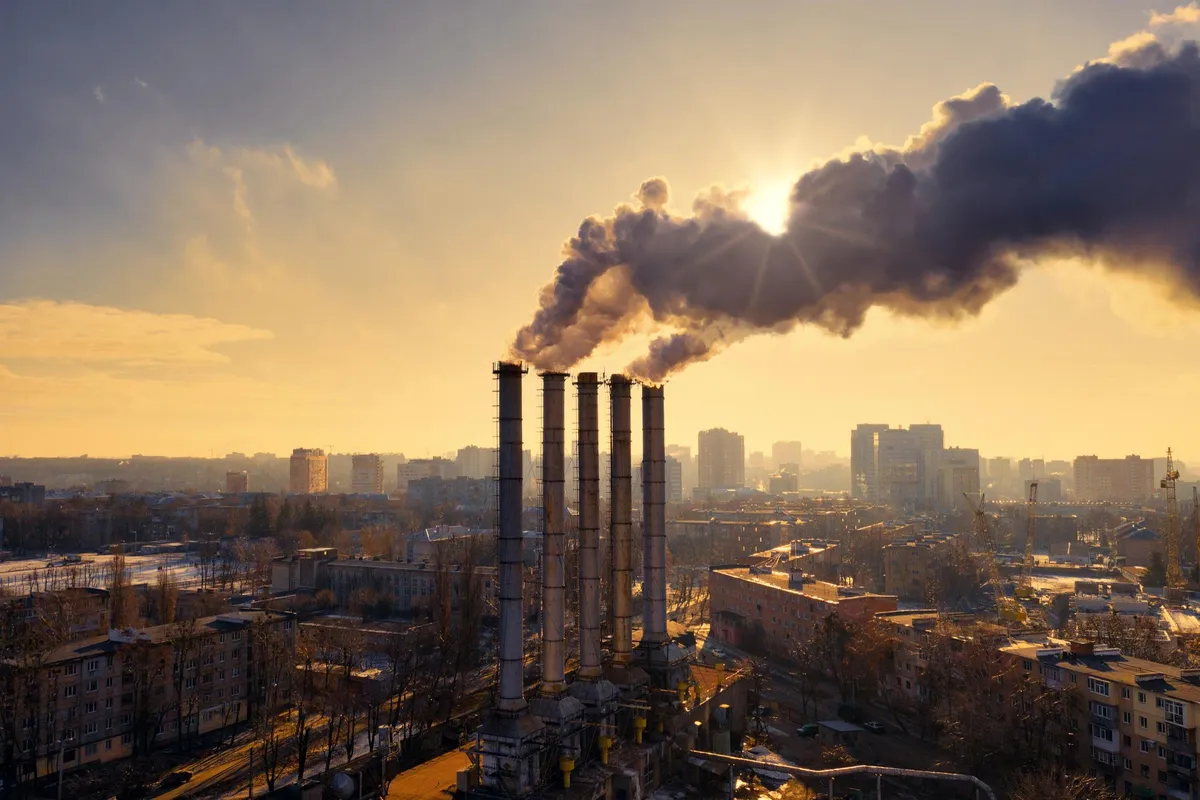
For years, scientists thought nitric oxide — that stuff that comes out of tailpipes and factories — was actually a good guy when it came to air pollution. They figured it put the brakes on chemical reactions that create those hazy, lung-clogging particles in city air. Turns out, it might be doing the exact opposite.
New research from Tampere University and the University of Helsinki just dropped a bombshell: under certain urban conditions, nitric oxide isn't limiting particle formation; it's practically throwing a party for it. Which, if you live in a city, is less than ideal.
The Unsuspected Haze-Maker
Those tiny aerosol particles are the bane of city living. They make your skyline disappear, hitch a ride into your lungs, and even mess with local weather. Understanding how these invisible nuisances form from gases is crucial for predicting — and hopefully fixing — air quality.
We're a new kind of news feed.
Regular news is designed to drain you. We're a non-profit built to restore you. Every story we publish is scored for impact, progress, and hope.
Start Your News DetoxShawon Barua, a doctoral researcher, and the team focused on aromatic carbonyl compounds. Think of them as the chemical soup simmering in city air, courtesy of vehicle exhaust, industrial fumes, and even some of your favorite consumer products. These compounds are gases, but they're always looking for a chemical date to turn into something more substantial.
What the scientists discovered, using a mix of lab experiments and computer models, was a previously overlooked chemical pathway. In this scenario, nitric oxide doesn't just meet these aromatic carbonyls; it accelerates their transformation into aerosol precursors — the chemical Lego bricks that build those hazy particles. It's like finding out the designated driver is actually bringing the extra tequila.
Dr. Avinash Kumar from Tampere University put it mildly: urban air chemistry is far more complex than we thought. Turns out, you need to know all the secret chemical handshakes if you want to accurately predict how bad the air's going to get.
Why Your Air Quality Forecasts Might Be Off
This discovery is a big deal, especially for bustling metropolises where aromatic pollutants and nitrogen oxide emissions are practically neighbors. If this newfound pathway is active in cities globally, it could be a major reason why current air quality models often miss the mark when predicting particulate matter pollution.
Professor Matti Rissanen, also from Tampere, suspects that some crucial reaction chains have been left out of our atmospheric models entirely. Those 'sequential oxidation reactions' between common air pollutants? They've been ghosted. And that, he says, explains why predicting urban aerosol levels has been such a headache.
His hope is that these findings will help scientists fine-tune those air quality models, making forecasts more accurate. Because knowing what's actually making the air hazy is the first step to, you know, un-hazing it. And maybe, just maybe, giving city dwellers a clearer view — and a better breath.