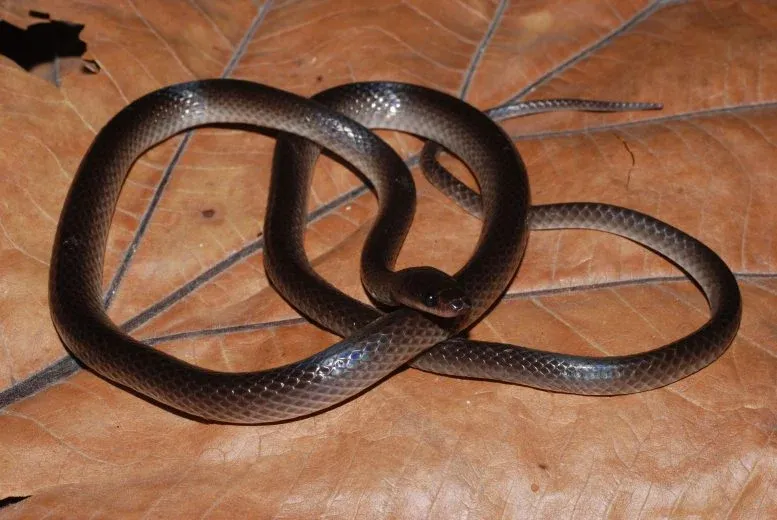
A new snake species, Lielaphis slashi, has been discovered in New Guinea. This reddish-brown groundsnake is about 28 inches long and lives in the island's dense tropical forests. It is named after Slash, the guitarist from Guns N' Roses, also known as Saul Hudson.
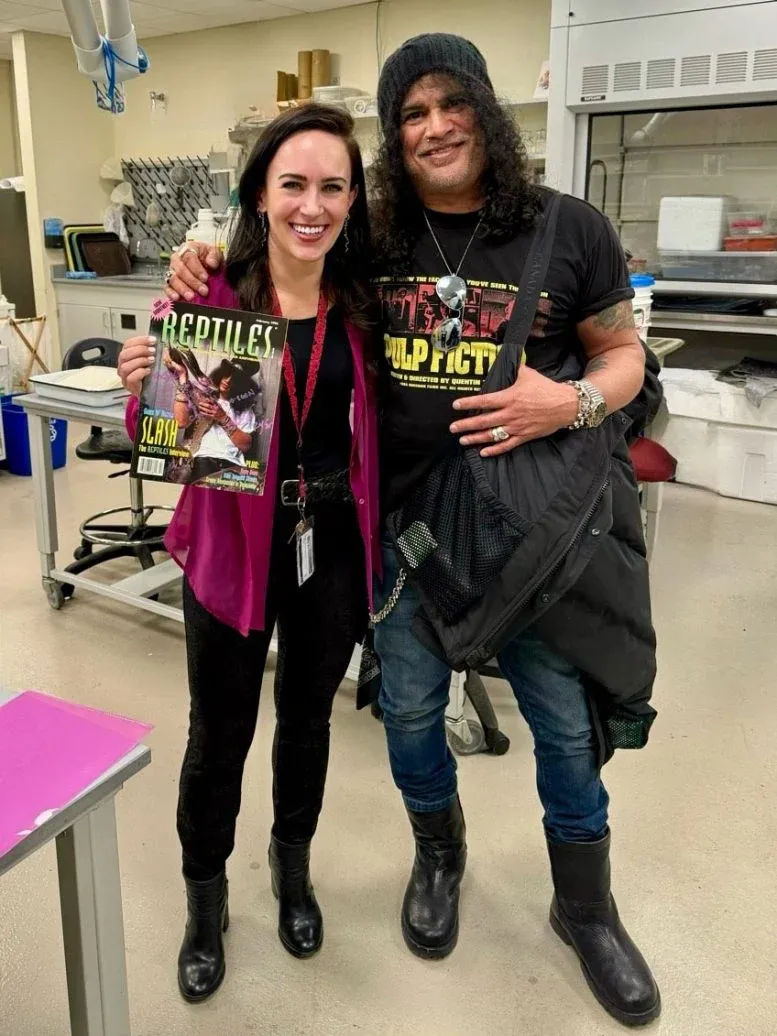
Slash has a lifelong interest in reptiles and supports zoos and museums. He expressed honor and humility at having a snake named after him, calling it "really exciting."
Naming the New Snake
Sara Ruane, an Associate Curator of Herpetology at the Field Museum, led the research. She is the senior author of the paper describing the species in Zootaxa. Ruane has been a fan of Guns N' Roses since childhood. She also knew she wanted to study reptiles from a young age.
We're a new kind of news feed.
Regular news is designed to drain you. We're a non-profit built to restore you. Every story we publish is scored for impact, progress, and hope.
Start Your News DetoxRuane recalled seeing Slash on the cover of Reptiles Magazine holding his pet reticulated python. She thought he was "so cool." Years later, as a scientist, she reread his interview. Slash spoke about his love for museums, zoos, natural history, and searching for snakes as a child. Ruane felt a strong connection to his passion, which inspired her to name the new species after him.
Discovery in New Guinea
New Guinea is the world's second-largest island. It is known for its rich biodiversity, much of which remains unexplored.
In 2006, Chris Austin, a professor at Louisiana State University, found an unfamiliar snake during fieldwork. He was working at night, as these groundsnakes are nocturnal. They often appear after sunset at the base of large trees, looking for food. Austin noted the need for caution, as many venomous snakes in New Guinea look similar to non-venomous ones.
A decade later, Ruane and Austin began working together to understand New Guinea's snakes better.
Genetic Confirmation and Habitat
Researchers used advanced genetic analysis to confirm L. slashi as a distinct species. Tianqi Huang, the study's first author, explained that genetic differences, along with physical traits like scale numbers, proved it was new. Ecological modeling also showed that L. slashi prefers a different habitat than similar snakes.
Much about Slash's groundsnake remains unknown because it is hard to observe them in the wild. However, its anatomy suggests it might eat small, slippery lizards and reptile eggs. Unlike boa constrictors, it likely uses large teeth at the back of its mouth to grab prey.
Despite the band's reputation, L. slashi is not venomous enough to seriously harm humans.
Conservation Concerns
The forests where L. slashi lives are threatened by human activities like coffee farming and mining. Ruane stressed the importance of identifying new species. She noted that understanding every species helps us comprehend how ecosystems work. We cannot protect animals and other living things if we do not know they exist.